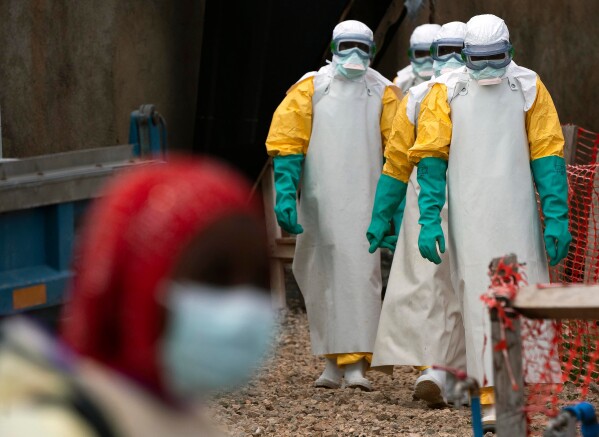
Health authorities have reported a new outbreak of Ebola in the Central African country of Congo, with over 300 suspected cases and at least 88 fatalities. Neighboring Uganda has also reported cases. On Sunday, the World Health Organization declared this outbreak a public health emergency of international concern.
Ebola, a severe and often deadly disease, was first recognized in 1976 after outbreaks in what is now South Sudan and Congo. Most major Ebola outbreaks have occurred in sub-Saharan Africa, where the viruses are native. The most severe outbreaks have been in West and Central Africa.
The Ebola disease is caused by different viruses; the WHO identifies three significant ones capable of large outbreaks: Ebola virus, Sudan virus, and Bundibugyo virus. The current crisis is attributed to the Bundibugyo virus, which is rare, with only two previous outbreaks recorded.
According to the WHO, a family of fruit bats is considered the natural host of Ebola-causing viruses, although animals like apes and monkeys can also become infected. Human infection can occur through contact with these animals. Person-to-person transmission happens when someone comes into contact with the body fluids of an infected person, like blood, feces, or vomit, or surfaces contaminated by these fluids.
Symptoms typically appear two days to three weeks post-exposure, usually within a week, according to the U.S. Centers for Disease Control and Prevention. The illness starts with flu-like symptoms such as fever, aches, fatigue, and sore throat. Progressively, patients might experience gastrointestinal issues, rashes, seizures, and bleeding.
The WHO reports an average Ebola fatality rate of about 50%, though previous outbreaks have shown rates between 25% and 90%. Currently, vaccines and treatments are approved only for the Ebola virus.
Historical Outbreaks
2013-2016: West Africa
A decade ago, the worst Ebola outbreak on record swept through West Africa, resulting in more than 28,000 cases and over 11,000 deaths. This outbreak reached Guinea, Liberia, and Sierra Leone, with more cases in nearby countries. A limited number of cases appeared in the United States, the U.K., Italy, and Spain, primarily involving travelers from Africa or health workers returning home after aiding outbreak efforts. The outbreak’s origin was traced to a child in southeastern Guinea who came into contact with infected fruit bats.
2018-2020: Congo and Uganda
The second-largest outbreak occurred shortly after the West African crisis, mainly in Congo’s North Kivu, South Kivu, and Ituri provinces, with some cases in neighboring Uganda. The latest outbreak announced recently is also in Ituri, near the Uganda border. In the outbreak from 2018 to 2020, over 3,400 cases were reported, and the fatality rate was around 66%, as per the CDC. Like the previous massive outbreak, it was caused by the Ebola virus. Congo has faced more than a dozen significant outbreaks, including one as recent as late 2025.
2007-2008: Uganda
In 2007, an outbreak of Ebola in western Uganda near the Congo border was the first recorded incident involving the Bundibugyo strain. The CDC reported 131 cases and 42 deaths, noting that the Bundibugyo strain’s fatality rate appeared lower. No specific treatment or vaccine exists for the Bundibugyo virus. Uganda has experienced multiple Ebola outbreaks.
1976: First Known Outbreaks
The first known Ebola outbreak happened 50 years ago in towns in what was then Sudan and now part of South Sudan. Scientists suspect it began in a cotton factory where bats were present, although the source remains unconfirmed. The outbreak was due to the Sudan virus. Later that year, another outbreak in northern Congo, then called Zaire, led to the identification of the Ebola virus. This outbreak originated near the Ebola River, and it had 280 deaths. The same year, a British lab technician accidentally pricked himself with a needle with the virus and recovered, marking the first known Ebola infection outside Africa.
 British Police Arrest Man Suspected of Terror Plot
  Activists Push for Nationwide Ban on Child Marriage in the U.S.
  Investigation into Alleged Incident at Cornell University
  Rising Drone Threats Highlight Vulnerabilities in Moldova’s Airspace Defense
  Bolivia Faces Security Test Amid Unrest
  Incident on FlyDubai Flight Raises Security Concerns