The United States has adopted a strategy towards Cuba that echoes its approach in Venezuela. This includes a petroleum blockade, an increased military presence, federal charges, and threats of intervention. Despite these similarities, experts warn that such pressure campaigns may not yield identical results. President Donald Trump, however, often warned that “Cuba is next.”
Brian Finucane, a senior adviser at the International Crisis Group and former State Department lawyer, noted that Trump viewed military intervention in Venezuela as a ‘fantastic success’ and aimed to replicate that model elsewhere, including Iran. But he emphasized that Cuba, like Iran, fundamentally differs from Venezuela.
If the U.S. were to overthrow Cuba’s government, there’s no obvious successor willing to cooperate with the Trump administration, unlike in Venezuela, where Delcy Rodríguez, backed by the U.S., took over after Nicolás Maduro’s capture.Cuban officials, speaking anonymously, insisted that “there is no Delcy in Cuba.”
Military Presence and Pressure
Currently, the U.S. military presence in the Caribbean is less formidable than the massive deployment near the Venezuelan coast before Maduro’s capture. Finucane explained that indicting a 94-year-old former Cuban leader, Raúl Castro, holds less sway compared to narcotics charges justifying Maduro’s capture.
Embargo Impact
The U.S. has implemented oil embargoes to exert pressure. For Venezuela, Trump targeted oil exports to cut off revenue to Maduro’s government. After Maduro’s removal, the focus shifted to blocking Venezuelan oil shipments to countries like Cuba, where cash payments were not made. As a result, most Venezuelan crude is now processed or set to be processed in U.S. refineries.
In Cuba’s case, the embargo aims to cut oil imports amid an energy crisis. Although limited shipments reach the island, the broader U.S. embargo makes electricity and gasoline provision challenging. Finucane warned that further pressure might drive refugees to Florida, recalling events from the 1990s.
Charges Against Leaders
The U.S. Department of Justice charged Maduro with crimes including narcoterrorism during Trump’s first term. This case enabled his capture. Subsequently, Venezuela’s relations with the U.S. shifted, allowing previously sanctioned Venezuelan oil sales to U.S. companies and global markets—a significant change.
The charge against Castro for the 1996 downing of civilian planes piloted by Cuban exiles in Miami aims to escalate the U.S. pressure campaign. However, capturing Castro would not alter Cuba’s government operations, as he still influences key decisions but doesn’t manage daily government affairs.
Military Deployments
Prior to Maduro’s capture, the U.S. deployed warships near Venezuela, marking the largest Latin American military presence in generations. The USS Gerald R. Ford aircraft carrier was diverted from Europe to join the operation. Amphibious assault ships transported Marines, helicopters, and Osprey aircraft.
U.S. forces continuously conduct drug smuggling interventions in the Caribbean and eastern Pacific, with warplanes flying over the Gulf of Venezuela. The mission to capture Maduro involved over 150 aircraft across the Western Hemisphere.
Today, the U.S. maintains a smaller Caribbean force, including two amphibious ships with Marines. The USS Nimitz, accompanied by warships, arrived as charges against Castro were announced. The Nimitz is on its final tour before decommissioning, taking part in regional maritime exercises.
Finucane concluded by emphasizing the differences between Cuba and Venezuela, suggesting that a swift raid to capture Castro or another leader in Cuba is unlikely to produce the same outcome as in Venezuela.
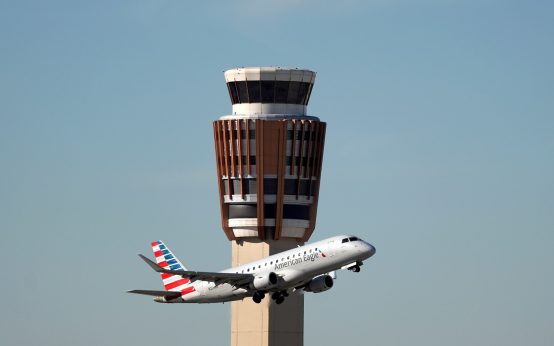 Potential Collision Averted as Duplicate Flight Numbers Cause Confusion Over Phoenix
  The Passing of Jason Arday Amid Controversy
 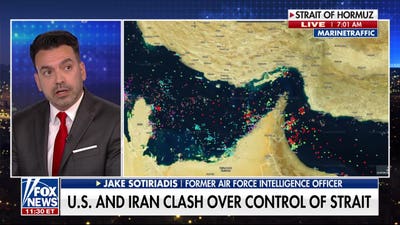 Trump Asserts US Dominance Over Strait of Hormuz Amid Economic Impact on Iran
  Taliban’s Fifth Anniversary in Power: Celebration Amidst Human Rights Concerns
  Settlers Seize Family Home in Qusra, West Bank
  US Navy Faces Challenges Amid Iran Conflict and Pacific Shifts