
On a rainy Saturday morning, I watched as cadets at the United States Military Academy became part of the prestigious Long Gray Line. The ceremony at Michie Stadium invoked memories from my own graduation in 1973. I tuned in to refresh these memories before a television interview scheduled later that day. However, by the end, it became evident that something far more significant had taken place: a commencement address at West Point that openly discussed the themes of God, duty, sacrifice, and war.
The address was delivered by Secretary of War Pete Hegseth. I became acquainted with Pete many years ago through my work at the Family Research Council, where I ultimately served as vice president for policy. During the summer of 2000, Pete joined us as an intern while a student at Princeton, known for his intelligence, personable nature, and commitment to his Christian faith. My family warmed to him immediately.
Years progressed, and Pete Hegseth gained prominence on Fox News, where I also serve as a military analyst. His background includes National Guard service with deployments to Iraq and Afghanistan, which adds to his credibility in advocating for veterans. His experiences made him an apt choice to address the newest graduates among the 994 in attendance at the ceremony.
Unlike many recent speakers, Hegseth’s address was candid and direct rather than sanitized to avoid offense. At the core was a verse from Isaiah 6:8: “Whom shall I send, and who will go for us? … Here am I! Send me.” The verse aptly conveyed that these graduates were not merely receiving diplomas but taking on substantial responsibility as commissioned officers in the Army, with the reality of potential deployments to dangerous areas looming. Some may face combat; others may not return home.
West Point has long understood these stakes. Founded in 1802 under President Thomas Jefferson, the academy’s purpose is to produce leaders capable of defending the nation. Its graduates have participated in major conflicts from the Civil War to the Iraq and Afghanistan wars. The motto “Duty, Honor, Country” reflects a legacy forged in sacrifice, not comfort.
My graduation in 1973 occurred during a transitional period marked by the Vietnam War’s conclusion, unrest in the Middle East, and Cold War tensions with the Soviet Union. Our speaker, Admiral Thomas H. Moorer, addressed us as an Army navigating significant challenges. In parallel, today’s graduates face a world where Russia’s aggression in Ukraine, China’s pressures on Taiwan, and Middle Eastern proxy conflicts complicate global stability.
Technological advances in artificial intelligence, cyber warfare, autonomous systems, and information operations continue to reshape military engagements rapidly. Unlike the previous Cold War period, this instability calls for immediate adaptability. Hegseth’s speech was timely, emphasizing the importance of returning to merit-based standards instead of diversity, equity, and inclusion initiatives that have overshadowed military readiness. He reiterated values encapsulated in “Duty, Honor, Country,” reminding the graduates of the military’s ultimate goal — defending and winning America’s wars.
Combat experience eliminates ideological ambiguity. Unyielding motives clash directly with determined adversaries. Officers must possess moral clarity to engage under fire, displaying sound judgment and courage when required.
Hegseth spoke of personal matters during his address, mentioning his seven children and expressing pride should his son someday step forward saying, “Send me.” This personal revelation exemplified the continuity inherent in West Point — each graduating class becomes part of an enduring legacy over two centuries. The republic relies on individuals ready to prioritize service over self.
Afterward, the graduating class joined in singing “The Corps.” Since first performed in 1910, it remains a poignant element of West Point ceremonies. The traditions persist even as technological shifts reshape the Army. However, amid machine-assisted decision-making and autonomous systems, moral judgment remains key — a characteristic honed by the kind of earnest discourse Hegseth offered.
America demands leaders with not only technical prowess but also an understanding of war’s harsh realities and moral responsibilities. These young officers must mirror past generations, affirming the ageless summons: “Here am I, Lord. Send me.”
 Cargo Plane Crash at Miami International Airport
  Marine Veteran Suing Oregon School District Over Curriculum Reimbursement
 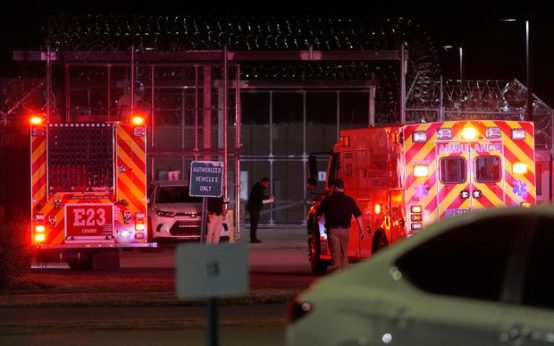 Tennessee Execution Halted as Issues Persist with Lethal Injection Protocol
  Judge Dismisses Case Against Former Olympian Over Lincoln Memorial Incident
  Minnesota Family Files Civil Rights Lawsuit Over ICE Agent Shooting
  California Bans Child Marriage, Protecting Minors