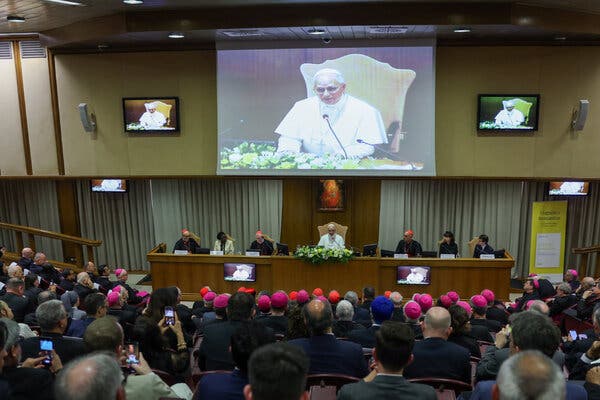
Pope Leo XIV has made a significant call to action regarding the integration of humanity into technological progression, emphasizing the necessity to maintain human values as technology advances. His first encyclical, “Magnifica Humanitas,” was presented at the Vatican, marking a crucial moment in the discussion about technology’s impact on human life.
This document arrives at a pivotal time, as many foresee dramatic shifts in human life due to technological advancements. The encyclical draws a parallel to “Rerum Novarum,” a document by Pope Leo XIII in response to the Industrial Revolution. Pope Leo XIV aims to address what may become one of humanity’s greatest challenges during his papacy.
The letter contains over 42,000 words and is directed at the Church’s 1.4 billion followers, covering extensive themes. It sheds light on artificial intelligence and reinforces several key ideas.
Artificial Intelligence versus Humanity
Pope Leo XIV cautions against viewing artificial intelligence as equivalent to human intelligence. He characterizes AI as systems that imitate human cognitive functions but ultimately surpass humans in processing speed and data handling. Yet, these systems lack fundamental human experiences. They don’t form relationships, feel emotions, or comprehend concepts like love, work, friendship, or responsibility.
While acknowledging AI’s potential as a “valuable tool,” Leo XIV insists that AI lacks the essence of humanity. He urges recognition of the inherent difference between AI systems and the complex, soulful capabilities of the human mind.
 British Police Arrest Man Suspected of Terror Plot
  Activists Push for Nationwide Ban on Child Marriage in the U.S.
  Investigation into Alleged Incident at Cornell University
  Rising Drone Threats Highlight Vulnerabilities in Moldova’s Airspace Defense
  Bolivia Faces Security Test Amid Unrest
  Incident on FlyDubai Flight Raises Security Concerns