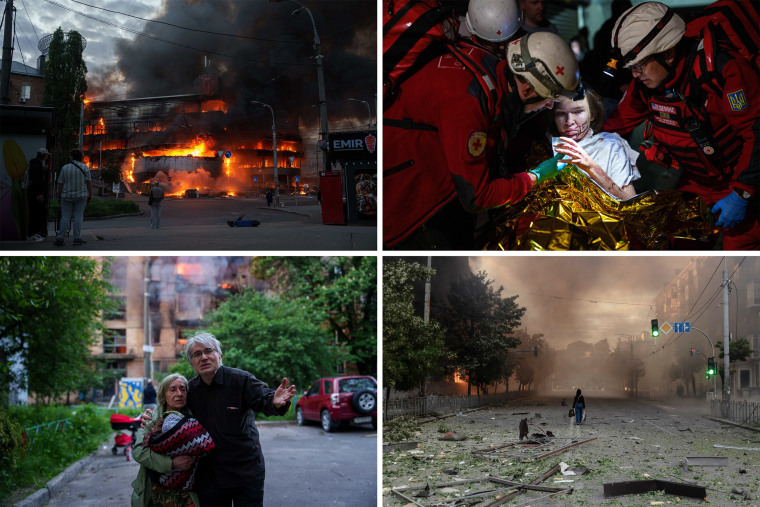
On May 26, 2026, Russia issued a stark warning to the United States and other countries with diplomats in Kyiv. Russia urged them to abandon the Ukrainian capital or face an intense wave of attacks labeled as ‘systematic strikes.’
U.S. Secretary of State Marco Rubio received a personal warning from his Russian counterpart about these potential strikes. He offered Washington’s renewed mediation in efforts to restart stalled peace talks. European nations, however, rejected the Kremlin’s call and expressed their intention to maintain their presence in Kyiv. They saw the warning as an act of desperation. Many European countries also summoned Russian ambassadors to protest this warning.
“We came back and saw total carnage,” said Lesia Homiak, who lives in Kyiv and felt a missile hit near her apartment. Her apartment sustained extensive damage, with broken windows and cracked walls, leaving her feeling fortunate to be alive.
Intensifying the situation, Moscow indicated plans for more strikes similar to those over the weekend, which included using the Oreshnik hypersonic missile. The Russian Foreign Ministry stated it would target military locations in Kyiv in response to a drone attack last week in the Russian-occupied Luhansk region, which killed 21 individuals, including college students. Kyiv’s forces denied targeting civilians, asserting they aimed at a military unit.
Ukraine has increased its access to Russian territories, raising tensions for the Kremlin. Russian cities endure frequent missile and drone attacks, leading to widespread damage and civilian casualties. Moscow declared that Kyiv should now expect more significant challenges due to the attack on Luhansk that they claim has tested their patience.
Kremlin spokesman Dmitry Peskov declined to offer specifics regarding the frequency of anticipated attacks. During a call, Russian Foreign Minister Sergey Lavrov informed Rubio of upcoming strikes on Kyiv, urging the evacuation of U.S. diplomatic staff. Peace talks led by the U.S. to resolve the conflict have halted, with President Donald Trump focusing on the conflict with Iran.
In response, European Union Mission Head in Kyiv, Katarina Mathernova, insisted they would not leave. She criticized Russia’s warning as hypocritical and aimed at causing panic. France and Poland also condemned Russia’s threat and refused the evacuation suggestion.
The new warning and recent bombardment have residents like Homiak and her partner, Andriy Klen, apprehensive but resigned to endure life under fire. Although they plan to stay in Kyiv, they now intend to seek shelter in subways during future attacks. Influential Russian military bloggers voiced that attacking Kyiv more intensively is overdue, showing eagerness for substantial military action.
Anastasiia Parafeniuk reported from Kyiv, while Yuliya Talmazan contributed from London.
 British Police Arrest Man Suspected of Terror Plot
  Activists Push for Nationwide Ban on Child Marriage in the U.S.
  Investigation into Alleged Incident at Cornell University
  Rising Drone Threats Highlight Vulnerabilities in Moldova’s Airspace Defense
  Bolivia Faces Security Test Amid Unrest
  Incident on FlyDubai Flight Raises Security Concerns