Presidential Race in Colombia
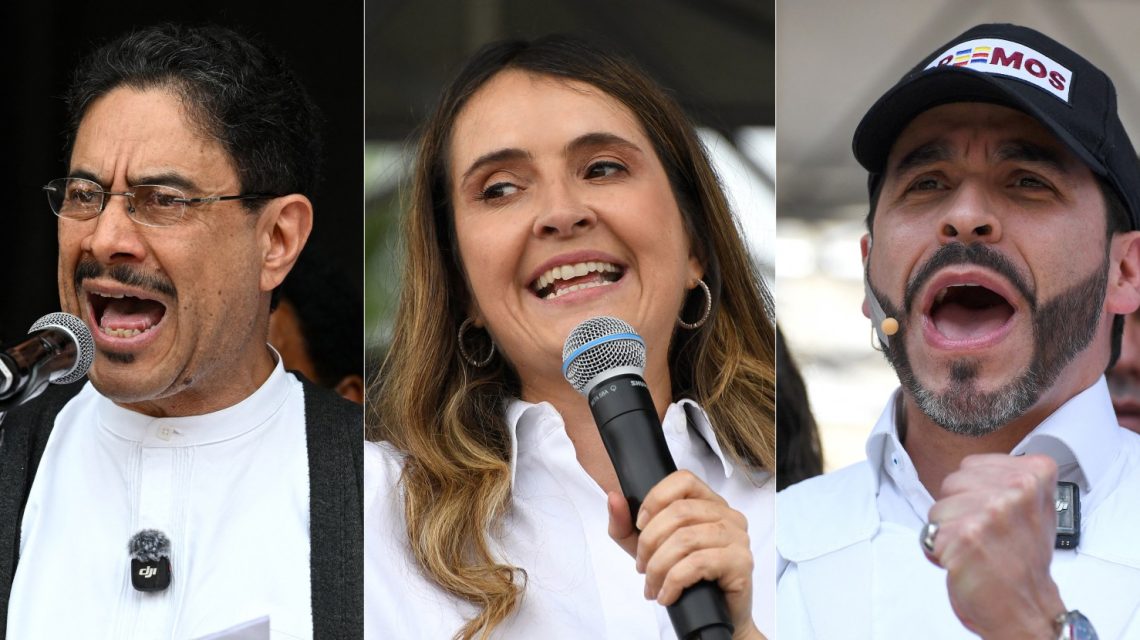
Four years have passed since Gustavo Petro emerged as Colombia’s first left-wing president. Now, the electorate faces a crucial decision: whether to sustain Petro’s political agenda or opt for a hard-right alternative. Leading contenders include Ivan Cepeda, Petro’s favored successor, and Abelardo De La Espriella, a lawyer who has emerged as a prominent right-wing candidate.
De La Espriella’s campaign resonates with anti-establishment sentiments, using popular social media strategies and promising security enhancements. Dubbed “The Tiger,” he mirrors U.S. President Donald Trump and other right-wing populists such as Javier Milei and Jair Bolsonaro.
Polarized Nation
Colombia approaches this Sunday’s election deeply polarized. Petro’s tenure saw approval ratings indicating a near-even split between supporters and detractors. Gimena Sanchez, director of the Washington Office on Latin America’s Andes program, highlighted a growing weariness with the traditional left-right divide.
This environment benefits De La Espriella, whose campaign prioritizes defeating Petro’s political movement over detailed policy outlines. His platform endorses smaller government, expanded prisons, and a security strategy akin to El Salvador’s Nayib Bukele.
Right-Wing Populism on the Rise
Michael Shifter from the Inter-American Dialogue observed De La Espriella’s campaign focusing on emotional appeals rather than substantive policy. Ivan Cepeda, Petro’s preferred successor, leads the polls yet approaches a runoff with De La Espriella.
Meanwhile, Paloma Valencia, a conservative backed by former president Alvaro Uribe, has seen diminished support. A runoff between Cepeda and De La Espriella seems likely, with polls showing Cepeda slightly ahead.
De La Espriella’s Rapid Ascent
De La Espriella transitioned from being a criminal defense lawyer to a political front-runner, surpassing traditional candidates. His poll ratings surged from 1.1% in March 2025 to nearly 30% as elections loomed.
Despite controversies around his legal career, De La Espriella maintains that providing legal counsel does not equate to endorsing client actions.
Impact on U.S.-Colombia Relations
Colombia, once a steadfast U.S. ally in South America, saw relations strain under Petro. Kevin Whitaker, former U.S. Ambassador, noted the deterioration of ties following the 2016 peace accord and subsequent Colombian policies.
Under Petro’s governance, coca cultivation and cocaine production peaked, leading to severe criticism and Colombia’s loss of drug certification. Both De La Espriella and Valencia promise to restore ties with Washington, prioritizing organized crime control and border security.
Risks of Hardline Security Policies
Critics caution against Colombia adopting a hard-right security strategy. Sanchez from WOLA warns of historical human rights violations linked to such measures. She emphasizes addressing deep-rooted inequality and lack of opportunities as pivotal to curbing illegal economies.
Foreign Policy Challenges: Venezuela
Colombia’s relationship with Venezuela remains a critical foreign policy challenge. The 1,400-mile shared border is rife with illicit activities. Sunday’s election could influence Colombia’s alignment with U.S. policies regarding Venezuela.
Julio Paredes, a former Colombian foreign service official, stressed the necessity of cooperation with Venezuela. Borda noted that future relations with Venezuela hinge on the U.S. stance, suggesting Colombia may need to diversify its foreign policy.
 The Trump Team’s Challenge to the Military Leadership
  Maryland First State to Restrict Electronic Pricing in Grocery Stores
  British Police Arrest Man Suspected of Terror Plot
  Activists Push for Nationwide Ban on Child Marriage in the U.S.
  Democratic Hopes and Historical Warnings in 2026 Senate Race
  Republicans Face Challenges Amidst Cost of Living Concerns