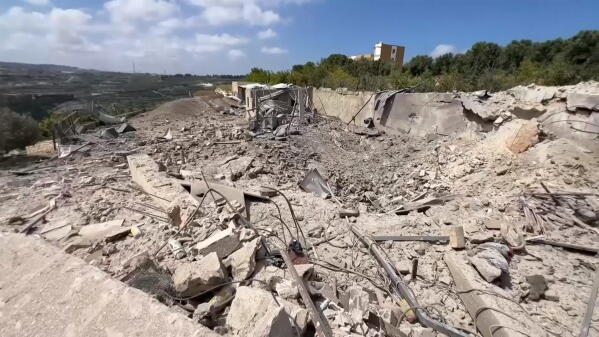
Israeli troops have achieved a significant military objective by capturing Beaufort castle, a strategic site in southern Lebanon. This action marks Israel’s deepest incursion into the country in over twenty-five years. The military confirmed on Sunday that the operation took place near Nabatiyeh after intense airstrikes and clashes in the surrounding villages against Hezbollah forces.
Current Conflict Dynamics
The latest conflict between Israel and Hezbollah began on March 2. The fighting escalated after Hezbollah launched rockets into northern Israel, following a U.S. and Israel attack on Iran, a key supporter of Hezbollah. In response, Israel initiated a ground invasion, seizing multiple villages and towns near the border. Despite a ceasefire supposedly in effect since April 17, fighting has persisted. Israeli forces are pressing forward as diplomatic talks between Lebanon and Israel are scheduled for June 2 and 3.
Historical Significance of Beaufort Castle
The Beaufort fortress stands atop the hills of Lebanon, offering a strategic vantage point over the Litani River. Over the centuries, various armies have utilized this site. Originally constructed as a Crusader castle in the 12th century, it saw use by Saladin’s army, the Mamluks, Ottomans, the French mandate, and more. The Israeli military previously occupied the castle from 1982 until its withdrawal in 2000, turning it into a museum site. The fortress’s name, Beaufort, translates from Old French to ‘beautiful fortress.’
In 1982, capturing Beaufort was a decisive victory led by then Defense Minister Ariel Sharon. The Israeli forces progressed northwards and controlled parts of Beirut. During a past conflict with Hezbollah, UNESCO designated Beaufort Castle as an enhanced protected cultural site.
Military Operations and Ongoing Conflict
The Israeli military issued a statement highlighting recent operations aimed at dismantling Hezbollah’s infrastructure. This includes engagements in Beaufort Ridge and Suluki Valley to neutralize threats against Israeli civilians. The military asserted readiness to broaden the operation if circumstances demand.
Recent military movements involve Israeli troops advancing beyond the Litani River. This area, extending to the Zahrani River, is now considered a combat zone. The population in southern Lebanon, including Nabatiyeh and Tyre, faces evacuation orders due to the escalating conflict.
Continued Border Tensions
Hezbollah has reported attacks against Israeli positions, including incidents involving a Merkava tank near Bayada. The group claims clashes in several locales near Nabatiyeh and the Beaufort site. Lebanon’s National News Agency reported airstrikes on southern villages resulting in casualties.
The conflict has led to Hezbollah deploying fiber optic drones, impacting Israeli military maneuverability. With nearly 200 alerts for Israeli civilians regarding drones and missiles in northern areas, tension remains high.
Casualty Reports and International Response
The conflict’s toll is severe. Lebanese casualties number 3,350, with over a million displaced. Israel reports 25 military personnel and one defense contractor killed, along with two civilian casualties in the northern region.
The situation grows more precarious as both sides continue to engage in aggressive military actions, keeping the region on edge.
Lidman reported from Tel Aviv, Israel.
 Dutch Review Board’s Euthanasia Ruling and International Debate
  Israeli PM Commends Heroic Actions in Flight Emergency
  Rabbi and Jewish Leaders Criticize Adam Brody for ‘Genocide’ Comment
  Flydubai’s Emergency Landing Highlights Cockpit Security
  Former Israeli PM Naftali Bennett Commends Passengers and Crew for In-Flight Heroism
  Diplomatic Complexities Unfold at U.S. National Archives Visit