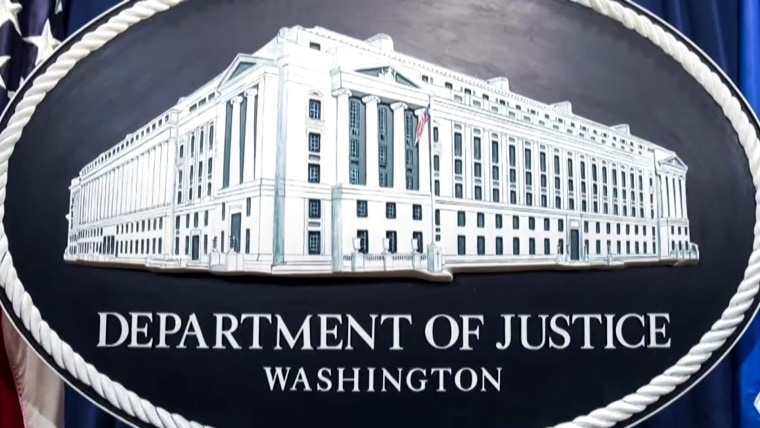
The Trump administration has withdrawn its support for the establishment of a $1.8 billion Justice Department fund. This proposed fund aimed to assist allies of President Donald Trump identified as victims of political persecution, often termed ‘lawfare.’ The decision came after significant opposition from Senate Republicans, who expressed willingness to join Democrats in opposing the fund. Sen. Ted Cruz, R-Texas, reported that nearly half of the Republican senators were prepared to vote with Democrats to limit or abolish the fund.
The Justice Department’s stance followed a temporary ruling by a federal judge blocking the fund. This ruling allows time for the court to evaluate both sides’ arguments. The temporary block resulted from a lawsuit by a former prosecutor involved in the January 6 investigations, who contended the fund’s legality. The Democracy Forward organization, leading this legal challenge, declared their continued commitment to opposing the fund. Skye Perryman, the group’s president, called for full abandonment of the initiative, highlighting ongoing legal actions to ensure clients’ grievances are addressed.
Meanwhile, the administration’s announcement seems to be part of an effort to advance a party-line reconciliation bill. This bill aims to fund Immigration and Customs Enforcement (ICE) and the Border Patrol through the remainder of Trump’s administration. Previously excluded from the Department of Homeland Security’s appropriations, these agencies’ funding was delayed due to the proposed fund.
Democrats have threatened to disrupt any attempt to establish the fund through amendments and standalone legislation. Senate Minority Leader Chuck Schumer criticized the fund as corrupt and declared the Democrats’ intent to pass legislation preventing any president from reintroducing similar measures. He argued that clear legal prohibitions are necessary due to Trump’s lack of reliability.
Senate Majority Leader John Thune acknowledged the controversy, suggesting that the best outcome would be for the administration to independently shut down the fund. However, he expressed uncertainty about the administration’s next steps. During a private meeting on May 21, GOP senators expressed strong opposition, with some ready to join Democrats to eliminate the reconciliation bill if the fund remained included.
The political atmosphere around the fund is charged, with Republicans holding a narrow majority in both Senate and House. Opposition from both sides underscores the contentious nature of the fund, described by some, like Schumer, as potentially benefiting individuals involved in the January 6 events and those closely associated with Trump.
Additional lawsuits have emerged, challenging the fund’s establishment in different states, including two in Washington, D.C., and one in California. Concerns about the fund’s legitimacy grew following a Florida judge’s inquiry into a $10 billion IRS settlement involving Trump, suggesting possible legal improprieties.
The Justice Department had previously planned to appoint commissioners to oversee the fund, who could be dismissed by Trump, yet no official appointments were made. Schumer and other Democrats continue to mount legislative efforts to obstruct the fund’s realization permanently.
 Sen. Cotton Opposes Permanent Daylight Saving Time
  Steve Hilton’s Latino Outreach and Gubernatorial Ambitions
  The Need for Reform in Presidential Nominations
  Controversy Surrounds Performances at Gillette Stadium
  Celebrity Controversies Over Political Activism and Speech
  Trump Pushes for Permanent Daylight Saving Time, Sharing Senator’s Contact Information