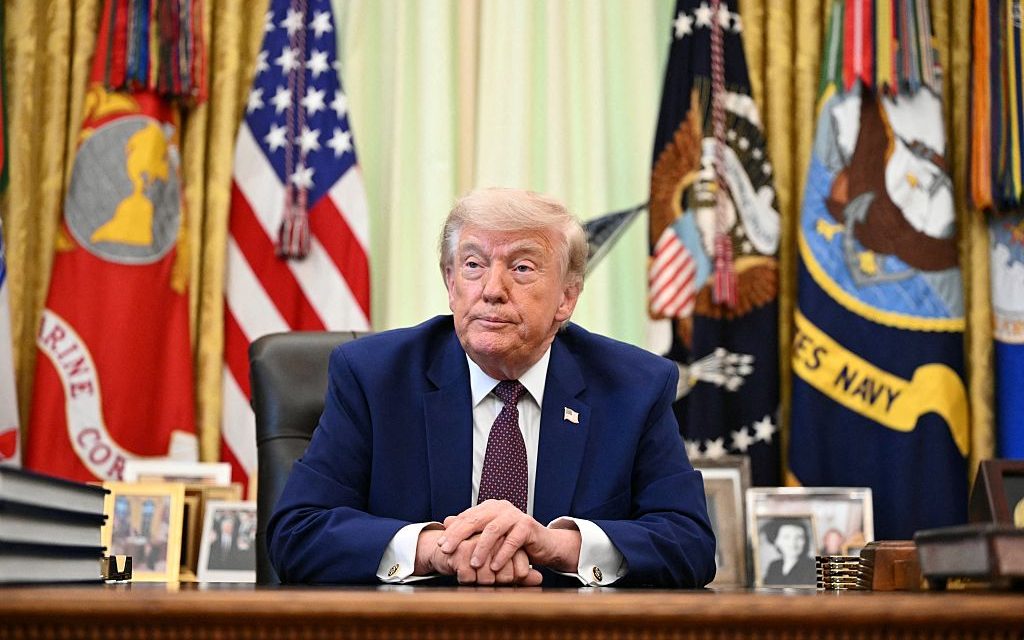
President Donald Trump has enacted an executive order affecting nearly 8,000 federal employees. This order shifts them into a new ‘at-will’ employment classification, removing their civil-service protections. The change significantly expands the administration’s ability to dismiss and replace career officials in policy-influencing positions.
The executive order incorporates elements from Trump’s former Schedule F framework, targeting multiple agencies, including those responsible for cybersecurity, data systems, and emerging technology. Legal challenges and internal conflicts are likely due to this adjustment.
Roles and Impact
The order affects high-level positions such as chief information officers, deputy CIOs, chief information security officers, and senior staff overseeing IT modernization and artificial intelligence. These roles now fall under the Schedule Policy/Career category, a classification established late in Trump’s second term for positions with significant policy influence.
Individuals in this category are no longer entitled to the standard appeals process, making them vulnerable to dismissal without traditional protections. Most impacted roles are at the GS-15 level. They include directors, deputy directors, chiefs of staff, senior advisers, regulatory analysts, and public-affairs leaders. Many of these professionals earn close to $200,000 annually.
White House officials argue that the change ensures career staff can effectively implement administration policies. Critics argue this resembles Schedule F and risks politicizing nonpartisan roles. Scott Kupor, the Office of Personnel Management Director, supports the shift, stating these positions must be filled by individuals who are prepared to carry out administration directives.
Impact on Federal Agencies
Trump’s order impacts agencies unevenly, hitting hardest where senior officials shape national security, regulate scientific processes, or manage technology systems. Affected agencies face risks of operational disruption, turnover, and politicization.
Department of Homeland Security (DHS)
DHS has a vast senior workforce, with many roles in cybersecurity, intelligence, border security, and tech infrastructure. Continuity in these areas is crucial, and political turnover could destabilize national security operations.
Department of Defense (DOD)
The DOD employs numerous senior analysts and policymakers who influence military planning. The department’s large GS-14 and GS-15 population makes it susceptible to the consequences of the ‘at-will’ reclassification.
Department of Health and Human Services (HHS)
HHS has a significant number of GS-13 and GS-14 staff responsible for public-health analytics and policy. Scientific independence in these roles is vital, and rapid changes could undermine operations.
Department of the Treasury
The Treasury’s GS-13 and GS-14 employees manage sanctions, financial oversight, and economic policy. Many of these functions intersect with global markets; political turnover could significantly disrupt these activities.
Department of Justice (DOJ)
The DOJ has over 40,000 GS-12 to GS-14 legal and policy staff. At-will status may influence enforcement priorities and legal judgments, impacting how laws are applied.
Department of Energy (DOE)
The DOE has a substantial concentration of GS-13 to GS-15 employees in cybersecurity, grid security, and nuclear analysis roles. Quick removals could imperil essential infrastructure and national security.
Environmental Protection Agency (EPA)
The EPA’s GS-12 and GS-13 workforce focuses on environmental enforcement and scientific integrity. Politicization here could affect rulemaking and data interpretation.
Office of Management and Budget (OMB)
The OMB has influential regulatory-review and data-policy teams. At-will reclassification could modify the federal rulemaking and agency performance evaluation processes.
General Services Administration (GSA)
GSA’s senior employees are key to technology infrastructure, modernization, and AI governance. At-will status might influence procurement, cybersecurity, and government-wide tech initiatives.
 The Trump Team’s Challenge to the Military Leadership
  Maryland First State to Restrict Electronic Pricing in Grocery Stores
  Activists Push for Nationwide Ban on Child Marriage in the U.S.
  Democratic Hopes and Historical Warnings in 2026 Senate Race
  Republicans Face Challenges Amidst Cost of Living Concerns
  A Different Kind of Fall for Congress This Year