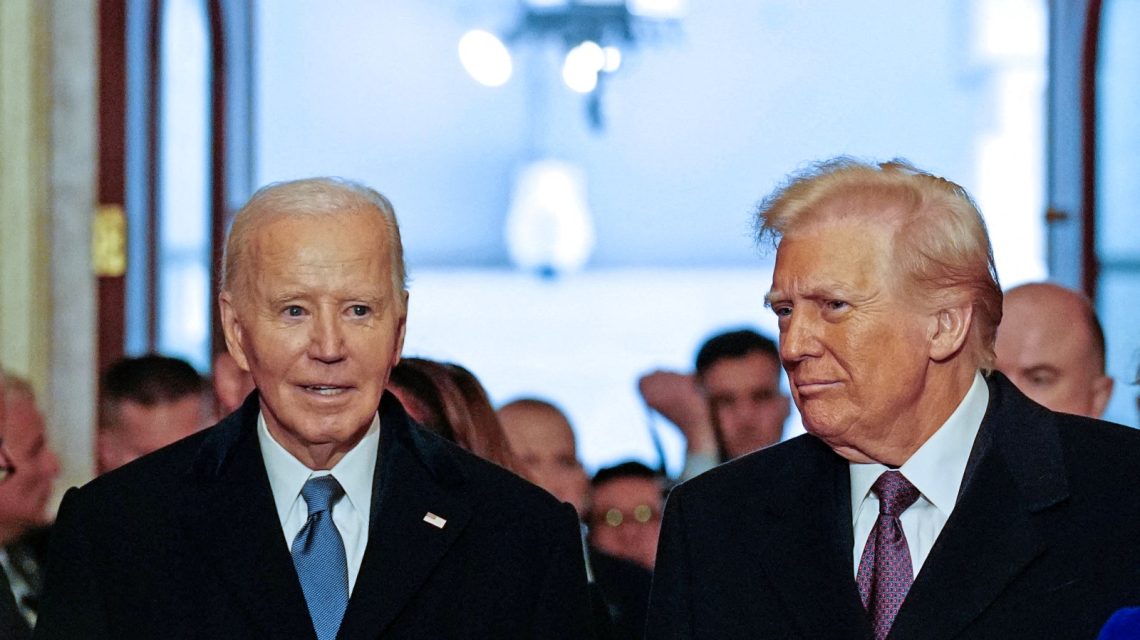
Recently, frequent reports of job layoffs have emerged, some linked to the rise of artificial intelligence. Examining whether President Donald Trump faces significant layoff challenges reveals a situation not unlike that of former President Joe Biden. Despite campaign promises to reduce costs and bolster the economy, Trump faces political pressure from voters frustrated with their financial situations. Inflation has surged, consumer confidence remains low, and economic concerns top polling lists among Americans.
Trump’s approval ratings heading into the midterms are not favorable. The economy ranks as his weakest issue. While layoffs are a key indicator of the labor market, economists note that unemployment data might not fully reflect reality due to discouraged job seekers leaving the workforce. The rate of layoffs remains consistent with previous years, but announcements from major companies about significant staff cuts raise concerns about long-term trends and job security.
Comparing Layoffs: Trump and Biden
Data from the Bureau of Labor Statistics shows average monthly layoffs during Biden’s last 17 months at about 1.66 million. In contrast, Trump’s first 17 months of his second term saw this figure rise to approximately 1.75 million. Layoffs averaged 92,000 more per month under Trump.
Wayne Hochwarter, a business professor at Florida State University, notes that these figures don’t necessarily point to a massive spike in layoffs. However, layoffs gain attention because they often occur in visible sectors such as federal government, technology, media, and companies dealing with AI. Some of Trump’s highest monthly layoff totals have exceeded those from Biden’s tenure. For instance, in October, layoffs reached 1.891 million, surpassing Biden’s highest recorded figure of 1.831 million in November 2024.
Firms continue focusing on efficiency, cost-cutting, and automation. Companies that expanded significantly during the pandemic have trimmed payrolls over the past two years, despite low overall unemployment. Layoffs might rise in a generally healthy labor market due to staffing rebalancing or technological investments.
Job Market Context
Despite layoff figures, they do not indicate widespread economic distress. Job openings remain substantial, and the overall unemployment rate is healthy. However, individuals who lose jobs struggle with job hunts, as economists describe the economy as a “low fire, low hire” environment.
Major Layoffs in 2026
Several notable companies announced significant job cuts in 2026. Cuts span various industries, highlighting the broad restructuring trend. For example, Ideal US Talent Systems Worker OpCo LLC laid off about 10,000 employees, and Corizon Health reduced its workforce by around 7,000, according to WarnTracker.
ESPN conducted layoffs as part of a restructuring tied to Disney and the integration of NFL Network. High-profile departures included NFL analyst Ryan Clark, whose dismissal became a subject of interest after he learned of it during a live NFL Live segment. ESPN also reduced its workforce in 2024 during Biden’s presidency, cutting figures like Robert Griffin III and Sam Ponder.
Centene, a health insurer, offered buyouts to most of its 61,000 employees. The decision followed losses related to Obamacare and Medicaid memberships, among other operational shifts. Past years have seen Centene assess expenses and adjust enrollments in response to changing market conditions.
Amazon continued layoffs to streamline operations after its pandemic surge. With at least 31,000 jobs cut in 2025 and 2026, its restructuring affected divisions such as corporate, devices, and cloud computing. Amazon had previously cut 27,000 jobs during Biden’s presidency.
Verizon executed layoffs amid fierce competition, infrastructure demands, and evolving consumer needs in telecommunication. With over 16,000 job cuts reported in 2025 and 2026, Verizon’s strategies focused on voluntary separation to reduce workforce numbers during Biden’s presidency.
Whether layoffs will become a political issue for Trump may relate more to personal financial sentiments than statistics. Despite job creation and low unemployment, surveys highlight growing worker anxiety about costs, automation, and job transitions. These issues might affect voter perspectives as elections approach.
Current data suggests the U.S. is not experiencing an extensive layoff crisis akin to past recessions. Yet, as major employers pursue efficiency through AI, the visibility of workforce reductions underscores the economic uncertainty some Americans feel. Trump’s challenge lies in convincing voters of the economy’s trajectory, with layoffs remaining a crucial measure of confidence in his economic message.
 Upcoming Congressional Elections: Key Districts to Watch
  President Trump’s Pre-Midterm Interview on Key Issues
  Trump’s 2024 Reelection and Evolving Voter Dynamics
  Defense Secretary Emerges as Key Player in the Trump Administration
  Hegseth’s Vision for the Military: Balancing Tradition and Innovation
  Significant Funding Boosts Ken Paxton’s Texas Senate Campaign Amid Tight Race