
The cyber agencies of the Five Eyes alliance—comprising the U.S., Britain, Canada, Australia, and New Zealand—issued a joint warning this week. They expressed worry about the rapid advancements in artificial intelligence. These advancements are seen in frontier AI models, which are transforming both offensive and defensive cyber capabilities within months.
Recent concerns focus on Anthropic’s Mythos, which in certain contexts penetrated some of the National Security Agency’s secure networks. The U.S. administration halted public access to Mythos 5 and Fable 5 over national security. Worries persist in Washington and the West, but there’s a strategic advantage for the U.S.
The American Advantage
Anne Neuberger, previously a deputy national security adviser for cyber and emerging technology, highlighted that AI is a dual-use technology benefiting both adversaries and allies. She explained that U.S. models provide a substantial advantage, particularly in intelligence collection. The physical infrastructure and skilled workforce in the U.S. support these advancements.
Neuberger pointed out that the U.S. seeing AI advances firsthand reduces chances of strategic surprise from adversaries. Fixing vulnerabilities identified in American AI models strengthens national defenses.
Project Glasswing
Anthropic’s Project Glasswing represents a proactive approach. Mythos is used to detect flaws in critical software, patched to prevent exploitation. Partners like Amazon and Microsoft have gained early access through Claude Mythos Preview. Although security expert Bruce Schneier criticized it as a PR move, the strategy of identifying and fixing vulnerabilities remains sound.
Offensive and Defensive Power
Senator Mark Warner emphasized concerns regarding Mythos, clarified as part of a controlled exercise simulating cyberattacks. Mythos managed to complete network attack simulations, but lacked active defenders, underscoring its potential rather than guaranteed success.
Neuberger suggests models developed domestically can be more secure, reducing risks of back doors during training. They allow for faster leveraging in classified missions and setting global standards on safety.
Global Competition
Neuberger remains cautious about Chinese models, expressing concerns about possible back doors and biases. China’s open-source models could quickly spread, despite being less powerful than U.S. models. Michael Horowitz notes DeepSeek’s models trail the American frontier, but China’s mass deployment poses challenges.
The race involves rapid adoption and, although the U.S. is ahead, the lead requires maintenance. Anthropic accuses DeepSeek of copying through fraudulent accounts, showing the risks in maintaining an edge.
Infrastructure Considerations
Neuberger noted that private companies control critical infrastructure, complicating rapid AI adoption for defense. She described it as the first advanced technology with significant impact on intelligence and warfare crafted in the private sector.
The American innovation ecosystem’s success may face complexities in policy-making, with Neuberger highlighting the importance of deploying American models widely.
An Accelerated Timeline
U.K. AI Security Institute found that OpenAI’s GPT-5.5 matched Mythos in capabilities. Rivals could soon deploy similar models. Some argue this benefits countries like Russia, integrated with criminal proxies and state-linked hackers.
Joseph Hoefer stresses the urgency, suggesting that despite the risk of AI-cyber proliferation, quick action is necessary. A lead, even brief, requires active investment.
Strategic Implications
The Five Eyes emphasized the ticking clock on AI advancements. Adversaries and defenders are urged to adapt quickly, leveraging AI to improve security.
Mythos highlights the opportunity for the U.S. to harden its defenses first. Neuberger compares AI cyber power to submarine warfare—advancements on both sides fuel ongoing strategic development.
Fortunately, America’s proactive approach allows it to identify weaknesses first, providing a strategic edge. To capitalize, the U.S. must balance offense with strong defenses.
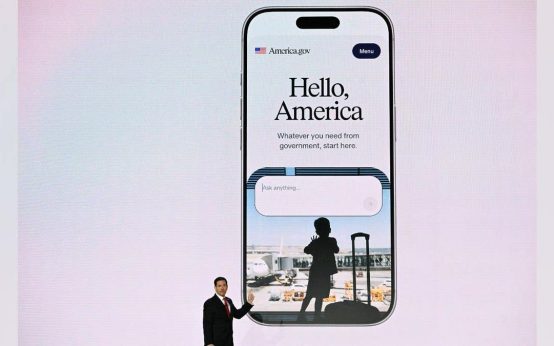 Trump Unveils AI-Powered America.gov Platform
  Trump’s 2024 Campaign Targets Young Men Through Cryptocurrency
  How Modern Windows Improve Home Insulation
  State Department Simplifies Passport Process with Online Applications
  Senate Democrats Block Data Center Bill Over Efficiency Concerns
  Future Cities: Ambitious Projects Aiming for Innovation and Sustainability