Apral Jack’s Grocery Strategies
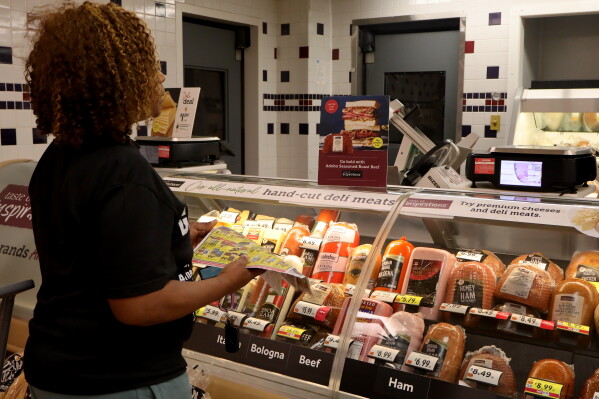
Eating at home is shaped by the pursuit of savings at Apral Jack’s place. She constantly looks for grocery deals through an app and reviews the weekly store circular for missed coupons. If the shelf prices aren’t satisfying, she alters her list or explores alternatives. The apples I prefer are expensive here, so I’ll head to Market Basket for a better price,
she remarked while shopping at a Stop & Shop in Lexington, Massachusetts.
Impacts of Rising Grocery Prices
The approach used by Jack, focusing on discounts and reducing luxury food consumption, is becoming common among many Americans. Since the start of 2019, food prices for home consumption have increased by 33%, marking the biggest rise in half a century. In contrast, the preceding years saw a 6.4% increase. The surge stems from several disruptions including pandemic-related supply chain issues and adverse weather conditions, compounded by tariffs and international conflicts affecting production costs.
Economic Response and Effects
Despite some wage increases, consumers feel the pinch from rising grocery bills and other living expenses, notably housing and utilities, leading to budgetary stress. Jared Bernstein, a policy fellow at the Stanford Institute for Economic Policy, notes the psychological impact of rising costs on everyday budgets, revealing that even marginal wage growth struggles to offset the increased living expenses.
Different Impacts Across Regions
Regions experience varied inflation rates. For instance, food price inflation in St. Louis was recorded at 2% annually as of June, contrasted with 6% in San Francisco, according to the consumer price index. Residents in high inflation areas are resorting to strategies such as buying alternative brands and seeking out discounts to manage costs.
Changes in Meat Consumption in Texas
Ada Torres, living near Houston, Texas, cites costly ground beef as a reason for reducing meat consumption in her household. The price per pound of ground beef reached $6.82 in June. Her strategy involves substituting beef with cheaper proteins like chicken or cold cuts. Her family feels the absence of beef-centered meals like lasagna and fajitas, as they’re now out of reach financially.
Shopping and Meals in the Boston Area
Apral Jack adjusted her weekly shopping plan with apps showcasing special offers, and focuses her budget on sale items like chicken. She has refrained from purchasing costly branded snacks and prioritizes home-cooked meals using discounted products.
San Francisco Family’s Budgeting Strategies
Jack Chang, a San Francisco barber with a family of five, faces rising costs in a hub of food culture. He manages expenses by choosing generic brands and leveraging leftover food from his daughter’s preschool when available. Chang also highlighted using SNAP assistance as a crucial aid, saying, Without that, I don’t know what I would do.
Nevertheless, he faces tight budgets and economic uncertainty. His family and his mother share SNAP benefits and food bank aid to stretch their resources.
High Costs in Hawaii Challenge Eating Locally
In Hawaii, Amanda Tabadero, a pastry chef, finds local produce overly expensive and often opts for imports to manage costs. Shipping expenses drive the prices of local goods high. Her adjustments include shopping at more affordable chains than Hawaiian-owned stores to manage the prices of essentials like milk.
Overall, Americans are modifying their shopping habits, employing creative strategies, and making sacrifices to cope with inflated grocery prices impacting daily living costs.
 Failed Execution in Tennessee Sparks Controversy
  Trump Announces $100 Checks for Seniors to Aid Medicare Part B Premiums
  TSA Discovers Spent Smoke Grenade at Watertown Airport
  Hockey Player’s Family Criticizes ASU’s Response and NHL Player Honors Late Father
  Teen Left in Critical Condition After West Ridge Shooting
  Death of Kenan ‘Ken’ Urker, Partner of Gypsy Rose Blanchard