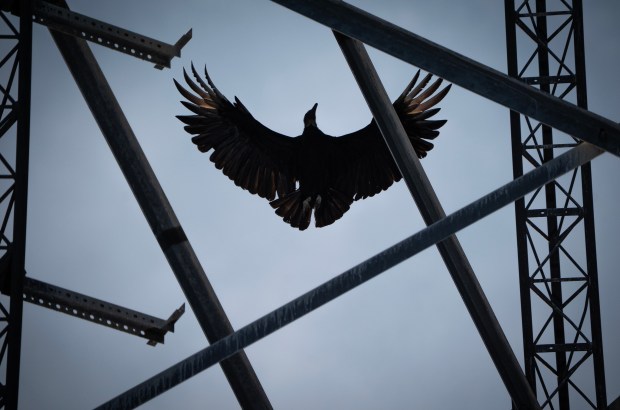
In daylight, they glide slowly above the roads and farmlands of rural southern Illinois. These black vultures, once outsiders, now seek easy meals like roadkill and vulnerable livestock, striking fear into local farmers.
Patty Zettle, a 62-year-old farmer, keeps her Benelli Black Eagle 12-gauge shotgun close. She blames black vultures for the death of one of her calves last year, shortly after her cow Black Ruby gave birth. Zettle found the gruesome scene too late, the calf’s eyes and tongue mutilated, chunks of flesh missing. The loss was both emotional and financial, costing her over $2,000.
“That’s my effigy,”
Zettle said of the vulture replica she crafted from wire and cloth to ward off the birds. She relocated it as she moved her cows, convinced it helped. But she knew the limitations of fake deterrents and wanted real solutions.
Zettle’s farm covers 70 acres in northeastern Williamson County, a region closer to Mississippi than Chicago. Starting with two cows, her passion led her to expand the farm to 19 cows, 14 chickens, 16 goats, a horse named Hero, and a rooster called Cowboy.
Observing the differences between black and native turkey vultures, Zettle often looks skyward. Black vultures, identifiable by their stockier frames and white-tipped wings, are more aggressive. As they are federally protected, Zettle needed special permits from the Illinois Farm Bureau to control their numbers.
For two years, she has filed paperwork to legally kill three vultures annually. The fear of losing another calf is overwhelming, as newborns are critical to her small-scale operation. Selling them in Salem, 65 miles away, is part of her routine.
Zettle runs her farm with her fiancé, Robert Willmore, sharing the labor and concerns about vultures. She describes a recent incident when the vultures circled low over pregnant cows, prompting her to grab her gun. Although her shot missed, she hoped to use a fallen vulture as a more effective deterrent than her effigy.
Eleven miles south of Zettle’s farm, near Crab Orchard, cellphone towers host large gatherings of vultures at dusk. Hundreds roost there, filling the evening air with their grunts. They prefer these towers, returning after a day of scavenging.
Wildlife biologist Michel Kohl from the University of Georgia studies vulture migration. Using GPS data, he’s tracked their northward movement over the last 40 years. Kohl suggests that changes in climate and a stable food supply have lured them north, expanding their range into new areas like Illinois.
Black vultures thrive despite warming temperatures that challenge other species. Kohl notes their critical role in cleaning the environment by consuming carcasses without spreading disease. Yet, conflict with human activities, especially farming, remains an issue.
On an ordinary Thursday, Zettle tends to her farm before her postal route, covering 67 miles. She notices local vultures feeding on roadkill, a common sight in her rural landscape. Chatting with neighbors like retired teacher Pat Henry, they discuss vulture sightings and impacts on their farms.
Zettle attributes these changes to climate effects, observing shifts in local fauna like the appearance of armadillos. Warmer weather seems to welcome these new species to southern Illinois.
On her route, Zettle regularly passes where black vultures gather. Slowly, they become a part of the landscape, with local curiosity growing. Over lunch, Zettle discusses her observations with affected residents, pondering broader environmental changes.
One morning, she encounters a dead black vulture on her route, likely struck while scavenging. She calls Willmore to collect the bird, a potential new deterrent. Together, they decide on a suitable spot to hang the vulture, selecting a mulberry tree in a visible area.
After trimming branches, they carefully position the vulture as a stark warning to others overhead. With hopes of deterring future visits, Zettle relies on both traditional and creative approaches to protect her livestock.
 Cargo Plane Crash at Miami International Airport
  Marine Veteran Suing Oregon School District Over Curriculum Reimbursement
  Tennessee Execution Halted as Issues Persist with Lethal Injection Protocol
  Atlantic Ends September Without a Hurricane for First Time Since 1994
  Bobcat Sightings and Conservation Efforts in Illinois
  2026 El Niño: A Historical Comparison and Future Projections