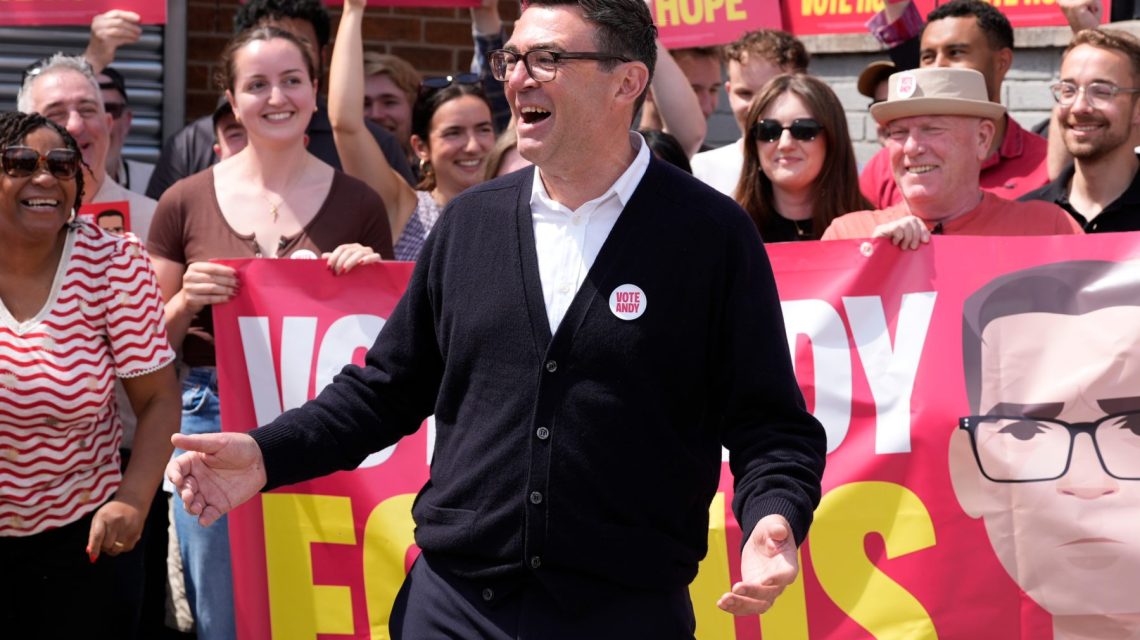
British Prime Minister Keir Starmer announced on Monday his intention to resign after being forced out by his own party. This move comes two years after his landslide election victory, which was won with promises of steady leadership and economic development. Starmer will act as caretaker prime minister until the Labour Party selects a new leader. Former Greater Manchester Mayor Andy Burnham is considered a strong candidate for the role. Burnham confirmed on social media his intent to participate in the leadership contest.
Wes Streeting, a former Health Secretary previously regarded as Burnham’s main competitor, has chosen to endorse Burnham. This support was sparked by Burnham’s victory in a special parliamentary election, prompting Labour lawmakers to rally behind the charismatic ex-mayor, hoping he can revitalize the party.
Following his return to Parliament after nearly ten years as mayor, Burnham took the oath of office in the House of Commons. Labour’s leadership requires membership in Parliament, and Streeting’s backing makes Burnham’s unchallenged selection more likely.
Starmer is the sixth prime minister in a decade to announce an early departure from office from the steps of No. 10 Downing St. His resignation precedes the 10th anniversary of the Brexit vote, which continues to affect the UK economically and politically. After initially resisting demands to step down, Starmer acknowledged the growing demand for new leadership to rejuvenate the government.
His resignation comes two years after leading Labour to an overwhelming election victory in July 2024, with popularity declining since. Starmer conveyed his decision during a speech at his official residence, surrounded by staff, ministers, and journalists. With emotion, he accepted his party’s decision, having informed King Charles III of his resignation.
Starmer mentioned that nominations for a leadership contest will begin on July 9, with plans to have a new leader by Parliament’s return on September 1. If Burnham runs unopposed, this change could occur by mid-July.
Starmer’s leadership faced challenges, including unmet economic growth promises, the appointment of Peter Mandelson as ambassador, and loss of liberal support to the Green Party. Opposition from Reform UK, led by Nigel Farage, also intensified.
Former U.S. President Donald Trump commented on social media, linking immigration and energy issues as factors in Starmer’s exit. A once warm rapport with Trump deteriorated due to disagreements, notably regarding the Iran war.
Despite domestic struggles, Starmer earned praise internationally, particularly for rallying support for Ukraine against Russia and addressing the Iran conflict’s fallout. His actions have been lauded by Ukrainian President Volodymyr Zelenskyy and European Commission President Ursula von der Leyen.
While Labour stands behind Burnham, some lawmakers, like Neil Coyle, expressed that Starmer was unfairly treated. Many see Burnham as the person who can defeat the Reform Party and encourage fresh engagement with voters.
Analyst Olivia O’Sullivan from Chatham House suggests Burnham’s appeal to party members dissatisfied with Starmer’s governance. However, she warns this doesn’t necessarily indicate a significant policy shift.
 USCIS Raises Immigration Fees
  The Surveillance Threat to U.S. Federal Agents
  Trump Administration Distributes ACA Refund Checks
  Trump Administration’s Approach to Illegal Alien Deportations
  New Jersey Voter Fraud Prompts Renewed Push for SAVE Act
  Concerns Over Changes to Voter-Registration Form for Americans Abroad