
Advocates for racial reparations have celebrated a recent legislative win in California, where Governor Gavin Newsom signed Assembly Bill 2599, known as the Truth in Disclosure Act, into law. However, leaders involved in this movement emphasize that corporate transparency is only an initial step, advocating for direct cash compensation as a crucial element.
Kristin Nimmers, the policy and campaign manager for the California Black Power Network (CBPN) and the Alliance for Reparations, Reconciliation, and Truth, shared her views with Fox News Digital. According to her, financial reparations must extend beyond the idea of a single payment. Nimmers stated, “We focus on a harm-based approach, ensuring that those harmed receive appropriate repair.” She pointed out that compensation needs to address slavery, unpaid labor, and the unfulfilled promise of “40 acres and a mule,” specifically for those with ancestral ties to people who were enslaved.
Nimmers stresses that racial inequities extended well beyond the era of chattel slavery. “Black Americans faced denied wages, property access, capital, and equal education over centuries,” she explained, arguing that a single payment would not fully repair the community.
Assembly Bill 2599 mandates that corporations operating in California with over $100 million in revenue examine historical records and publicly disclose any ties to chattel slavery. Lawmakers and advocacy groups aim to use this legislative success to push for the broader recommendations from the California Reparations Task Force to become law.
The California Task Force to Study and Develop Reparation Proposals for African Americans, established under Assembly Bill 3121, completed its efforts with a comprehensive 1,100-page final report in 2023. During its existence, CBPN played a critical role by promoting civic engagement and hosting sessions to gather public input, directly influencing the task force’s findings.
At the same time, efforts for direct cash payouts face challenges. Although Newsom signed AB 2599, he has consistently adopted a cautious approach towards direct financial restitution, showing reluctance towards costly payout proposals.
There are also ideological differences within reparations advocacy groups. The U.S. Freedmen Project, representing “Foundational Black Americans,” opposes broader eligibility based on harm, arguing that reparations should be specific to those descending from enslaved people in the U.S. They contend that recent immigrants and Black individuals without this ancestry should not be included.
Nimmers rejects the idea of lineage-only requirements, stating that systemic discrimination in the 20th century affected a broader group of Black residents. She argues that those harmed by segregated schools, redlining, and similar injustices should be included in reparative efforts.
While state-level cash proposals struggle, local initiatives have made progress. In Evanston, Illinois, this year, a Reparations Committee approved $25,000 housing grants to 44 Black residents, citing historical redlining and discriminatory zoning as substantial reasons for reparations.
For California advocates, the ultimate aim extends beyond cash compensation, targeting systemic policy reforms. Nimmers emphasized, “Reparations is not a handout. It acknowledges, addresses, and repairs harm. It’s necessary compensation for unpaid labor and historical harms.”
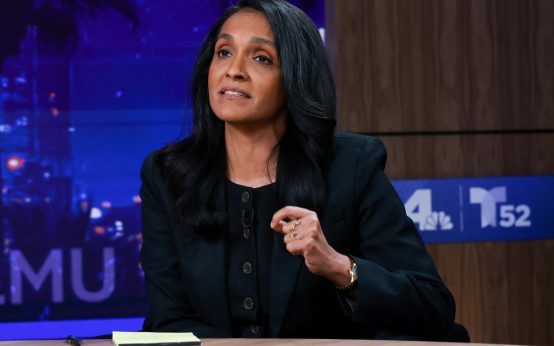 Raman Challenges Bass’ Inside Safe Initiative
  Georgia Senate Race: Ossoff vs. Collins in Heated Debate
  French AI Founder Warns Against Voting for Democrats
  L.A. Mayoral Candidates Bass and Raman Face Crucial Debate
  High-Stakes Mayoral Debate in Los Angeles
  Mayoral Candidates Bass and Raman Face Crucial Debate Before Election Day