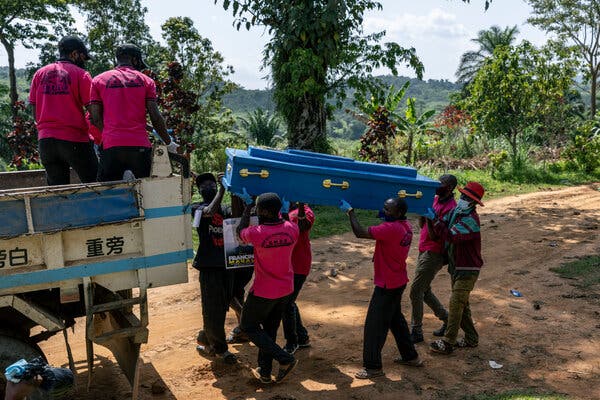
China is strategically positioned to potentially halt the spread of a deadly virus, offering solutions where the U.S. involvement has decreased significantly. As Ebola continues to spread in East Africa, China’s capabilities as an economic and biotech leader become crucial.
In Mongbwalu, a town in the Democratic Republic of Congo, where the outbreak is concentrated, there is a severe shortage of necessary equipment, medicine, and basic supplies. The Bundibugyo virus is responsible for this outbreak, yet no approved vaccine or treatment exists, complicating testing efforts essential for controlling the spread.
Despite China’s substantial investments in the region, the extent of their involvement to curb the potentially deadliest Ebola outbreak remains uncertain. With reduced U.S. intervention, a notable shift compared to prior epidemic responses, China experiences less competitive pressure to intervene swiftly. Beijing shows caution in rapidly addressing this outbreak located in a remote, conflict-ridden area.
“Now we are in this moment of truth,”
Bradley Parks, executive director of AidData at William & Mary, expresses that China must decide whether to fill the leadership void or allow the situation to worsen. There is uncertainty whether China is prepared to assume a leadership role amidst this crisis.
Recently, China took preliminary action, deploying a team of five medical experts to Kinshasa, Congo’s capital, which is more than 1,000 miles away from the outbreak’s center.
 Tropical Storm Lala Threatens Hawaii with Hurricane Potential
  Taliban Leaders Mark Five Years in Power Amid Human Rights Crisis
  Cuba Facing Economic Siege Amid U.S. Sanctions
  France’s Constitutional Council Rejects Social Media Ban for Children Under 15
  Public Health Challenges with Proposed Vaccination Order
  Tensions and Resilience: Christians in Israel’s Complex Landscape