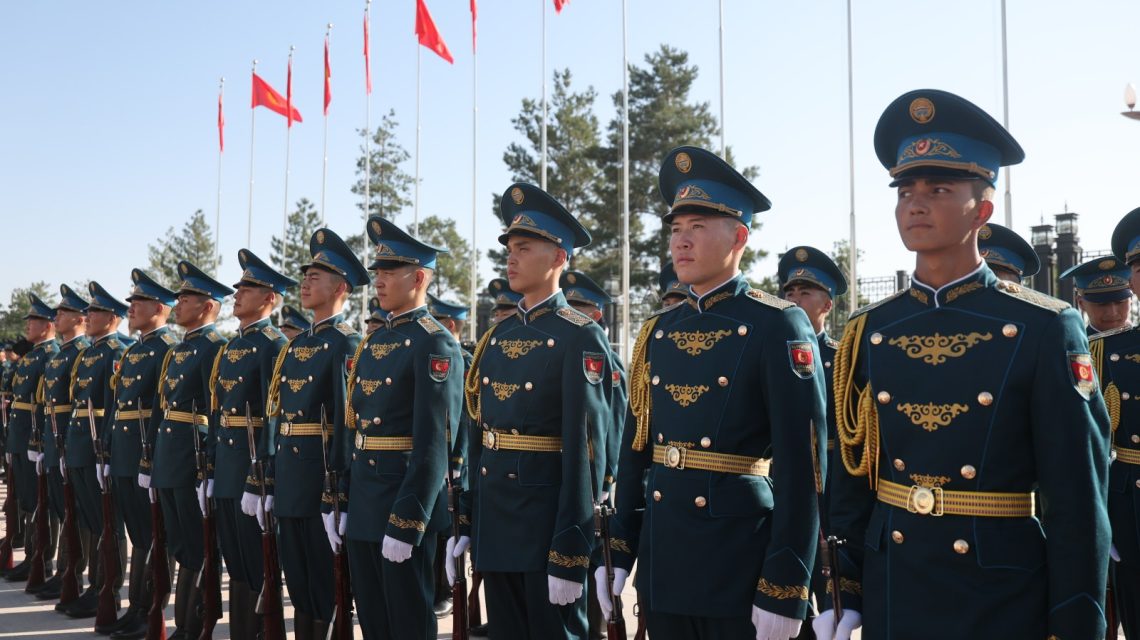
The humanitarian crisis at the Nepal-Tibet border could dominate the agenda in many countries. However, China prioritizes differently. Xi Jinping has chosen to travel to Kyrgyzstan, where he is asserting authority at the Shanghai Cooperation Organization (SCO) summit.
Key Players Gather at the SCO Summit
The SCO marks its 25th anniversary with a summit in Bishkek, Kyrgyzstan. Attendees include leaders Vladimir Putin of Russia, Narendra Modi of India, and Iran’s President Masoud Pezeshkian. Xi plans to engage with them all. However, his presence is not merely symbolic.
After welcoming various international leaders over the past year, Xi prepares for a significant visit to the United States in late September. The SCO summit and an upcoming BRICS meeting will help Xi assert China’s position as a global leader.
The Evolution of the SCO
Originally known as the “Shanghai Five,” the SCO was formed to manage post-Cold War border tensions. China’s Eurasian periphery includes a substantial border with Russia, resolved in principle in 2008.
Since 2001, the SCO has provided a platform for strategic discussions, especially for its America-skeptic members. For Xi, it is a venue for promoting initiatives and increasing the Chinese yuan’s influence globally.
Countries like Kyrgyzstan, this year’s host, leverage the SCO to balance Moscow’s influence with Chinese interests. This dynamic concerns Putin, but he remains focused on other issues.
India in the Mix
India represents a major uncertainty in global politics. Coveted by both Eastern and Western powers, India faces challenges in maintaining its strategic autonomy.
Recent talks between India and China aimed to ease their Himalayan border dispute. Led by India’s national security adviser Ajit Doval and China’s Foreign Minister Wang Yi, these discussions indicate a priority for resolution over distraction.
The SCO’s Influence
With 10 members, the SCO covers over 40% of the world’s population and a quarter of the global GDP. It seeks to provide an organized alternative to Western alliances, despite diverse political systems among members.
China’s leaders do not aspire to join the West but seek recognition as equals. They advocate for a multipolar world where China’s governance model is accepted globally. This requires gaining legitimacy, especially within the United Nations.
Challenges and Strategies
Some doubt the SCO’s capacity to counter the “collective West.” Current conflicts among members include Russia and Iran’s wars, the prior conflict between India and Pakistan, and Pakistan’s tensions with observer state Afghanistan.
Yet, adversaries of the U.S. are organizing economically, establishing trade routes around the Caspian Sea to avoid U.S. naval power. China holds substantial economic influence, serving as the main trade partner for eight SCO countries last year.
The 2023 SCO summit focuses on alternative narratives and support for Iran. Xi bears the responsibility of leading the anti-Western bloc as he visits the U.S. shortly after.
He aims to demonstrate control, aligning with statements from Finnish President Alexander Stubb. In an interview, Stubb conveyed Chinese Foreign Minister Wang’s assurance that China would prevent any nuclear escalation by Russia.
European leaders might be concerned about China’s apparent tolerance of Russia’s actions short of its red line. The dynamics between Trump and Xi may lead to China’s involvement in resolving U.S. conflicts, such as with Iran.
Xi’s recent actions show a focus on asserting internal control, signaling confidence to Trump. His message appears to be: “My house is in order. Is yours?”
 Sen. Cotton Opposes Permanent Daylight Saving Time
  Steve Hilton’s Latino Outreach and Gubernatorial Ambitions
  The Need for Reform in Presidential Nominations
  Controversy Surrounds Performances at Gillette Stadium
  Celebrity Controversies Over Political Activism and Speech
  The Threat of Melting Glaciers: A Call to Action