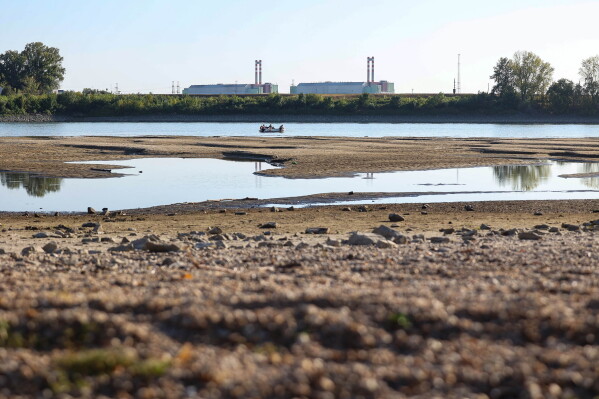
Recent findings indicate climate change’s significant impact on the worsening fire conditions that triggered devastating wildfires in Spain and France. Two new studies highlight this trend. Human-induced climate change has made Spain’s record-breaking wildfire 20 times more likely, while doubling France’s extreme fire conditions likelihood. Scientists at World Weather Attribution conducted rapid analyses during ongoing fires, illustrating climate change’s role. Over the past 26 years, warming has tripled Spain’s severe fire risk odds and increased France’s by 40%.
On Thursday, researchers released another study, written before the fires began, showing that Southern Europe’s extreme fire-prone weather days have doubled compared to previous decades. The studies examined factors like air temperature, drought, humidity, and wind influencing fire-prone conditions.
The change in these fire weather conditions in Spain is really extremely strong,said Friederike Otto, an Imperial College London climate scientist coordinating World Weather Attribution. Otto noted Spain’s hottest summer follows a wet January that increased plant growth, setting the stage for the current wildfire situation.
Spain also faces land abandonment issues, leaving dry plants and trees unmanaged. In France, regions like Bordeaux have thick pine groves that easily ignite. The study by World Weather Attribution, despite its rapid execution and lack of peer review, used scientifically accepted techniques. Otto’s team compared current fire weather severity with past data and projected scenarios if global temperatures were 2.5 degrees Fahrenheit cooler since pre-industrial times.
Jacob Bendix, a Syracuse University fire scientist not involved in the research, validated the study’s logic, emphasizing known correlations between extreme heat, drought, and increased fire intensity. Scientific Reports published another study showing Southern Europe’s extreme fire-weather days increasing from around 10 annually in earlier decades to approximately 25 now. These days have intensified by about 50% since 1981-2010.
Raúl Cordero of the University of Groningen explained that improved fire suppression and management reduced Southern European fires from the 1980s to 2018. However, climate change reversed these gains rapidly.
It doesn’t matter how many resources or how much money you have, you just cannot stop the propagation of a fire when the weather is so extreme,Cordero stated.
John Abatzaglou, a fire scientist at UC Merced, not involved in the studies, emphasized that climate change is an immediate concern, not a distant threat. Otto reiterated the need to halt fossil fuel use to prevent worsening fire conditions.
The Associated Press independently provides climate and environmental coverage with financial support from private foundations. Their content remains unbiased under their established standards.
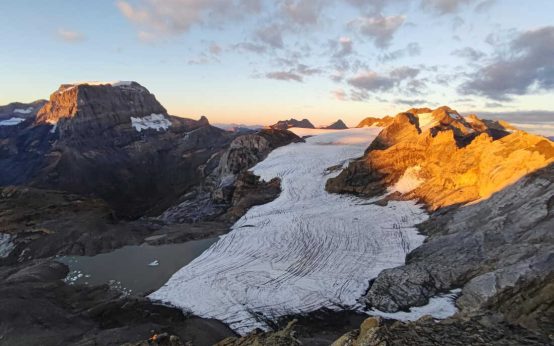 Swiss Glaciers Show Effects of Ice Loss Amid Global Warming
  Climate-Resistant Rock Glaciers: Hidden Water Resources
  Senators Reach Bipartisan Agreement on Permitting Reform
  Experts Warn of Critical Period for the Colorado River
  Future Cities: Ambitious Projects Aiming for Innovation and Sustainability
  Supreme Court Case Suncor vs. Boulder: Implications for Accountability in Climate Change