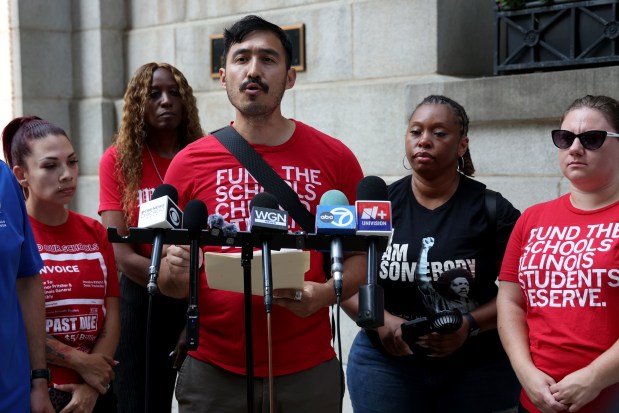
Cook County Board President Toni Preckwinkle awarded stopgap loans totaling $191 million to 32 suburban villages, library, and school districts. This initiative seeks to mitigate the impact of delayed property tax revenues. Despite the aid, many suburban agencies received less funding than requested, leaving them in challenging financial positions. As a result, $109 million remains in the loan pool, according to data obtained by the Tribune.
The program initially excluded Chicago Public Schools (CPS) from loans but considered helping them if funds were available after assisting suburban applicants. CPS will not receive any of the remaining funds as they did not apply. A CPS spokesperson mentioned the leftover amount was insufficient to address their financial shortfall effectively.
The property tax bridge loan program, announced earlier in the summer, aimed to offer enough funds to cover two months of expected property tax revenues for eligible suburban entities. This occurred in conjunction with the announcement of another property tax bill delay, a recurring issue affecting taxing bodies reliant on this income.
A ‘needed lifeline’
Some applicants submitted requests that surpassed their actual funding needs, reflecting their concerns over cash flow disruptions. For example, School District 57 in Mount Prospect requested $20 million but received just under $6 million. Skokie/Evanston School District 65 sought $68.3 million and got nearly $23 million. The city of Berwyn asked for $13.5 million, receiving $5.6 million instead.
Particularly affected were south suburban local governments already grappling with difficult budgets and some of the lowest property tax collection rates in the county. These financial pressures complicate matters for compliant property owners. For instance, the city of Harvey requested $24 million but received $1.7 million. Their previous $164 million debt, tied to previous administration mismanagement and low tax collections, remains an outstanding issue.
Other areas like Robbins and Dolton experienced similar disparities between their applications and received funds. Robbins applied for $350,000, receiving $150,000. Dolton requested $9.5 million and got $1.85 million amid ongoing financial turmoil and legal disputes.
The delay in property tax bill releases contrasts with assumptions from local governments, leading to inflated requests based on worst-case scenarios. Some areas recall previous delays that left their financial planning in disarray, as the distribution portal faced technical setbacks causing underpayments and overpayments.
Hopeful for timely resolution
With recent tax bills distributed on September 1, entities remain hopeful the wait won’t parallel that of the previous year. Several organizations made applications touting their vital role in ensuring operational continuity. For example, New Trier Township High School District 203, heavily reliant on local property taxes, received a $22 million loan after requesting $40 million in anticipation of liquidity needs should tax distributions face delays again.
The Cook County Treasurer’s office is tasked with facilitating these distributions, which, compounded by last year’s contract management issues with Tyler Technologies, left various organizations in precarious positions. Assistance this year has been more streamlined, with efforts focusing on improving the property’s tax collection systems.
Despite other districts successfully securing sufficient amounts to cover immediate financial gaps, CPS remains critically underserved by county assistance. Initial considerations for CPS participation in the loan pool have subsided due to their extensive operational needs versus the shrinking loan reserve.
Challenges ahead for CPS
CPS continues to experience severe financial strain. Interest costs from previous borrowings to bridge property tax delays indicate further budgetary stress, which affects timely payments to vital areas, including pension funds. The Illinois Federation of Teachers highlights the ongoing district challenges, including forced borrowing and unpredictable delays affecting financial planning. The prevailing uncertainties also influence third-party perceptions, potentially hindering future credit ratings and financial predictability.
The state of CPS funding draws scrutiny from various corners, including union representatives and ratings agencies, criticizing the lack of structural budgetary management and reliance on unconfirmed state funding.
 The Trump Team’s Challenge to the Military Leadership
  Maryland First State to Restrict Electronic Pricing in Grocery Stores
  Activists Push for Nationwide Ban on Child Marriage in the U.S.
  Democratic Hopes and Historical Warnings in 2026 Senate Race
  Republicans Face Challenges Amidst Cost of Living Concerns
  A Different Kind of Fall for Congress This Year