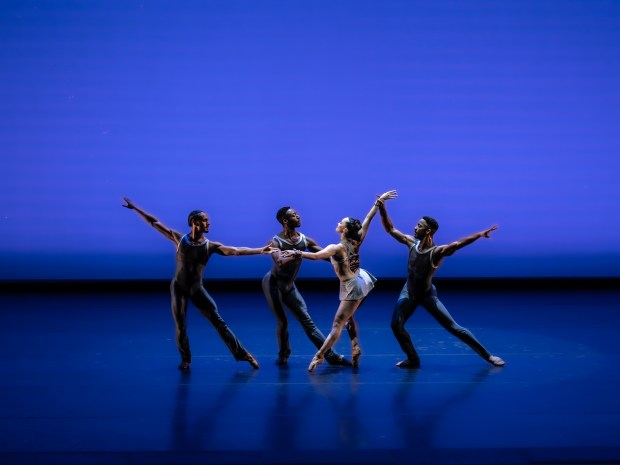
Robert Garland’s “Return” opened the performance of Dance Theatre of Harlem in Chicago, marking the company’s return after a ten-year absence. This neoclassical funk ballet, crafted in 1999 to the music of legends like James Brown and Aretha Franklin, symbolizes a full-circle reflection of artistic director Garland’s endeavors. He referred to the performance as embodying ‘all of himself in one place,’ a fitting representation of the company’s essence.
The company was formed by Arthur Mitchell in 1969 during the civil rights era. At that time, Mitchell taught ballet in a Harlem garage, blending Black culture with ballet, a rarely seen combination. Though some advancements have been made, ballet’s evolution to an entirely inclusive art form continues to be sluggish. For instance, only a small fraction of the New York City Ballet includes Black dancers. Nevertheless, Mitchell persisted, turning ballet into an art form for all.
Dance Theatre of Harlem faced financial challenges, leading to a year-long hiatus that stretched into eight years. They returned to Chicago in 2014, reintroducing Garland’s “Return” and other archival works. In 2016, the company made a bold return, resonating with current social and political climates. Chicagoans filled the Auditorium Theatre, drawn not only by the company’s legacy but also by Garland’s unique fusion of classical and funk-soul elements.
An example of this blend is seen in soloists Carly Greene and Micah Bullard. Their maneuvers range from hip-hop influences to smooth pirouettes, showcasing the versatility and technical prowess of the dancers. Roma Flowers’ lighting enhances this performance, providing varied visual aesthetics.
The evening’s repertoire included “Donizetti Variations,” Balanchine’s work from 1960. While Dance Theatre of Harlem excels in presenting traditional European ballet styles, this specific piece felt outdated. Its presentation, however, was well-executed, featuring intricate dance numbers by Kamala Saara and Kouadio Davis.
The performance also included “Firebird,” originally choreographed by Michel Fokine in 1910 for Serge Diaghilev’s Ballets Russes, with Taras adapting it in 1982. Transposing the setting to a Caribbean forest, this adaptation involves beautiful scenic elements reflective of tropical flora and fauna.
In “Firebird,” Derek Brockington plays a man aided by a mystical bird, portrayed by Alexandra Hutchinson, against the menacing Prince of Evil, played by Jhaelin McQuay. Brockington’s use of a feather to summon the Firebird highlights the story’s fantastical elements, underscoring the ballet’s enduring appeal.
The Dance Theatre of Harlem’s interpretation adds contemporary flair while paying homage to its vintage roots. This touch recaptures the ballet’s timeless nature, rendering the performance captivating. The dancers’ precision enhanced by Hutchinson’s perfect embodiment of the Firebird enrich the production’s impact.
 Rosalía: A Musical Journey Beyond Boundaries
 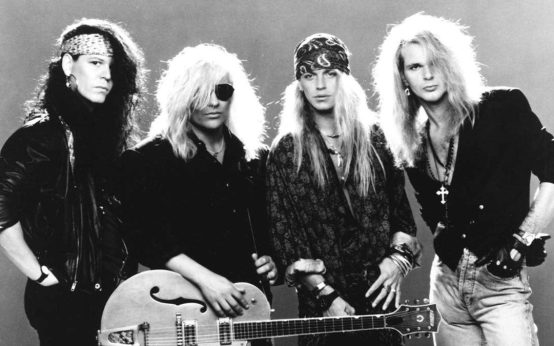 Rikki Rockett’s Fight Against Cancer and Path to Recovery
  Character Actor John Turturro: A Career of Memorable Performances
 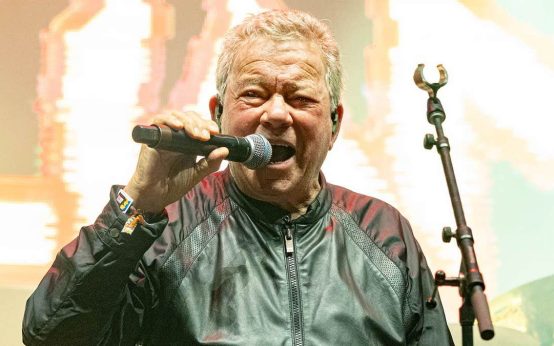 William Shatner Takes on Heavy Metal at 95
 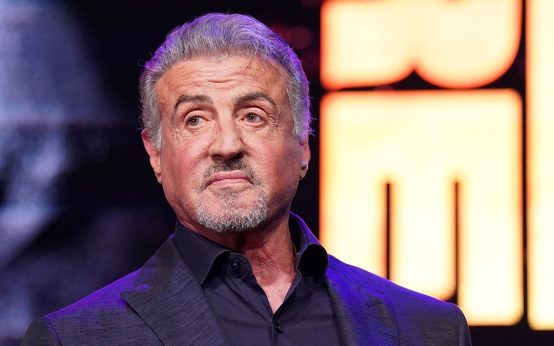 Sylvester Stallone Defends Casting Daughter in ‘Tulsa King’
  Kevin Pollak Reveals Rip Torn’s Eccentric On-Set Behavior