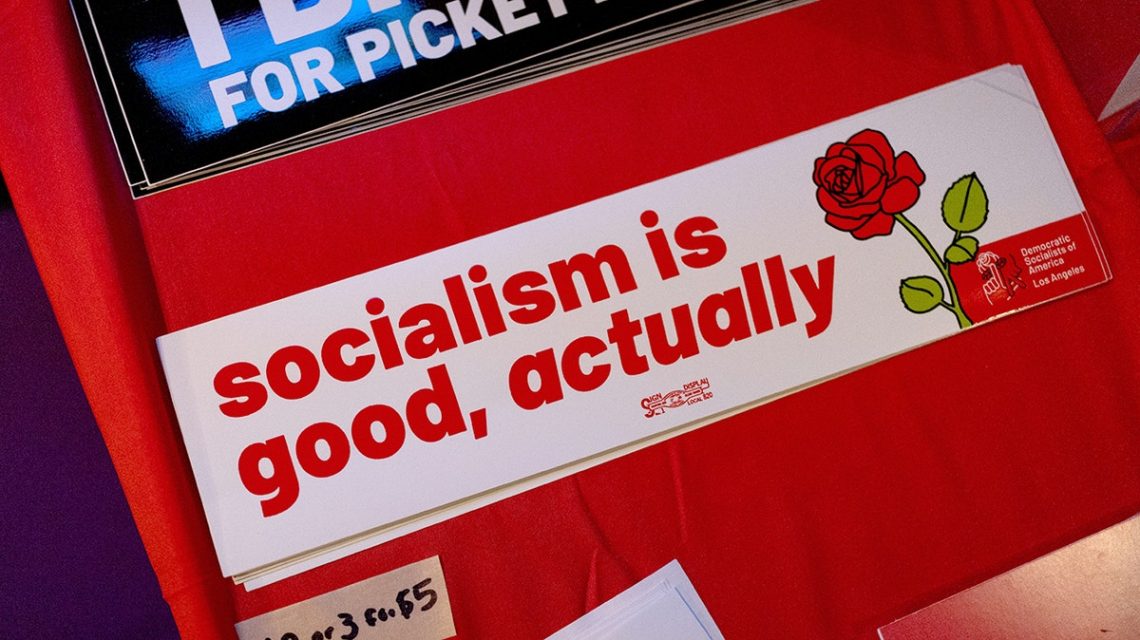
Dozens of candidates backed by the Democratic Socialists of America (DSA) are making their presence known on ballots for state legislature seats during the upcoming Election Day. This shift has caught the attention of Republicans, who believe it could lead to significant changes within the Democratic Party.
The Republican State Leadership Committee (RSLC) reports that 65 DSA-aligned candidates are competing for state legislative seats in the November general election. According to a memo from Fox News Digital, these races could play a crucial role in shaping the Democratic Party’s future.
The memo highlights a trend wherein prominent DSA-aligned Congressional candidates in 2026 have roots in state and local political organizing. These victories suggest that movement organizations may foster candidates at local and state levels, offering political experience and supporting their bids for Congress.
DSS-backed candidates celebrated a strong primary night, advancing across various regions.
DSA’s influence extends beyond policy discussions. If elected, their candidates may significantly impact state legislatures by providing a platform and experience for aspiring politicians looking to campaign for higher office.
The RSLC identifies DSA candidates through their membership, endorsements, or self-identification within the organization. These candidates often take stances on controversial issues, such as defunding police departments and advocating for race-based reparations.
Opposition to traditional policing is a recurring theme among DSA-aligned candidates identified by Republicans. New York State Senator Jabari Brisport is committed to ending policing and incarceration in the state. He supports decriminalizing prostitution while ensuring protections against trafficking, believing it will enhance community safety.
In Wisconsin, Democratic State Representative Ryan Clancy firmly asserts that police work lacks dignity or value, arguing historical roots stem from slave patrols, creating an inherently racist institution.
Reflecting on contentious remarks, Clancy noted his comments addressed abuses by officers towards sex workers, although they broadly criticized policing as irreformable.
New Mexico State Representative Eleanor Chávez, backed by DSA, labels immigration enforcement as ‘fascist’ and likens agents to the KKK, drawing criticism from Republicans concerned about potential violence against law enforcement.
The DSA identifies primarily as an economically motivated organization, despite its focus on social issues.
New York Democratic Assemblywoman Sarahana Shrestha champions legislation allowing government acquisition of the Central Hudson Gas & Electric Corp., potentially through eminent domain. Michigan’s Dylan Wegela similarly advocates for state acquisitions of utility companies.
Shrestha concurs with RSLC’s assertion that DSA-aligned lawmakers could drive Democratic Party evolution. She emphasizes that their policy goals, including healthcare reform and energy sector reformation, resonate with constituents.
Challenging Democratic policy priorities, DSA-backed lawmakers like Maryland’s Gabriel Acevero have opposed marijuana legalization measures viewed as insufficiently progressive.
Several DSA-affiliated candidates in New York, Minnesota, and Massachusetts support reparations for racial minorities.
Republicans target the DSA’s mainstreaming within the Democratic Party to sway voter sentiment. A Fox News poll from September indicated 55% of registered voters harbor unfavorable views of the DSA.
Despite Republican claims, Democratic leadership has made concessions to their left-wing members, with Senate Minority Leader Chuck Schumer’s super PAC funneling funds to progressive candidates despite differences.
The disorganized nature of DSA complicates estimates regarding the number of socialist candidates running for state legislature across sources. The Brookings Institution found 76 candidates advancing, while RSLC identified 65 candidates in 24 states.
While the DSA garners attention, Brookings analysis suggests its candidates represent only a small fraction of state legislative seats, raising questions about the extent of their political influence.
RSLC insists socialism poses risks at state levels, necessitating intervention to curb its state-level propagation and political power-building.
 Tensions Rise in Michigan Senate Race
  Democrats Eye Congressional Control Amid Impeachment Debate
  Senator John Fetterman’s Complex Political Position
  Controversy Over Livestreaming Execution of Nidal Malik Hasan
  Ohio’s 2026 Midterm Elections: Key Battleground Races
  Ohio Dog Park Shooting Sparks Legal Debate