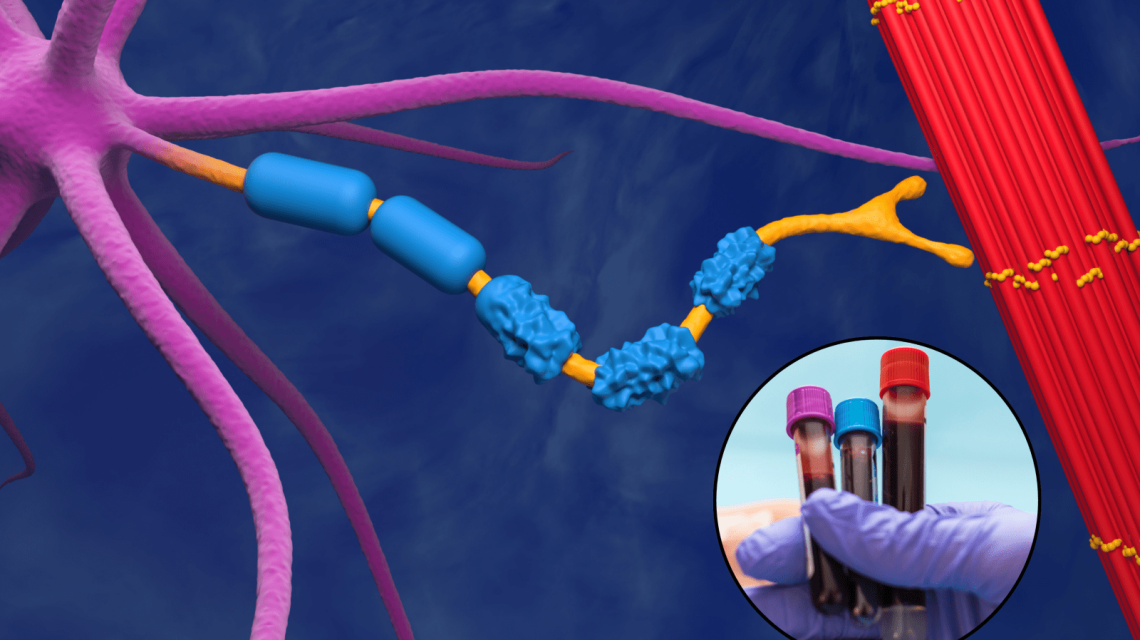
A breakthrough in blood research might advance efforts to combat amyotrophic lateral sclerosis (ALS). Scientists have found proteins that alter months or even years before symptoms of this neurodegenerative disease appear. This raises the hope of preemptive treatment before irreversible nerve damage occurs.
ALS, known as Lou Gehrig’s disease, progressively harms motor neurons that control movement. The Centers for Disease Control and Prevention (CDC) note that approximately 5,000 people in the U.S. are diagnosed with ALS yearly. Symptoms begin with painless muscle weakness, twitching, and slurred speech, worsening over time to impact movement, swallowing, and breathing.
Blood Proteins Changed Before Symptoms Emerged
These findings stem from the Pre-symptomatic Familial ALS (Pre-fALS) study, funded by the National Institutes of Health, which observes individuals with high ALS genetic risk. Researchers examined plasma samples from 137 Pre-fALS participants, including 33 who later developed ALS or frontotemporal dementia.
Using proteomics, a technique called Olink, they measured over 5,000 blood proteins, identifying 92 proteins that altered before symptoms appeared. Through machine-learning models, researchers singled out 19 proteins, including neurofilament light chain (NfL), known to increase prior to ALS symptoms.
With these 19 proteins, researchers estimated symptom onset with an average error of 18 months. The models successfully predicted symptoms from six months to five years prior.
A Potential Window for Early Treatment
Dr. Michael Benatar, a neurology and public health professor at the University of Miami, stated the findings offer crucial insights for individuals with ALS-related genetic variants. He mentioned that in the past, predicting symptom onset was challenging, but the biomarkers now allow estimation with an average error of 18 months.
This prediction capability holds value as therapies are tested to delay or stop the disease before clinical manifestations. The study also replicated results using UK Biobank data, indicating potential applicability beyond inherited ALS.
Why the Findings Matter
Amy Bany Adams, acting director of the NIH’s National Institute of Neurological Disorders and Stroke, emphasized the importance of these results as preventative gene-targeting treatments become available. Identifying reliable biomarkers is crucial for imminent onset prediction in those carrying ALS risk genes.
Tofersen, a drug approved for symptomatic ALS, is undergoing the ATLAS clinical trial to assess if early administration can delay or prevent ALS onset.
Benatar acknowledged the contribution of research volunteers, noting their support has driven efforts towards preventing ALS. He expressed gratitude for their participation, considering it a privilege to contribute back to the community.
Reference: Ran, X., Wuu, J., Qin, Z.S. et al. Longitudinal plasma proteomics predict phenoconversion to clinically manifest ALS. Nat Med (2026). doi.org/10.1038/s41591-026-04528-x
 Increased Funding Needed for Psychiatric Hospitals
  Trump Administration Distributes ACA Refund Checks
  Higher Consumption of Ultra-Processed Foods Linked to Increased Health Risks
  Understanding Inflammation: Myths and Facts
  Calm Parenting: Strategies to Manage Stress
  Trump’s Executive Order to Combat Mosquitoes and Ticks in D.C.