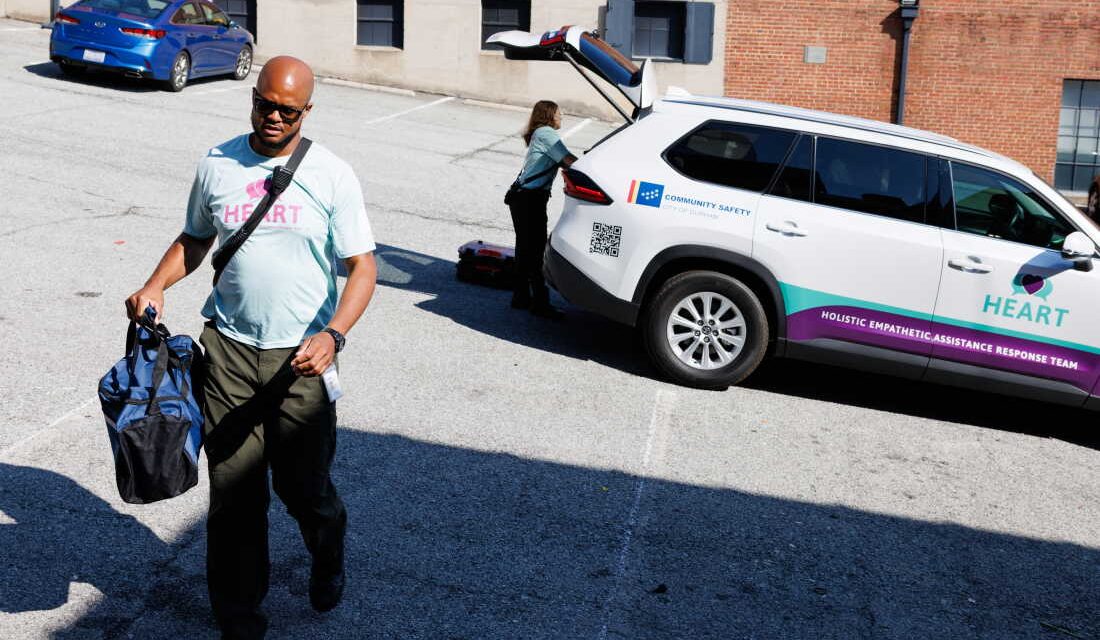
Rob Crisp, part of the Holistic Empathetic Assistance Response Team (HEART), responded to a wellness check in Durham, N.C. Equipped with supplies, he and Allie Craft, a mental health clinician, sought out a man reported for trespassing in a parking lot. The man, dressed in a McDonald’s T-shirt and backward baseball cap, appeared tense and defensive over his belongings. Crisp, who has a history of drug addiction, approached him with empathy, calming him and offering essentials like water and socks.
This response is part of a broader initiative tracing back to the 2020 police killing of George Floyd. Many U.S. cities adopted alternative response programs, like Durham’s HEART, to handle certain 911 calls without armed officers. The program has fielded over 25,000 calls since its 2022 launch, dealing with issues such as trespassing and welfare checks.
In Durham, a study by Duke University suggests increased trust in 911 services, with fewer arrests and reduced police backup needs. While similar programs have yielded positive results, they face scrutiny and challenges. In particular, the program copes with limited funding and scope, handling only clear mental health crises.
Durham’s HEART was designed after analyzing years of 911 data to focus on calls least likely to escalate violently. The program operates citywide, integrating with police and emergency services yet standing apart in its approach.
Leadership, like Ryan Smith from Durham Community Safety, emphasizes that sending social workers instead of officers in applicable situations marks success. In addressing skepticism, former police chief Patrice Andrews noted that HEART operates alongside traditional emergency services, promoting its role as part of the public safety net.
Other cities’ experiences illustrate the challenges of alternative responses. New York and Baltimore highlight funding difficulties and logistical issues, prompting some to look to Durham as a model.
Beyond immediate crisis handling, Durham pursues longer-term outcomes through initiatives like Stabilization Services, aiming to connect individuals with resources. Anise Vance, spearheading this approach, believes in addressing basic needs, including housing and medical care, as key to reducing the necessity for emergency interventions.
As these programs evolve, their success remains under evaluation. With goals of addressing the deeper issues behind 911 calls, the future may see fewer immediate crises requiring interventions like HEART.
 FBI Director Kash Patel Announces Engagement to Country Singer Alexis Wilkins
  Sen. Thom Tillis Criticizes Trump’s Administration in New Book
  Metrolink Fare Hike Causes Discontent Among Commuters
  Tragic Shooting at Georgia Homecoming Block Party
  Laura Ingraham Criticizes Democratic Policies on ICE and Immigration
  Moose Street Brawl in Colorado Caught on Video