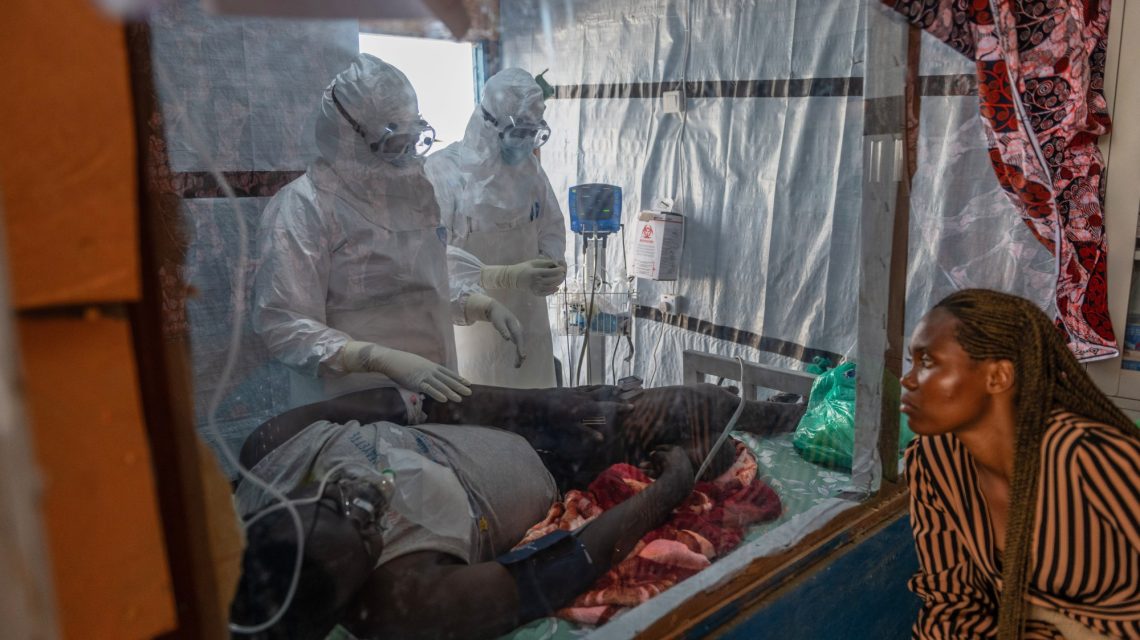
Health workers are on the frontlines battling an Ebola outbreak at the Rwampara Treatment Center in Ituri, Congo, as of June 18, 2026. The Democratic Republic of Congo and Uganda face a crisis with over 1,561 confirmed cases. The outbreak’s worsening situation, with over 500 deaths, highlights the urgent need for effective action.
President Trump may be in the spotlight for a Nobel Peace Prize, driven by efforts to contain the outbreak. Local hospitals and clinics are struggling, overwhelmed by inadequate supplies and lack of compensation for frontline workers. A strike threat looms as 17 health workers have died out of 75 infected.
Nurse Moise Bulabantu voices concerns over insufficient protective gear. Health workers are grappling with fear amid the Bundibugyo ebolavirus crisis, lacking effective treatments or vaccines. It requires decisive leadership to significantly alter the outbreak’s trajectory.
President Trump’s previous initiatives like Operation Warp Speed demonstrate how prompt action can lead to substantial achievements. With the current Ebola threat, the U.S. has responded under his leadership, including an experimental treatment facilitated by the World Health Organization.
To combat the outbreak, modern healthcare facilities are essential. Each Ebola Treatment Unit, crucial in past outbreaks, can handle 100 patients. A U.S. military operation could quickly deploy mobile units, ensuring protection for healthcare workers and patient isolation.
Logistical operations such as military airlifts can safely establish field hospitals away from infected areas, minimizing risk. A tangible measure of success would be a decrease in case numbers, potentially gaining notice from the Nobel Committee.
President Trump’s claims of deserving recognition for global peace efforts underline the stakes. Halting Ebola at its source exemplifies humanitarian leadership and aligns with public health priorities. It safeguards Americans while demonstrating swift U.S. response capabilities.
Author Benjamin L. Sievers, an Oxford-Cambridge NIH scholar, emphasizes the importance of addressing infectious diseases and immunology.
 Increased Funding Needed for Psychiatric Hospitals
  Trump Administration Distributes ACA Refund Checks
  Higher Consumption of Ultra-Processed Foods Linked to Increased Health Risks
  Understanding Inflammation: Myths and Facts
  Calm Parenting: Strategies to Manage Stress
  Trump’s Executive Order to Combat Mosquitoes and Ticks in D.C.