For the past decade, American citizens have witnessed recurring government shutdowns in Washington. These shutdowns threaten the economy, compromise security, and disadvantage families across the country. Each time, the American public finds themselves caught in the middle of this turbulent scene.
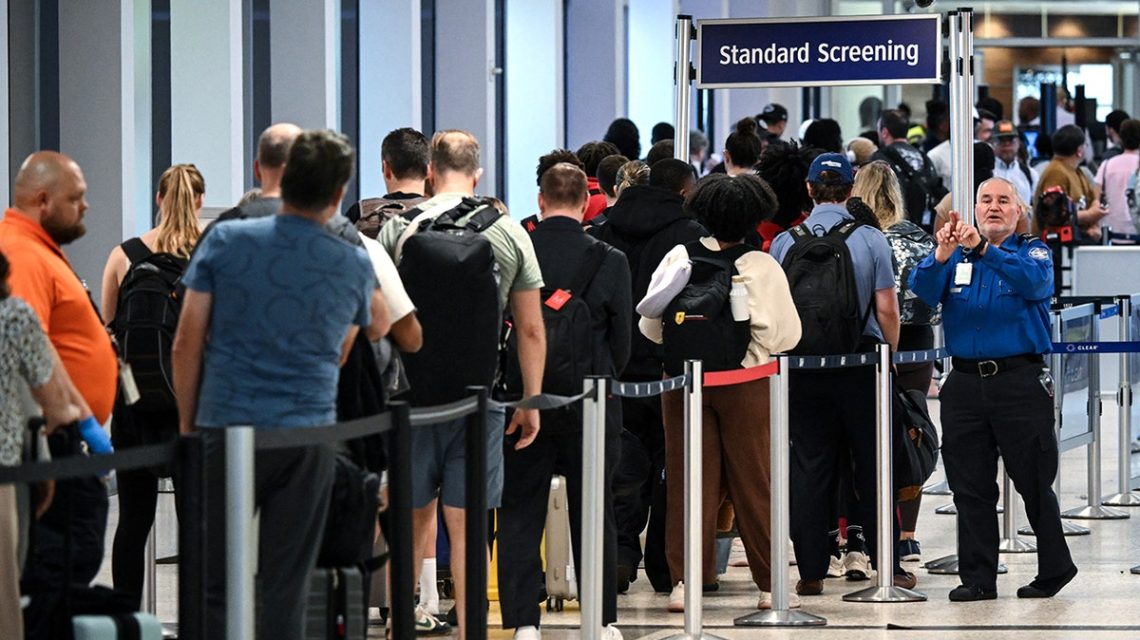
Government shutdowns are not merely procedural exercises; they have tangible consequences nationwide. The previous shutdown cost the nation over $11 billion. During these times, TSA went unfunded, resulting in lines up to six hours long at airports. Air traffic controllers, responsible for ensuring flight safety, worked without pay. Veterans and seniors found it difficult to access the benefits they had earned, with services grinding to a halt. Additionally, the Small Business Administration struggled to support entrepreneurs trying to sustain their businesses.
Families faced the threat of losing their SNAP benefits as they attempted to provide for their children. Shutdowns put at risk the ability to pay service members who defend our country’s freedom. These events show the world, including allies and opponents, that America’s leading democracy and largest economy can be hampered by political strife.
Some prominent figures in politics may view shutdowns as opportunistic moments to later gain political advantages, but the reality is that the American people always bear the brunt. This chaotic form of politics has worn out its welcome.
Both political parties have played roles in past shutdowns. Hence, there is a strong need for collaboration between the parties to prevent them from happening. A Republican and a Democrat in the Senate have collaborated to propose the “Prevent Government Shutdowns Act of 2026.” This act aims to remove shutdowns from consideration by urging Congress to negotiate and pass full-year funding bills timely.
“No matter how much we argue about our national budget, the American people shouldn’t pay the price for Congress failing to do its job on time.”
The mechanism is straightforward: if Congress fails to pass any of the 12 appropriation bills on time, an automatic Continuing Resolution (CR) activates. This ensures that federal workers and programs continue to operate at the current year’s spending level. However, Congress members, along with their staff, would be required to stay in Washington, D.C., voting every day until the budget deadlock is resolved. Both the House and Senate would be restricted to discussing appropriation bills solely.
During a shutdown, the pressure and inconvenience would shift from federal workers and families to Congress itself. Essential workers, including air traffic controllers, service members, federal law enforcement, healthcare professionals, and others, would keep serving the public without being ensnared in political disputes.
The legislation secured substantial bipartisan support last session but fell short by three votes from achieving its goal of eliminating shutdowns permanently. Since then, the nation has experienced its longest shutdown, prompting increasing calls in the Senate and House for change. The bill also garners backing from various partisan and nonpartisan groups, as well as the American Federation of Government Employees.
Altering the current system in Washington is always challenging, particularly when the status quo fails. Despite disagreements on several issues, both Senators agree it is time to permanently eliminate the option of shutdowns.
Maggie Hassan, a Democrat, represents New Hampshire in the United States Senate. She served as governor of New Hampshire from 2013 to 2017.
James Lankford, a Republican, represents Oklahoma in the United States Senate.
 Maryland First State to Restrict Electronic Pricing in Grocery Stores
  Activists Push for Nationwide Ban on Child Marriage in the U.S.
  Democratic Hopes and Historical Warnings in 2026 Senate Race
  Republicans Face Challenges Amidst Cost of Living Concerns
  A Different Kind of Fall for Congress This Year
  Cornel West and Sean Hannity Discuss Differences on Podcast