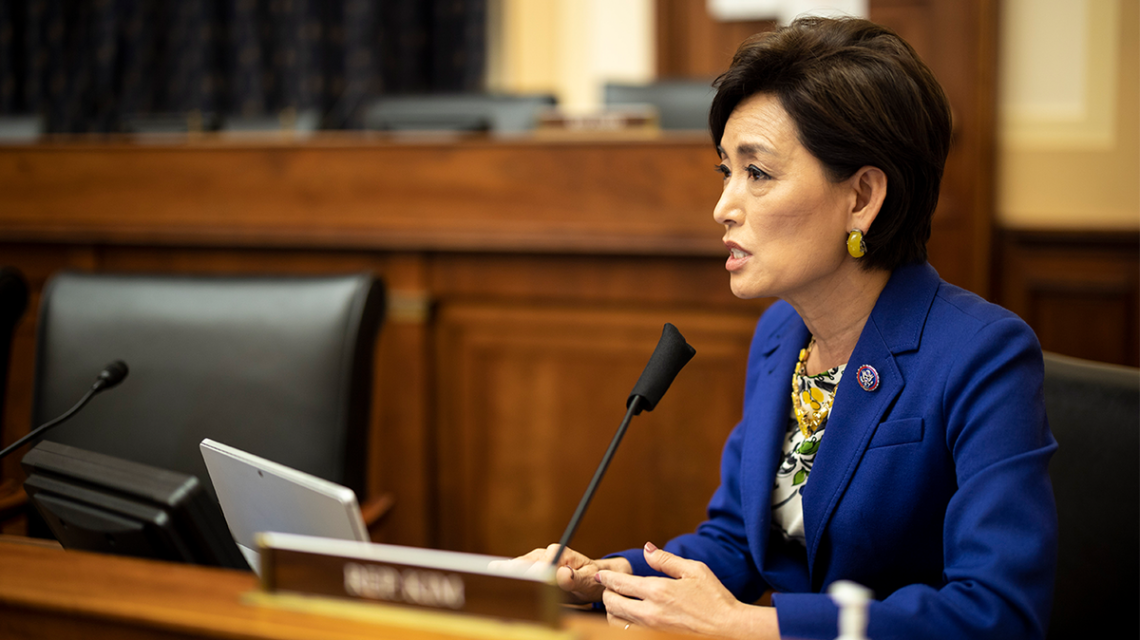
Recent actions by the House to restrict lawmakers’ stock trading are being expanded by further legislative efforts targeting additional methods of self-enrichment by members of Congress. This includes initiatives by a California Republican representative, Young Kim, introducing the Stop Congressional Self-Enrichment Resolution.
In July, the GOP led an initiative to restrict stock trading by lawmakers, imposing requirements for notice before stock sales. A prevalent concern among Americans is the apparent growth in wealth of politicians while serving in public office.
Kim highlighted issues like the earmarking of funds to nonprofits connected to lawmakers’ families or indirectly benefiting properties owned by family members, through projects funded by federal assistance such as roads or parks.
This resolution aims to cover both direct and indirect financial interests benefitting individuals beyond the lawmakers themselves.
The current House rules require lawmakers to certify no financial interest in earmarks. Kim’s resolution extends this to immediate family members and indirect financial interests.
Kim emphasized, “The days of lawmakers using community project funding or earmarks to enrich themselves are ending.”
“This is a significant moment, as Americans are fed up with politicians getting wealthy while they struggle financially,” Kim noted.
The “Bridge to Nowhere” project in Alaska is cited as an abuse example, leading to earmark moratoriums that reduced misuse but did not eliminate indirect gains.
The resolution does not target individual lawmakers, despite the existence of tools like “Pelosi Stock Tracker” to monitor stock transactions of various members.
Kim clarified, “It’s not about discouraging effort for district welfare but ensuring no enrichment occurs at constituents’ expense.”
She highlighted legislative efforts for Orange County to prevent wildfires, emphasizing responsible governance and constituency-focus.
Several legislators have faced criticism for earmarks benefiting personal interests. Notably, Dennis Hastert faced scrutiny for a parkway near properties he owned.
In Massachusetts, Rep. Stephen Lynch directed earmarks to a health center where his wife worked. Similarly, Sen. Tim Kaine earmarked funds for George Mason University with connections to his spouse.
The breadth of bipartisan support shows the urgency to address this form of enrichment, positioning Kim’s bill as a vital measure towards equity in congressional financial practices.
 Trump Administration Distributes ACA Refund Checks
  Trump Administration’s Approach to Illegal Alien Deportations
  New Jersey Voter Fraud Prompts Renewed Push for SAVE Act
  Concerns Over Changes to Voter-Registration Form for Americans Abroad
  Trump’s 2024 Campaign Targets Young Men Through Cryptocurrency
  Trump’s White House Visitor Center Proposal Gains Bipartisan Support