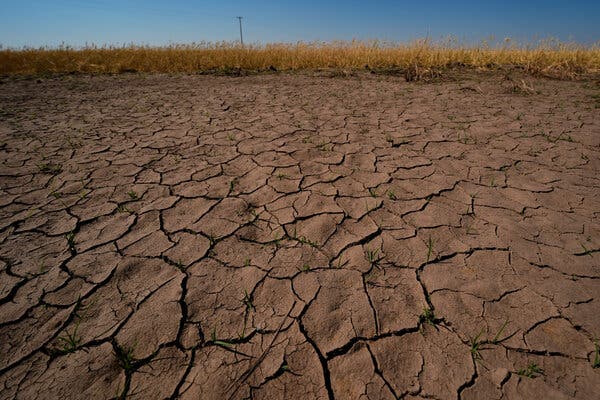
The National Oceanic and Atmospheric Administration (NOAA) has announced the arrival of an El Niño in the tropical Pacific. This phenomenon is expected to intensify, leading to extreme weather events and rising global temperatures.
El Niño occurs when Pacific trade winds shift, causing ocean temperatures to increase. It influences global weather patterns, potentially exacerbating floods and droughts already heightened by climate change.
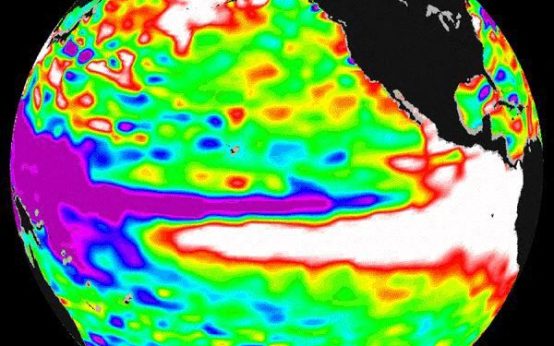
NOAA’s declaration indicates that equatorial Pacific temperatures have remained 0.5 degrees Celsius above the long-term average for a significant period. There is a 63 percent likelihood that sea-surface temperatures could rise 2 degrees Celsius higher than usual, suggesting a “very strong” event.
Predictions hint that this year’s El Niño might go beyond 3 degrees Celsius, marking an unprecedented intensity. Malte Stuecker, of the International Pacific Research Center and the University of Hawaii at Manoa, noted that such an event in a warming world could have severe consequences.
El Niño generally peaks during the northern hemisphere’s winter, affecting global temperatures into the subsequent year. The last El Niño in 2023 and 2024 coincided with record-high global temperatures.
Historical El Niños have imposed significant economic impacts worldwide. They often result in wet conditions in parts of the Americas and dryness in South and Southeast Asia, Australia, and southern Africa.
In the U.S., El Niño can decrease hurricane activity in the Atlantic. Colorado State University has revised its earlier Atlantic hurricane forecasts, predicting the lowest activity levels since 2015.
Yet, El Niño can increase risks of high tide flooding and algae blooms along the U.S. West Coast. Globally, vulnerable countries may face food shortages and droughts, worsened by existing challenges like reduced humanitarian aid and fertilizer shortages due to geopolitical tensions.
Mohamed Adow, director of the climate and energy think tank Power Shift in Nairobi, highlighted the specific threats to East Africa, where communities are already struggling with previous droughts and floods, leading to failed rains, damaged crops, and increased food prices.
 Atlantic Ends September Without a Hurricane for First Time Since 1994
  Bobcat Sightings and Conservation Efforts in Illinois
  2026 El Niño: A Historical Comparison and Future Projections
  U.S. Records Warmest September in History
  Swiss Glaciers Show Effects of Ice Loss Amid Global Warming
  Climate-Resistant Rock Glaciers: Hidden Water Resources