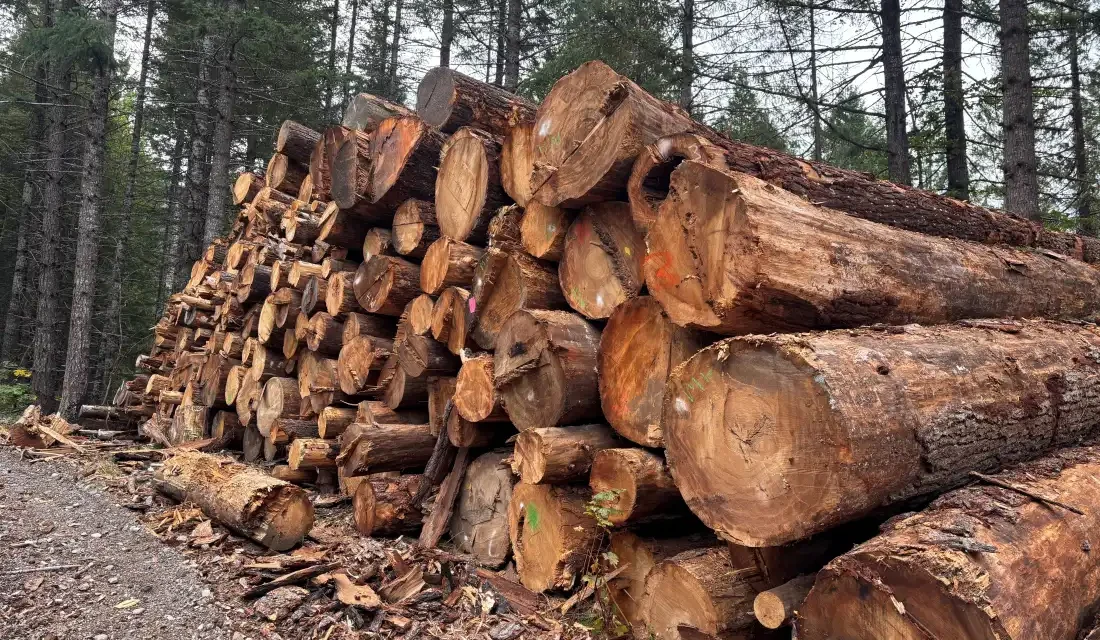
EUGENE, Ore. – President Trump plans to open access to 44 million acres of national forests, aiming to create timber jobs and reduce wildfire risks. This move involves reversing the 25-year-old Roadless Rule, which restricted logging in untouched forest areas.
Sean Smith, CEO of Starfire Lumber in Cottage Grove, Ore., acknowledges the significance of these executive actions but sees more immediate challenges for the industry. Rising diesel prices and inflation make operations costly. Smith mentions the high expenses for necessary supplies like sawblades and ball bearings.
The Roadless Rule, blocking new road building and logging projects on pristine acres since 2001, remains a lower priority for the industry. Smith supports the rule’s reversal, anticipating a stable local timber supply and addressing overgrown forests prone to fires. He’s concerned about the beauty and safety of these lands.
The administration and some local officials argue that repealing the Roadless Rule offers more flexibility for wildfire prevention. However, projects on accessible forests already face legal and bureaucratic hurdles.
Jeff Brink, a second-generation logger, highlights labor shortages and high diesel costs as potential industry obstacles. Brink notes the drastic reduction in timber sales on federal land since the 1990s and the closure of mills due to market shifts and cheaper imports.
While overturning the Roadless Rule might increase timber sales marginally, the industry’s decline presents challenges. Environmental groups intend to sue against the rule’s repeal. Concerns arise that new road building could escalate human-caused wildfires.
Timothy Ingalsbee, a retired Forest Service firefighter, criticizes the focus on potential profits rather than genuine economic development. He believes the administration’s approach prioritizes ideology over practical industry needs.
Federal forest policies often fluctuate with presidential changes, leaving the industry in uncertainty. Sean Smith expresses frustration with this instability, stressing the necessity for consistent and reliable policy to support long-term business operations.
 Record Low Hydropower Output in the Southwest
 Data Centers Face Challenges in Vernon, Los Angeles
 Rams Captured Relaxing in Residential Area
 Global Climate Finance and the Developing World: A Turning Point
 Hidden Plastics in Everyday Items
 The Final Journey of the SS United States