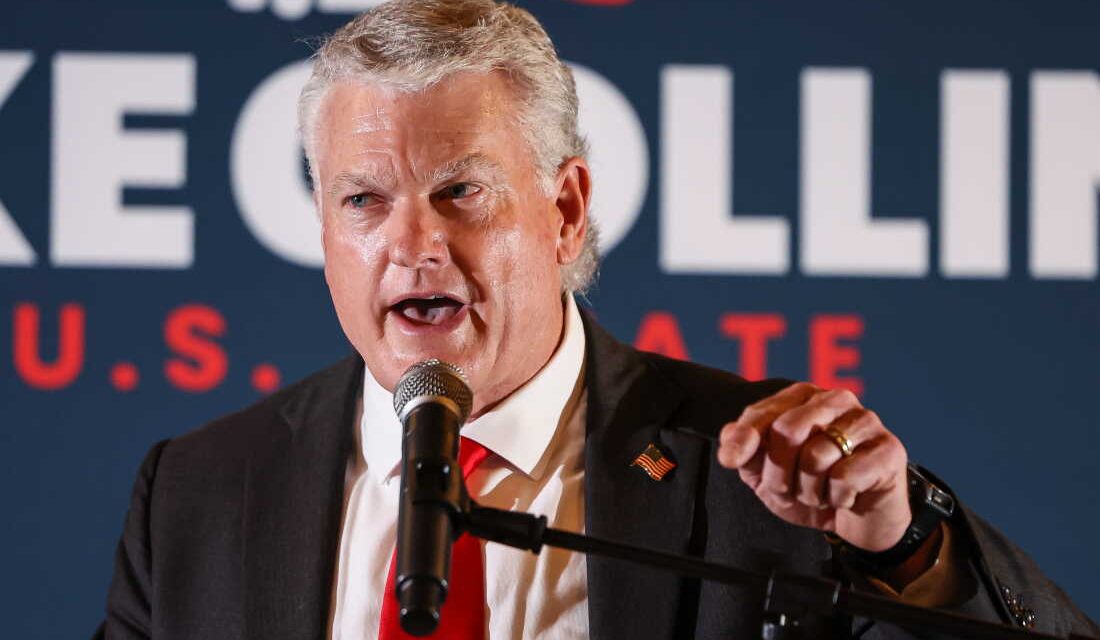
President Trump continues to discuss the 2020 election, despite the ongoing early voting in the midterms and the potential risk to Republican majorities in Congress. Some Republican candidates, particularly in crucial races, still support Trump’s unproven claims about election fraud, though some GOP voters express a desire to move forward.
In Georgia, Mike Collins, the Republican nominee for Senate, launched his political campaign shortly after Trump urged Georgia’s secretary of state to overturn the 2020 election results. In an ad, Collins made false claims about Trump winning Georgia, declaring, “Georgians are tired of weak-kneed, spineless politicians who won’t fight for Trump, get to the bottom of 2020 and fix our elections.” The commercial concluded with Collins firing a gun at a labeled “voting machine” bin. Collins remains steadfast in his belief the 2020 election was stolen from Trump. He also advocates for compensating individuals prosecuted for the Capitol riot on January 6.
Lynn, a lifelong Republican voter from Georgia who spoke at a farmers market in Alpharetta, voiced her concerns about Collins’ position and considered voting for Democratic Sen. Jon Ossoff due to Collins’ focus on 2020 election issues. Meanwhile, Austin Sapp, another Republican voter, believes in the possibility of election fraud but wishes Trump would focus on future policies instead.
“It’s really big with the media and the far edges of both parties,” Gabe Sterling, a veteran official with Georgia’s secretary of state’s office, said. “Regular humans have given this up a long time ago.”
Post-2020, Sterling frequently disputed Trump’s false claims and foresaw the violence on January 6. Although resuscitating fraud claims can raise funds, Sterling notes that obsession with 2020 persists mostly among dedicated activists. Some hold influential election board roles and consistently vote in Republican primaries. Sterling, who ran for secretary of state, remained firm in defending Georgia’s election integrity but drew some negative reactions from GOP voters.
Elsewhere, some former Trump critics, like Michigan GOP Senate nominee Mike Rogers, have embraced Trump’s claims. Once a critic, Rogers later refused to confirm who won in 2020 and suggested election issues at a local Republican meeting. His campaign did not respond to comment requests.
Michigan Republican strategist Jason Roe explained that candidates may echo Trump’s claims for his support, suggesting, “Frankly, I think most of the elected officials that still talk about it, it’s not necessarily a sincerely held belief.” Roe argued that discussing election integrity likely won’t win in tossup states.
The continued fixation on 2020 by Trump could impact midterms, as seen in his lack of endorsement for a GOP alternative to Collins in Georgia. Trump similarly endorsed a controversial Texas attorney general supporting his 2020 claims, influencing primary outcomes.
Georgia’s Sterling identified Trump’s focus on elections as a distraction from other significant issues like the Iran war and the Epstein files. Notably, a University of California San Diego poll revealed only 49% of Americans trust the midterm elections will be free and fair, a decline since 2024.
Sterling suggested Trump might be preparing to deflect blame if Republicans lose, potentially reigniting claims of rigged elections.
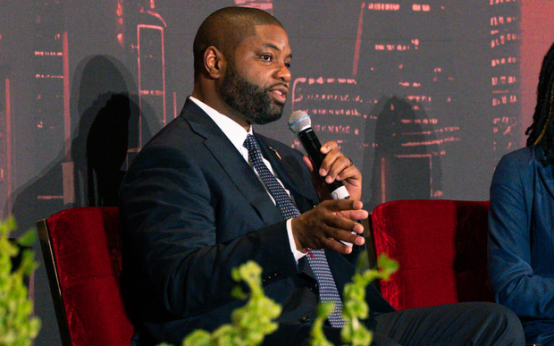 Byron Donalds Targets Black Voters in Florida Governor Race
 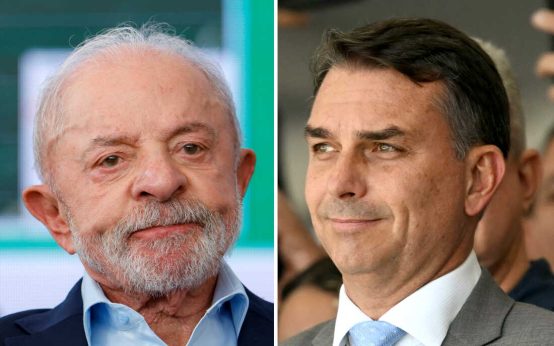 Brazil’s Presidential Race Heads to Runoff
 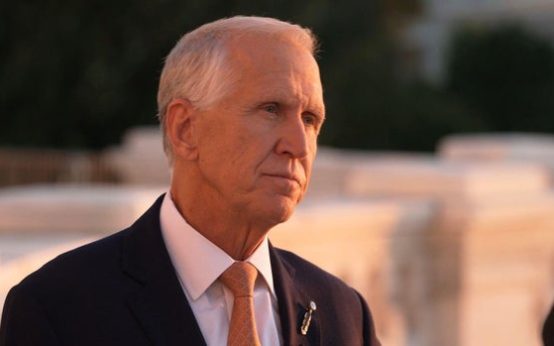 Sen. Thom Tillis Criticizes Trump’s Administration in New Book
  Controversy Surrounds Steve Hilton’s Campaign Ad Amid Gubernatorial Race
  Trump Calls for Probe into Alleged ‘Paid Protesters’
  Donald Trump Criticizes Fox News for Rally Coverage