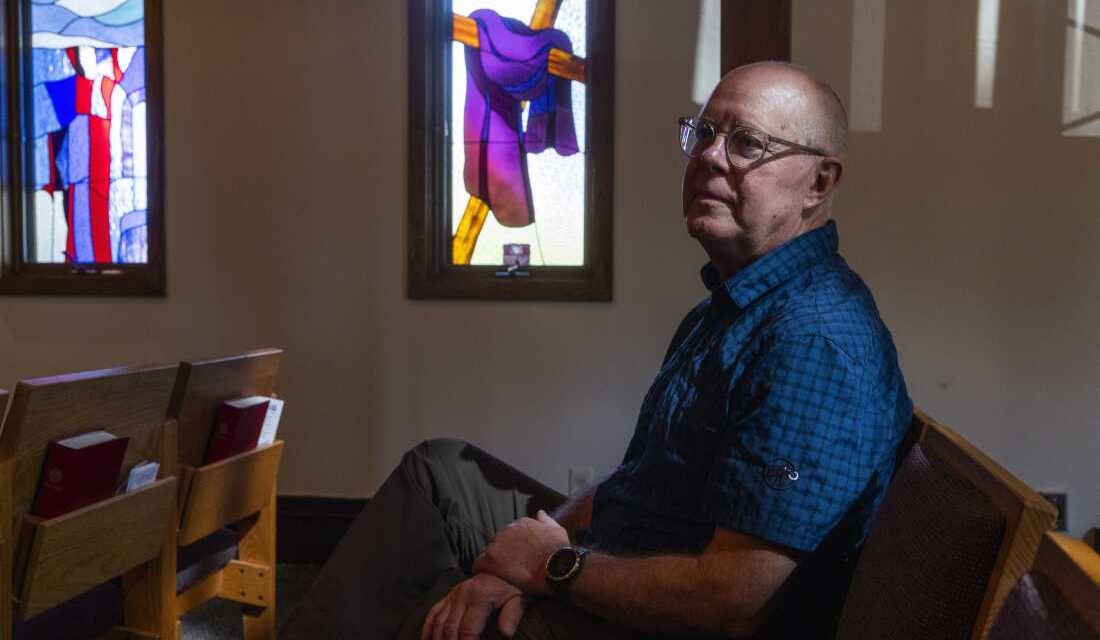
Rev. Steve Sylvester, interim Pastor of the Prince of Peace Lutheran Church in Roseville, Minnesota, recently informed his congregation that the Department of Homeland Security (DHS) had monitored their church. This occurred during a federal immigration enforcement surge last winter. This disclosure came as part of a motion filed in federal court regarding an ongoing conspiracy case against ICE protesters.
The government documents reveal that an undercover DHS agent attended a meeting of ICE protesters at the church in February. The agent collected information such as license plates, names, addresses, and employment details. “It feels weird, like living in 1950s Eastern Europe,” Sylvester remarked, expressing a sense of discomfort.
Widespread Surveillance
Surveillance extended beyond churches to include schools, libraries, and other gathering places. For months, federal agents recorded meetings, infiltrated private chats, sought financial records of national labor unions, and gathered data on community members not accused of crimes. Rachel Levinson-Waldman from the Brennan Center for Justice highlighted the extensive use of government resources.
At the University Baptist Church in Minneapolis, Cody Sanders, the interim pastor, discovered an undercover agent attended a self-defense class with a recording device. Sanders expressed surprise and concern about potential distrust among his congregation.
Sergio Manancero, general manager of La Doña Cerveceria in Minneapolis, noted that an undercover agent attended a meeting at the brewery. Despite concerns about government surveillance, he believed it might have demonstrated the peaceful intent of the ICE protest being organized.
Privacy and Free Speech Concerns
Levinson-Waldman pointed out that the federal government has broad authority under the Fourth Amendment for such surveillance, although questions about legality remain. She compared the tactics to COINTELPRO, a historic FBI program targeting organizations deemed subversive.
Prosecutors defended the government’s actions, asserting that only those charged in the conspiracy case were targeted. Aaron Terr from the Foundation for Individual Rights and Expression raised First Amendment concerns, citing potential implications for lawful activities.
As part of the investigation, DHS obtained financial records from several nonprofits and labor unions, including the Service Employees International Union. Prosecutors stated this was within the agency’s authority. Terr questioned whether the government aimed to investigate crimes or political movements.
A grand jury presentation depicted a web of organizations labeled “The Conspiracy,” including a teacher’s union and a bicycle repair shop. Bernie Burnham from the Minnesota AFL-CIO criticized the approach as reminiscent of McCarthyism, though the government clarified the organizations were not accused of involvement in the conspiracy.
DHS declined to comment on ongoing investigations. A hearing in the conspiracy case is scheduled for this week.