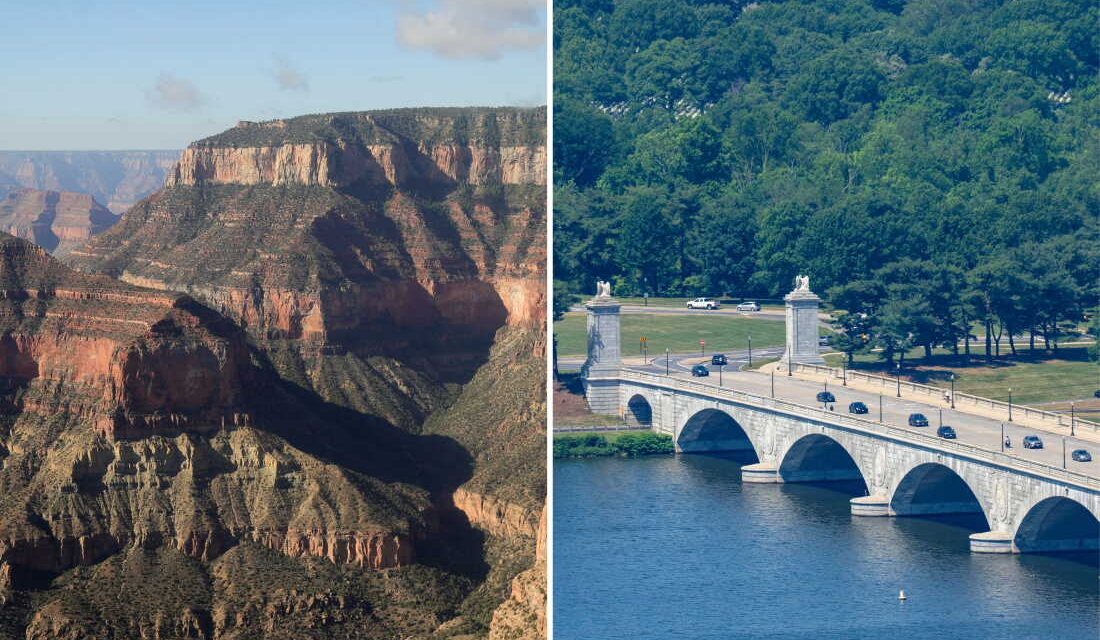
Historic sites like the Grand Canyon and Arlington Memorial Bridge are under threat due to proposed changes in preservation law. President Trump plans to build a 250-foot arch, which preservation advocates argue will undermine protections for such historic locations.
Exactly 60 years ago, President Lyndon B. Johnson signed the National Historic Preservation Act (NHPA) into law, alongside several conservation bills. At the signing on October 15, 1966, Johnson stated, “We have come here this morning to give part of our country back to its people.” Today, advocates believe the public’s power is being eroded.
Brent Leggs, CEO of the National Trust for Historic Preservation, discusses the decline in governmental responsibility towards preservation. He notes the shift away from a collaborative approach between public and private partnerships.
The NHPA created a process for identifying and protecting historic sites, ranging from a single tree to entire districts. The Section 106 review process mandates consultation with states, tribes, and stakeholders before any harmful projects proceed. Elihu Rubin, a professor of architecture at Yale, remarks on the importance of Section 106, describing it as the law’s “teeth.” The process allows for mitigation efforts rather than halting projects entirely.
Recent changes threaten Section 106. A federal council with Trump appointees voted to weaken the regulations. A Senate permitting reform bill also seeks to narrow the review process, simplifying infrastructure and energy projects. Critics, including Greg Werkheiser of Cultural Heritage Partners, argue the changes would ‘gut’ the law’s protective measures.
Historic preservation emerged as a response to destruction caused by urban renewal and highway construction post-World War II. The original Penn Station’s demolition catalyzed the modern preservation movement. The NHPA provided a framework to protect and manage historic resources, involving tribal voices since amendments in 1992.
Preservation experts emphasize Section 106 reviews as quick and effective. The National Trust reports an average of 16 days for reviews, with 98% determining no adverse effects. Chris Cody of the National Trust highlights the ongoing struggle against threats that undermine preservation efforts.
Advocates rally against dual threats: regulatory changes and a Congressional bill that would limit tribal and public input. Valerie Grussing of NATHPO warns of setbacks threatening pre-1992 tribal involvement. Their coalition, “Section 106 Strong,” launched to protect the review process.
A proposed Senate bill aims to reform environmental review processes, facing backlash for restricting tribal sovereignty. NATHPO Executive Director Ira Matt criticizes this approach. Advocates urge leaders to consult tribes and preservation experts for sustainable development.
Concerns around the bill persist, including undefined terms leading to potential legal disputes. Werkheiser from Cultural Heritage Partners expresses concerns over increased controversy if Section 106 is streamlined.
Leggs encourages broader public involvement, stressing the loss of historical wisdom could impact generations. Preservation law advocates strive to ensure historic sites and memories remain safeguarded.
 Congressional AI Investments Raise Concerns
  The Fallibility of Opinion Polls in Politics
  Research Reveals Diverse Reactions to Mass Shooting Fears
  Minnesota Somali Community Reacts to Raid on Rep. Ilhan Omar’s Home
  Florida Senate Candidate Angie Nixon Calls for Investigation into Opponent Ashley Moody
  Nonprofits Allege Misrepresentation by New White House Press Secretary