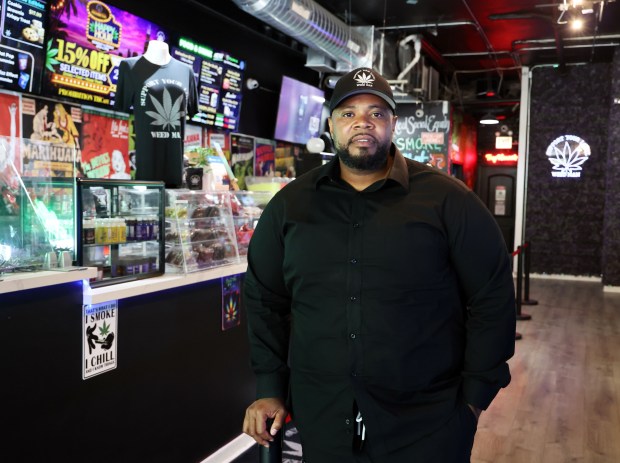
Since the federal legalization of hemp in 2018, businesses like Samuel Wilson’s Prohibition THCafe have capitalized on the opportunity to sell hemp-derived THC edibles and beverages. Located on the Near South Side, the cafe attracted attention during the April 20 cannabis holiday by partnering with Harold’s Chicken to offer THC-infused wings. Customers lined up, illustrating the demand for such products. However, this thriving business faces threats from new legal measures at both federal and state levels.
New Legislative Challenges
The federal government plans to enact a law in November restricting hemp sales exceeding 0.4 milligrams of tetrahydrocannabinols, the psychoactive compound in THC products. In parallel, an Illinois bill, pending Governor JB Pritzker’s signature, proposes to limit hemp sales to state-licensed dispensaries. This initiative aims to curb unregulated sales to minors and eliminate shops selling untested products.
Wilson, who insists on selling tested, quality products to adults, sees these developments as threats to small businesses like his, which compete against larger corporate entities. He describes his experience in pursuing the American Dream, expressing concern that new laws could damage small operators in favor of corporate interests.
“I was that innovator who chased the American Dream,” said Wilson. “To see that now in jeopardy after all the sacrifice and hard work I’ve done … it’s a hijacking of small operators and handing it over to corporate cannabis.”
Benefits for Licensed Cannabis Operators
Licensed cannabis businesses support these legislative changes. They assert that unregulated hemp sellers undermine their market by bypassing safety measures like testing and labeling. The Illinois legislation would limit unlicensed hemp operations, and its advocates argue it’s a necessary correction since recreational cannabis became legal in the state in 2020.
The bill significantly impacts consumer limits on possession. Illinois residents may possess up to 60 grams of cannabis flower (approximately 2 ounces), 1,000 milligrams in edibles, and 10 grams of concentrates. Out-of-state residents are limited to half these amounts. Furthermore, dispensaries could extend operation hours to 2 a.m., enhancing consumer convenience.
Advantages for Medical Cannabis and Emerging Businesses
Changes would also benefit medical cannabis users by allowing all licensed dispensaries to sell tax-exempt medical cannabis, previously restricted to certain outlets. This could reduce travel burdens for patients and support new dispensaries in gaining market share. The legislation would enable business tax deductions on federal income taxes.
Drive-thru services would be allowed, and cannabis could be transported in a car in its original sealed packaging. The Cannabis Business Association of Illinois supports these moves as a modernization effort. “(Senate bill) 3222 accomplishes both, making it one of the most consequential cannabis bills since legalization,” said Tiffany Ingram, the association’s executive director.
Future Outlook for Hemp and Cannabis Industry
New licenses will be available to permit hemp businesses to sell THC-infused edibles and beverages, providing a pathway to adapt within the legal framework. State Sen. Kimberly Lightford has long championed these restrictions, aiming to formalize the hemp market and lower institutional barriers for small operators and patients.
If enacted, the bill would immediately prohibit sale to minors and stop deceptive marketing aimed at youth. In-house security could replace costly third-party security contracts for dispensaries. State enforcement, rather than federal, will likely regulate hemp sales across numerous locations, presenting potential challenges in oversight.
 Cargo Plane Crash at Miami International Airport
  Marine Veteran Suing Oregon School District Over Curriculum Reimbursement
  Tennessee Execution Halted as Issues Persist with Lethal Injection Protocol
  Judge Dismisses Case Against Former Olympian Over Lincoln Memorial Incident
  Minnesota Family Files Civil Rights Lawsuit Over ICE Agent Shooting
  California Bans Child Marriage, Protecting Minors