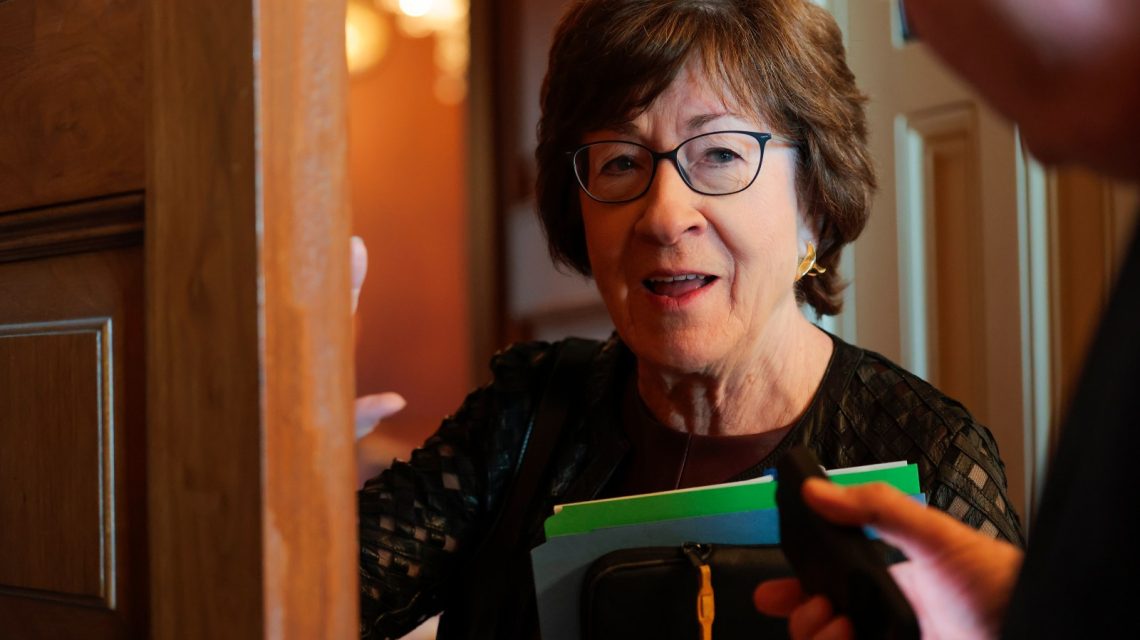
Senator Susan Collins’ reputation as an independent voice has emerged as a key issue in the Maine Senate race. She is facing a strong challenge from former Maine Senate President Troy Jackson, a Democrat, before the November midterms. Democrats aim to link Collins, a Republican, to President Donald Trump, unpopular in Maine, arguing she only opposes him when her vote isn’t crucial. Collins counters by highlighting key votes where she opposed Trump’s major initiatives.
Maine leans Democratic, having supported former Vice President Kamala Harris by 7 points in 2024. Collins previously sailed to re-election by leveraging her popularity and moderate image. Her perceived independence in the Trump era is now pivotal to her re-election. This focus is crucial with less than six weeks until Election Day.
Blake Kernen, Collins’ campaign spokesperson, stated to Newsweek that the senator has never missed a vote and holds the longest perfect voting streak in U.S. history. Kernen emphasized that Collins thoroughly considers each vote in Maine and America’s best interest. Georgetown and the nonpartisan Lugar Center ranked her the most bipartisan Senator in nine of the past eleven indexes.
Kernen contrasted this with Jackson, whom he described as an extreme partisan politician throughout his 20-year career in Augusta. On the other hand, Maggie Amjad, Jackson’s spokesperson, contended that Maine voters are not fooled by Collins’ political maneuvers.
Amjad claimed that Collins voted with Trump 96% of the time, notably supporting his judicial appointees, including those who overturned Roe v. Wade. Alleging Collins’ preference for billionaires over Mainers, Amjad criticized her votes on significant legislation that cut Medicaid and approved tax breaks for the wealthy.
Evaluating Susan Collins’ Voting Record
A CQ Roll Call report found Collins voted with Trump 95% of the time in 2025. Only Senators Lisa Murkowski of Alaska and Rand Paul of Kentucky had lower scores among Republicans, branding her as one of the least pro-Trump GOP senators.
Nonetheless, Jackson has highlighted her voting alignment with Trump, arguing you cannot support him 96% of the time and still claim to champion working-class families. Several votes drew Democratic ire, including Collins’ support for Supreme Court Justice Brett Kavanaugh. Maine Democrats criticized her for endorsing judges they said oppose abortion rights. Other scrutinized votes involved her support for the SAVE Act and confirming Robert F. Kennedy Jr. as Health Secretary.
Initially anti-Trump, Collins did not back him in the 2024 election and voted to convict him after the January 6 Capitol riot. She also opposed the Affordable Care Act repeal in 2017.
Instances Where Susan Collins Opposed Trump
Collins has opposed Trump on several occasions. Her criticism extended to tariffs and a proposal to give $5,000 to Americans if Republicans win midterms. Using her role as Appropriations Committee chair, she pushed against some Trump priorities.
On the Iran conflict, Collins didn’t back a War Powers Resolution limiting Trump’s military actions, citing concerns about its implications. Yet, she later criticized the administration’s strategy and supported further resolutions to curb military engagement.
Collins voted against major Trump legislation, including the One Big Beautiful Bill, pointing out its harmful Medicaid effects and tax credit phase-outs affecting energy entrepreneurs. Despite initial procedural support, her final stance against the bill became controversial.
Further opposition included a Trump-backed rescissions package and nominees like Defense Secretary Pete Hegseth and Attorney General Todd Blanche, citing lack of experience and departmental independence threats.
Susan Collins’ Dynamic with Donald Trump
Collins and Trump have not shared a close political alignment. Her consistent opposition to his broader measures, beyond significant GOP bills, defines her moderate Republican stance.
This week, Collins criticized federal health research funding politicization following reports of Trump considering executive action against NIH grants.
Vice President JD Vance acknowledged Collins’ importance in blue-leaning Maine, despite occasional frustrations. He praised her independence as suitable for the state’s political landscape.
Susan Collins vs. Troy Jackson: Polling Insight
The Maine Senate race remains tight. A New York Times poll with The Portland Press Herald and Siena University shows Collins slightly leading Jackson at 49% to 46%. Conversely, polls by the University of New Hampshire and the University of Massachusetts Lowell show Jackson with a modest lead.
Recent Maine Senate Race Developments
ProPublica reported alleged interactions between Collins and a major donor, sparking FBI interest. However, Trump’s return allegedly halted the probe. Collins’ office denied these claims, stating the campaign was never under investigation.
Jackson reacted by accusing Collins of prioritizing donor interests over voter needs. He demanded transparency about her political dealings.
Why the Maine Senate Seat is Crucial in 2026 Midterms
The Democrats’ Senate majority aspirations hinge on Maine. Despite a challenging political map, they aim to flip seats held by Republicans in Maine and other key states. They also target traditionally Republican areas like Alaska, Iowa, Ohio, and Texas.
With Cook Political Report and Sabato’s Crystal Ball marking the Maine race as a toss-up, both candidates will focus on independent and undecided voters while rallying their bases in the weeks leading to the election.
 The Trump Team’s Challenge to the Military Leadership
  Maryland First State to Restrict Electronic Pricing in Grocery Stores
  Activists Push for Nationwide Ban on Child Marriage in the U.S.
  Democratic Hopes and Historical Warnings in 2026 Senate Race
  Republicans Face Challenges Amidst Cost of Living Concerns
  A Different Kind of Fall for Congress This Year