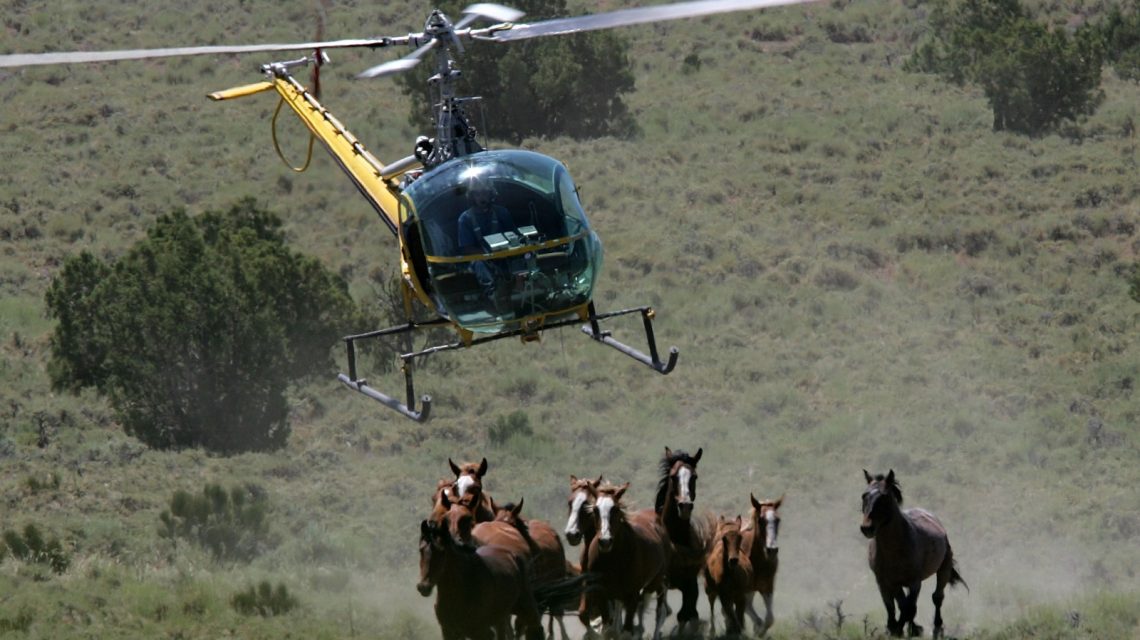
Federal sales of protected wild horses have seen a notable rise under the Trump administration, sparking concerns among animal advocacy groups about the possibility of these horses entering slaughter channels post-sale. The spotlight on this issue intensified following a New York Times investigation into the Bureau of Land Management’s (BLM) Sale Authority program.
Bureau of Land Management’s Sale Authority Program
The BLM’s Sale Authority program allows designated unadoptable horses to be sold following unsuccessful adoption attempts over three one-week listings. Unlike adopted horses, sold horses lose statutory protections, although initial buyers must agree not to slaughter the animals or sell them to someone intending to do so. Critics highlight potential loopholes when horses are resold to intermediaries who are not legally bound by the initial agreement.
Data from the BLM shows that sales notably increased after Trump’s return to office, with approximately 3,700 horses sold in 2025, a significant rise from the previous year. Currently, around 73,000 wild horses roam federal public lands in the West, while 58,000 remain in BLM holding facilities at an annual cost of about $100 million. The government estimates that foregoing years of care for horses sold could save around $56 million.
Official Statements and Responsibilities
The Department of the Interior maintains that the BLM adheres to federal responsibility under the Wild Free-Roaming Horses and Burros Act of 1971. A statement emphasized that wild horses and burros are neither sold nor sent to slaughter. Allegations of violations are reviewed and referred to law enforcement when necessary.
To manage healthy herds on public lands and reduce crowding and taxpayer costs, the department facilitates adoption and sale programs. However, scrutiny remains on the commitment to protecting these animals.
Concerns from Advocacy Groups
Patricia Miller, executive director of American Wild Horse Conservation, reported an increased vigilance regarding the Sale Authority program as efforts to relocate horses from long-term holding facilities intensified. Miller noted a correlation between the program’s usage and pressure to reduce the long-term holding population alongside plans for further roundups.
Through Freedom of Information Act requests, Miller’s organization discovered significant increases in horse sales, including bulk sales to inadequately vetted buyers. This follows a separate court ruling in 2025 leading BLM to temporarily halt the Adoption Incentive Program amid allegations that some animals entered slaughter channels.
Vetting and Compliance Concerns
A key focus for critics is the identity of horse purchasers. Miller pointed to livestock trader Brandon Jones as a concerning figure; he acquired hundreds of horses via the federal program without proper vetting. Although Jones denies selling horses to slaughter and claims they are resold to quality owners, he has not disclosed the final destinations of purchased horses.
Reports from volunteers and sanctuaries indicate that horses sold through the Sale Authority program are found in “kill pens,” raising questions about the enforceability of sales agreements.
Fertility Control Debate
This controversy revives debates on federal management strategies for wild horse populations. Animal welfare groups argue that the government overemphasizes roundups and sales rather than expanding fertility control measures designed to limit population growth.
Concerns arise as the BLM removes thousands of horses without implementing adequate fertility control plans, potentially leading to repeated roundups in the future.
Though BLM considers fertility control vital, it acknowledges challenges with current treatments requiring boosters and offering limited effectiveness on larger, secluded herds.
Broader Management Challenges
The situation underscores broader challenges faced by federal land managers. The U.S. Forest Service and BLM oversee various territories across millions of acres, aiming to manage populations without natural predators that strain resources when numbers exceed targets.
Advocates argue that the government’s increasing reliance on horse sales indicates inadequate attention to the fundamental issues driving population growth. Initially, Sale Authority targeted older or hard-to-place horses, yet evidence suggests young, viable horses are increasingly pushed through the program.
With rising sales, the focus includes not just post-sale horse fate but also whether effective measures are in place to address population growth through fertility-control efforts and other management tools.
 White House Chief of Staff Susie Wiles Declared Cancer-Free After Breast Cancer Battle
  Protein Sources Ranked: Tofu Tops the List
  Alaska’s Agricultural Challenges and Land Development
  Santa Ana Winds Impact Southern California, Prompt Fire Preparedness
  Alaska’s Limited Arable Land and Its Challenges for Local Agriculture
  Tropical Depression Champi Threatens Guam Amid Record Storm Year