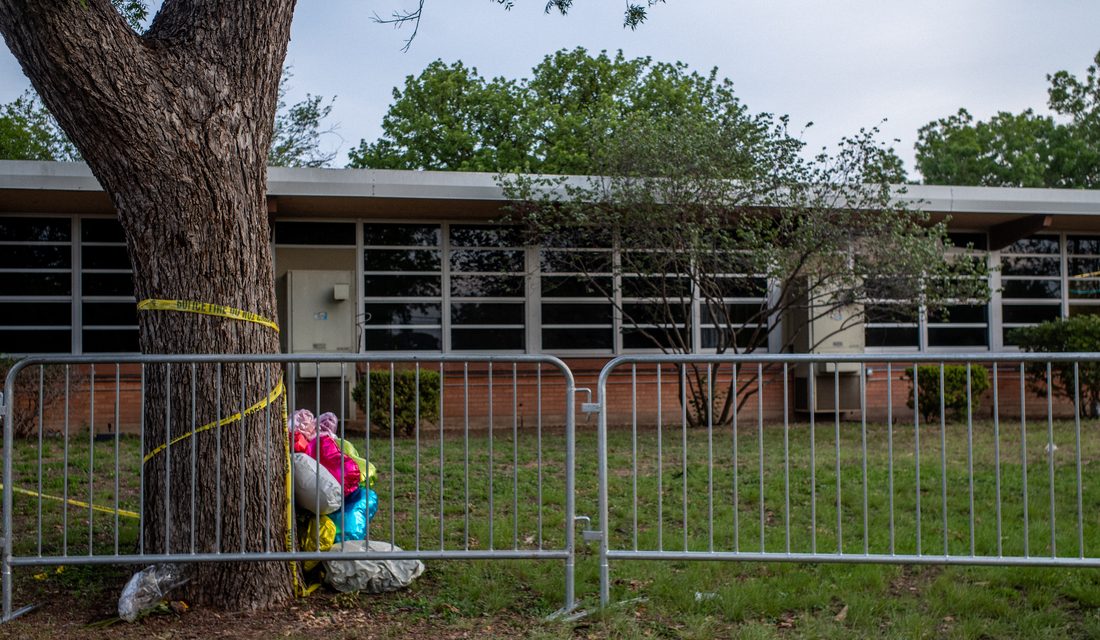
In February, Pastor Julián Moreno was stopped by security when a metal detector beeped at his grandson’s school field day. He had to return to his truck to leave his orange pocket knife. This incident reminded him of the tragedy that occurred at Robb Elementary School in Uvalde, Texas, where his great-granddaughter Lexi Rubio was lost. Schools across America have been adopting various measures like metal detectors and enhanced entrances to counteract the threat of school shootings.
Michigan’s Fruitport High School has taken a different approach by investing $48 million in redesigning its architecture. The school features curved hallways and hiding spots for students. Moreno believes architectural advancements can significantly enhance school safety and hopes schools understand the emotional impact of such tragedies.
Evolution of School Design for Safety
Over the last five decades, schools have evolved in their safety measures according to Gregory Saville of the International Crime Prevention Through Environmental Design Association (CPTED). From simple box-like structures, schools have integrated cameras and open sight lines. The modern approach advocates for architecture that secures while promoting students’ mental wellness.
Architect Rene Berndt of CPTED emphasizes creating spaces that foster social connections among students. The lack of such spaces can alienate students, leading to potential issues. Schools are now designed to encourage social interactions and provide areas where students can spend time alone when needed.
Designing Safe Schools
Michigan-based firm TowerPinkster has embraced CPTED principles in its designs, working with numerous districts. Their features often include common areas for lockers, sightline-disrupting walls, and small spaces for solitude. Matt Slagle from TowerPinkster mentions that the COVID-19 pandemic has heightened students’ emotional struggles, making thoughtful design crucial.
Judith Hoskens of the American Institute of Architects suggests schools need community spaces for relationship-building. Recent designs include learning communities grouped into “neighborhoods” to create tight-knit environments. These allow flexibility in evacuation plans during lockdowns, offering alternate routes from learning neighborhoods.
Challenges in Implementing Safety Designs
Since the Columbine tragedy in 1999, many schools have introduced a secure entrance or vestibule for monitoring. This concept is based on the Panopticon design, enabling comprehensive observation. Jill Renihan from Florida’s Hernando School District highlights their perimeter enhancements and vestibules, funded by state-provided security budgets.
Despite these advancements, some schools still prefer hardening measures, such as metal detectors, which can raise student anxiety. Even schools with different safety approaches recognize the importance of not making students feel confined or fearful.
The Subjectivity of Safety
Hoskens points out that security measures can evoke fear rather than calmness. Sandy Hook Elementary maintained a learning-focused environment despite its tragic history. Advocates from March For Our Lives call for schools to remain inviting spaces rather than rigid, confined ones.
Architects like Berndt engage communities to understand diverse perspectives on safety. Teachers might focus on secure paths, whereas students desire peer interaction. Parents often prioritize secure entrances and welcoming greeters. Design choices can range from displaying student artwork to incorporating plant life and natural materials inside school buildings.
Barriers to Widespread Implementation
Saville notes that while there’s support for innovative designs, practical implementation lags. Despite best practices, funding limitations mean not all schools pursue comprehensive redesigns. Disparities in school funding also affect redesign capabilities across communities.
The urgency to enhance safety through design remains. March For Our Lives advocates emphasize the necessity of stricter gun laws combined with securing school environments.
Pew Research reports that a significant portion of parents fear school shootings, and mental health treatment is seen as critical to prevention. While the debate over gun control continues, it’s clear immediate measures are needed to protect students.
 Evanston/Skokie School District 65 Faces Financial Challenges
 Suburban School Districts Grapple with High Diesel Costs
 ACE Scholarships Supporting School Choice
 Indiana University’s Deep Military Heritage and Impact
 Encouraging Youth Participation in Democracy at OPRF High School
 Bend, Oregon, School Shooting: What We Know