Energy industry leaders recognize the urgent need for new power sources. They are exploring technology and infrastructure improvements to meet growing demands. “As an industry, we are investing approximately $1.1 trillion in our infrastructure over the next five years to ensure that we’re meeting that need and that demand,” Exelon CEO Calvin Butler noted.
In 2024, data centers accounted for about 1.5% of global electricity usage. Consumption is rising sharply. This year, they are expected to rank as the fifth-largest energy consumers worldwide, with usage levels between those of Japan and Russia.
Exelon is a major electric utility holding company in the U.S. It operates the electric grid infrastructure that powers homes and businesses. “We’re a pure transmission and distribution company. My responsibility is to operate a safe, reliable, and resilient grid,” Butler said. “What we’ve seen across the PJM footprint is that supply costs have increased 645% since 2024.”
Companies are focusing on innovative solutions to handle increased energy needs, particularly due to AI.
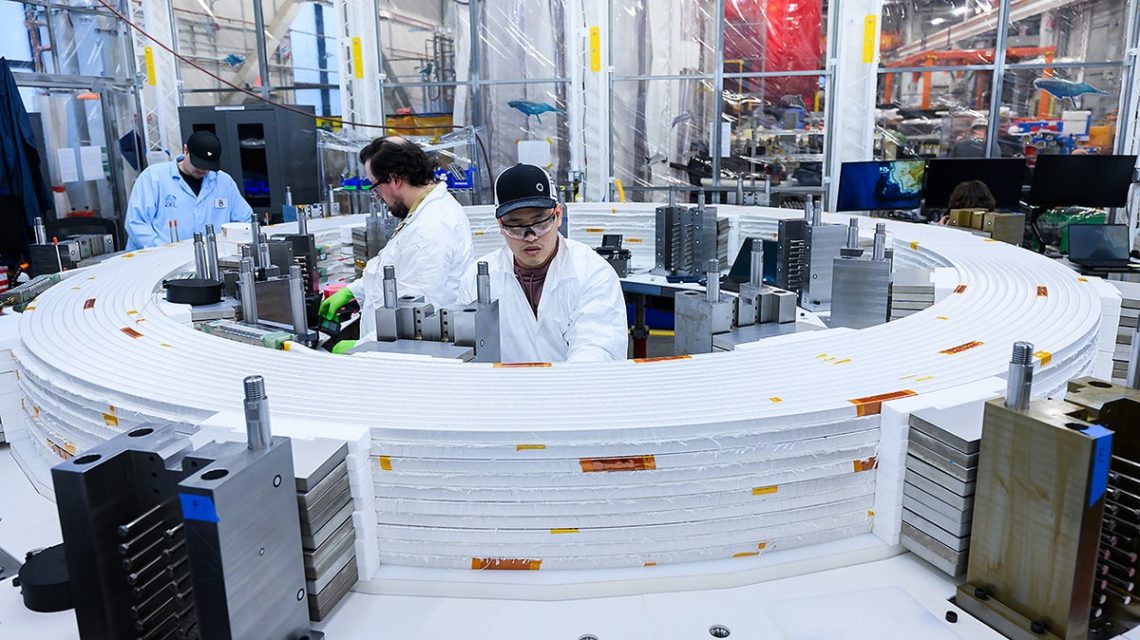
Commonwealth Fusion Systems, based in Massachusetts, is developing fusion technology to add reliable power to the grid. Fusion, the energy source of the sun, combines light nuclei like hydrogen. This process releases energy as heat, which can be converted to electricity. “One of these power plants we think could power about 280,000 American homes,” said Brandon Sorbom, co-founder of Commonwealth Fusion Systems. “It releases about 10 million times more energy per weight by reaction than chemical energy.”
There are uncertainties with fusion. MIT researchers suggest fusion might contribute 10% to 50% of electricity, but not before 2100. Others believe that integrating fusion plants will be costly.
Some businesses relocate data centers to areas requiring less power. “The Nordics are ideal due to their stable, educated populations, favorable regulations, and abundant green power,” Philippe Sachs of Nscale stated. The Nordic countries offer cool climates, which reduce the energy needed to cool data center hardware.
“Given the cold weather, we can utilize server-generated heat to warm homes,” John Wernvik of EcoDataCenter explained. Norway sees strong energy production without severe industrial competition, making it favorable for data center operations.
Despite construction challenges in the Arctic, the Nordic region is experiencing a surge in data center developments. “During the last 24 months, we’ve seen exponential growth in data center builds across the Nordics,” Wernvik added.
Those navigating these complexities aim to provide sustainable energy solutions. “There’s a strong correlation between energy use and quality of life,” Sorbom said, emphasizing the importance of clean and safe energy production.
 Trump’s 2024 Campaign Targets Young Men Through Cryptocurrency
  How Modern Windows Improve Home Insulation
  State Department Simplifies Passport Process with Online Applications
  Senate Democrats Block Data Center Bill Over Efficiency Concerns
  Future Cities: Ambitious Projects Aiming for Innovation and Sustainability
  High-Profile Hearing and AI Developments: Key Political Moves