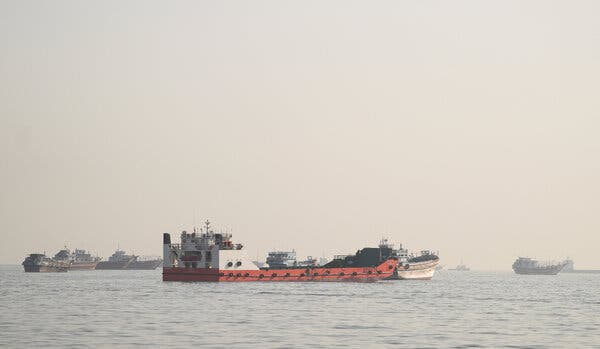
Iran has announced plans to charge fees for services rendered in the Strait of Hormuz, refraining from imposing tolls, which are illegal under international law. Charging for passage through this crucial global energy supply route represents a significant change, driving costs for commercial shipping and setting a concerning precedent for international waters.
President Trump declared the strait would remain “permanently toll-free.” Yet, Iran’s foreign ministry spokesman, Esmaeil Baghaei, clarified that while transit tolls would not be imposed, fees for services provided would be charged. He did not specify what those services would entail, although Iranian officials suggested possible environmental charges.
The legal distinction between tolls and fees rests on services provided versus mere access. Maritime law experts agree that a toll is banned, but fees for actual services like waste management can be justified legally.
The proposal emerged after conflicts involving the United States and Israel, spurring Iranian retaliatory actions against commercial vessels. In response, Iran established the Persian Gulf Strait Authority to oversee these charges and safe passage permits by May.
In discussions with Oman, Iran explored a ship payment framework based on service fees, marking a notable shift in regional maritime operations.
 Dutch Review Board’s Euthanasia Ruling and International Debate
  Israeli PM Commends Heroic Actions in Flight Emergency
  Rabbi and Jewish Leaders Criticize Adam Brody for ‘Genocide’ Comment
  Flydubai’s Emergency Landing Highlights Cockpit Security
  Former Israeli PM Naftali Bennett Commends Passengers and Crew for In-Flight Heroism
  Diplomatic Complexities Unfold at U.S. National Archives Visit