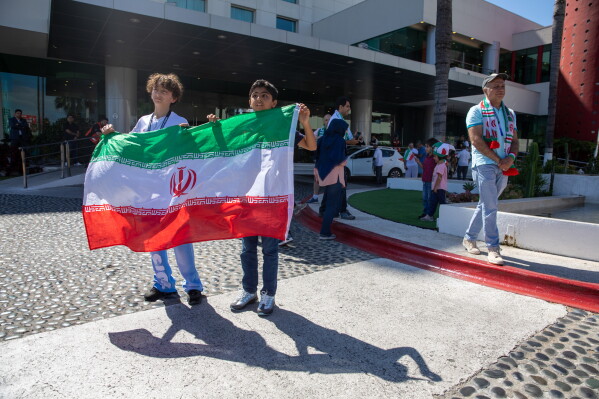
Tijuana, Mexico — Less than 150 miles from Los Angeles’ World Cup stadium, Iran’s soccer team is staying at the Marriott hotel in Tijuana, Mexico. The hotel’s entrance is heavily secured, with police and Mexican National Guard members ensuring no entry without a reservation or special permission.
Despite tensions surrounding Iran’s participation, the mood within the hotel is both relaxed and celebratory. On Saturday morning, dozens of fans eagerly gather to glimpse the squad as they prepare for their second group-stage match. Children shout encouragement as the team departs for the match.
Lucas Zarrabi, 13, expressed his support for Iranian soccer, saying, “I wanted to cheer for them and make them happy.” Lucas, who attended a recent match against New Zealand and plans to see the upcoming Sunday match against Belgium, is among several fans from Los Angeles supporting the team. Others have traveled from San Jose, California, and Miami.
The support is crucial, fans believe, due to the difficult conditions imposed on the team. Following the outbreak of war, Iran had to relocate its base camp from Tucson, Arizona, to Tijuana. Additionally, eleven officials did not receive U.S. visas. The U.S. also restricted their arrival time before matches and demanded immediate departure after games.
“Every technicality is making it difficult for the team,” Abbas Eftekhari, a longtime U.S. resident, said. “This drains them psychologically and physically.”
The Iranian soccer federation plans to file a complaint with FIFA regarding these obstacles. “Football shouldn’t be influenced by politics,” stated Hedayat Mombeini, the federation’s secretary-general. Despite challenges, he affirmed Iran’s intent to overcome them with pride.
Since June 7, Ali Eslami has been a regular presence at the hotel gates, expressing support for the team. He cherished interacting with players, describing his actions as “the best pleasure.” Eslami, who shares time between Southern California and Tijuana, anticipates the team’s return from training at the nearby Estadio Caliente.
For Eslami, seeing the team evokes strong emotions. “I’ve been in America for 50 years, and this is the most emotional thing,” he said. Some Iranian fans fear repercussions from their diaspora community for supporting the team. Eftekhari noted fans’ protests at a previous match may have negatively impacted players.
On the eve of Sunday’s noon kickoff, diverse fans bolster the atmosphere. Among them are flight attendants from China sporting festive attire and Tijuana locals offering hospitality. Iran’s diplomatic ties with Mexico have facilitated the team’s preference to host matches there.
A 10-year-old fan, Leonardo Ramirez Lopez from Tijuana, hopes to get autographs. Although unfamiliar with Iran’s play style, he ranks them his third-favorite team, behind Colombia and Argentina.
Eventually, fans cheer as players emerge, signing autographs and expressing gratitude. As each player leaves, a moment of reverence occurs as they kiss the Quran before boarding the bus to the airport. Fans chant, “Iran, Iran! Whoop, whoop!”
 British Police Arrest Man Suspected of Terror Plot
  Nick Saban’s Comments on ESPN Spark Debate Over College Sports Regulations
  Activists Push for Nationwide Ban on Child Marriage in the U.S.
  Freddy’s American Adventure: From Soccer to College Football
  Investigation into Alleged Incident at Cornell University
  Rising Drone Threats Highlight Vulnerabilities in Moldova’s Airspace Defense