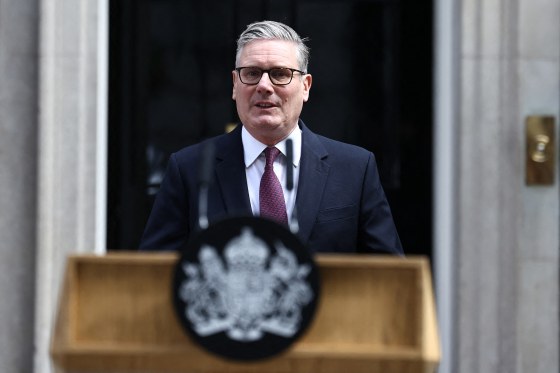
British Prime Minister Keir Starmer announced on Monday that he plans to step down from his position following a rebellion within his own Labour Party. This move may pave the way for Andy Burnham to assume leadership. The new prime minister will be the seventh leader the country has had in a span of a decade.
The announcement came during a statement made outside No. 10 Downing Street, bringing an end to weeks of speculation about his future. Starmer’s decision follows a series of controversies and policy failures that have diminished his political standing. His tenure has faced challenges from scandals, policy missteps, and poor election outcomes.
Starmer experienced backlash after leading his party to significant losses in local elections in May. Nigel Farage’s right-wing Reform UK party made notable gains, intensifying calls for Starmer’s resignation. Andy Burnham, the mayor of Greater Manchester, had openly discussed plans to challenge Starmer and recently won a parliamentary seat, positioning himself as a key contender for the position.
Burnham, known as the “King of the North” for his advocacy in northern England, emerged victorious in a by-election against a Reform candidate. He emphasized change in his victory speech, expressing the potential for political action to positively impact the nation.
Recent resignations from key cabinet ministers also plagued Starmer. Health Secretary Wes Streeting left the cabinet, criticizing Starmer for indecision. Defense Secretary John Healey also resigned, citing unmet promises on military funding as the reason for his departure.
A scandal involving Peter Mandelson’s appointment as the U.S. ambassador further tainted Starmer’s leadership. Mandelson’s connections with Jeffrey Epstein raised questions about the vetting process. Despite dismissing Mandelson, Starmer faced significant backlash.
Starmer’s initial promises of political reform have returned to trouble him. Economic challenges due to Brexit and global conflicts have left him unable to fulfill reform or investment promises. His key initiatives, like investments in net-zero emissions and digital ID cards, failed to gain traction.
Andrew Barclay, a politics lecturer, noted that Starmer struggled to establish a clear central narrative, leading to intensified effects of scandals. Tim Bale, another politics professor, pointed out that Starmer’s prior promises constrained his government financially, resulting in alienation of progressive voters.
Internationally, Starmer’s handling of global conflicts earned commendation. Despite initial close ties, his relationship with President Donald Trump soured over differing stances on the Iran conflict.
The Labour leadership contest requires contenders to secure the backing of 20% of Labour MPs. If multiple candidates surpass this threshold, members will vote to decide the new leader. Burnham is currently seen as the frontrunner, and many hope to avoid an extended contest if he remains the primary challenger.
Starmer, a former barrister and director of public prosecutions, became an MP in 2015 and was elected Labour leader after a significant party defeat in 2019. He led the party to electoral success but now faces an unraveling political legacy.
Details of this evolving story continue to develop.
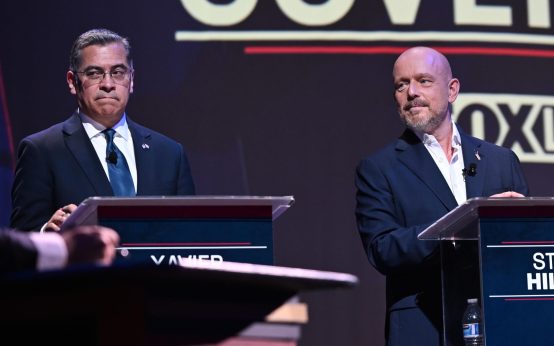 Becerra and Hilton Clash in California Gubernatorial Debate
  California Voters to Decide on $7.5 Billion State Research Fund
 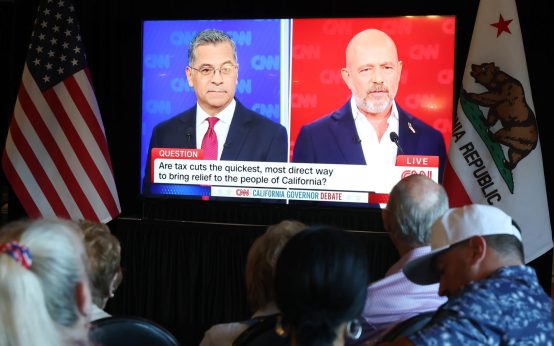 Highlights from the California Gubernatorial Debate: Becerra vs. Hilton
 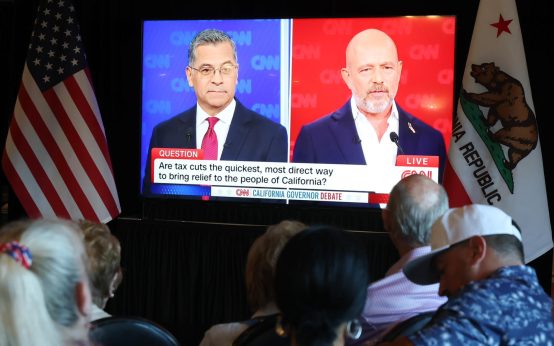 Becerra vs. Hilton: The Debate and Key Issues in the California Governor Race
  Senate Confirms New Labor Secretary
  Hegseth’s Ambitious Military Initiatives to Reshape Warfare