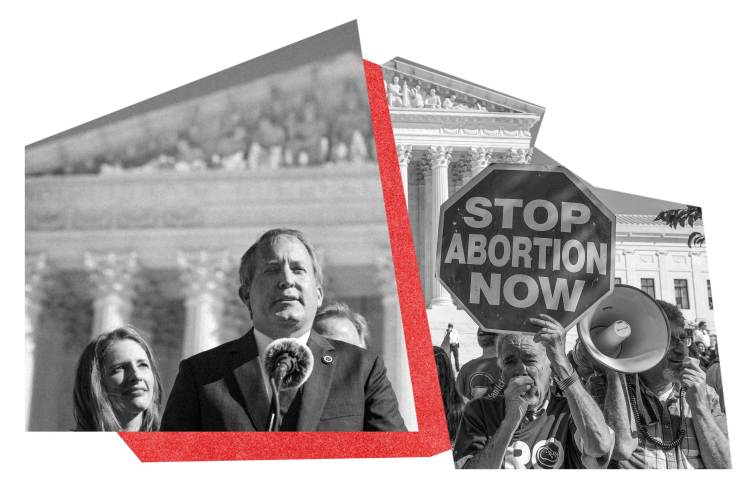
Ken Paxton, early in his role as Texas attorney general, highlighted what he called a national tragedy. In 2016, he commemorated the 43rd anniversary of Roe v. Wade, criticizing the Supreme Court ruling for supposedly preventing abortion bans. Over the years, Paxton challenged the ruling and achieved what others could not. In 2021, he defended a near-total abortion ban, crafted to bypass legal challenges, which the Supreme Court allowed to proceed despite Roe still being in effect. Following Roe’s overturn in 2022, Paxton continued pushing Texas’ abortion restrictions further, opposing the Biden administration and influencing other states.
Paxton’s tenure drew mixed reactions due to personal scandals but saw consensus on his impact in advancing abortion restrictions. His legal approach was marked by testing the law’s boundaries and employing innovative strategies. If he wins a U.S. Senate seat, his tactics might shift, as legislative processes require broader consensus compared to his current role. Allies see potential for him to draft national laws based on Texas’ regulations. Legal experts expect him to join efforts to impact FDA policies on abortion drugs and fetal legal rights, affecting reproductive care like birth control and in vitro fertilization (IVF).
Paxton, a strong IVF supporter, has shown interest in restrictions to prevent loss of fertilized eggs. His litigation raised complex legal questions. For instance, whether a federal law mandating emergency care overrides state abortion bans, and if a fetus should have separate emergency care rights. These legal challenges might reach the Supreme Court, affecting state-level policies.
In the political realm, abortion has become less central than Paxton’s ethics issues. His opponent, James Talarico, supports restoring federal abortion rights, opposing the strict laws Paxton defends. Paxton’s campaign has focused less on abortion, yet observers are closely watching his potential Senate influence. Dr. Jennifer Villavicencio, concerned for her own practice, notes Paxton’s strategies as a blueprint for targeting providers.
Paxton’s early career reflected his firm stance against abortion, influenced by his upbringing and connections. As a state senator, he co-sponsored a law banning most abortions after 20 weeks, a trend supported by similar bans across states. However, bans at six weeks met judicial challenges. In 2021, Texas lawmakers crafted Senate Bill 8, a creative approach bypassing state enforcement. Instead, it allowed citizens to sue abortion providers, with rewards up to $10,000. Paxton’s office argued that state officials couldn’t be stopped from enforcing this, as they had no enforcement role. The Supreme Court agreed, making the law effective, with other states like Idaho and Oklahoma following suit.
Changes in abortion laws forced professionals to relocate, such as Dr. Sam Dickman, moving from Texas to Montana. Cases like Josseli Barnica’s showed severe consequences of restrictive abortion laws. Barnica, suffering a miscarriage, was denied timely intervention due to the law, resulting in her death. Her case highlighted the perceived failings of healthcare providers and the legal system.
Paxton also played a role in blocking federal guidance on emergency abortion care. In 2022, after Roe’s overturn, Texas implemented laws threatening severe penalties for abortion. The Biden administration attempted to assert federal emergency care laws, suggesting doctors provide abortions if necessary. Paxton countered, arguing the federal law didn’t override state bans and might even consider a fetus in treatment decisions. His argument led to court rulings favoring Texas’ perspective, influencing states like Idaho. His victories created legal dilemmas for healthcare providers, exemplified by Dr. Jim Souza’s remarks on doctors’ hesitations over legal risks.
Paxton’s strategies extended beyond state lines. In 2023, he challenged a court ruling permitting a fetal anomaly abortion. Paxton threatened legal action against associated hospitals, influencing the Texas Supreme Court to reverse the ruling. Similarly, Paxton pursued legal action against out-of-state providers, accusing them of violating Texas laws. Defensive laws in states like New York have posed challenges to enforcing these judgments. Despite setbacks, Paxton’s tactics have inspired similar actions by attorneys general in other states.
Paxton, targeting even assistance towards abortion access, issued cease-and-desist orders. He sued Texas cities for funding abortion travel, leading to legislative bans on such funding. His approach influenced other states, such as Alabama, adopting similar tactics. Paxton’s vow to prevent actions perceived as manipulating the system against unborn lives underscores his continued commitment to these causes.
 Political Maneuvering Over Defense Secretary’s Future
 Trump’s Campaign Strategy and Its Impact on Supporters
 Challenges Faced by ‘No Kings’ Movement Around Midterm Elections
 School Choice Politics in West Virginia
 Trump Administration’s Actions Impede Election Security Efforts
 Poll Reveals Challenges for Chicago Mayor Brandon Johnson’s Second Term Bid