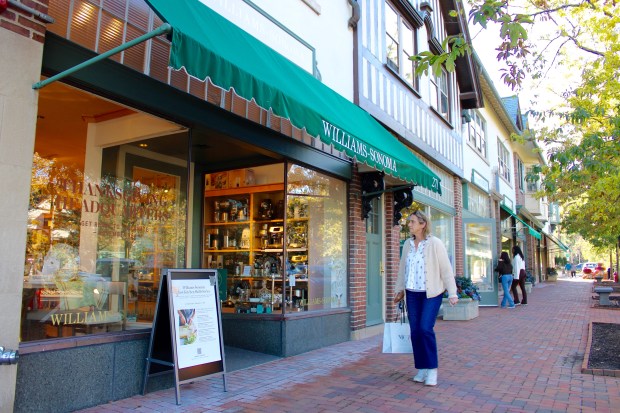
Historic preservation extends beyond architecture and historic artifacts. It encompasses the preservation of an entire community and its cultural essence. This approach was at the heart of the first Lake Forest Preservation Symposium, held from October 16 to 18. The event celebrated heritage, design, community, and future preservation efforts.
The symposium was a collaboration between The Lake Forest Preservation Foundation and Ragdale, marking the 50th anniversary of both organizations. Jennifer McGregor, executive director of the Lake Forest Preservation Foundation, explained that the event gathered preservationists, architects, historians, and community leaders to discuss the impact of historic places on American communities.
McGregor highlighted the importance of preservation in Lake Forest. She noted that while residents often appreciate the town’s beauty, they may not realize the thoughtful preservation efforts shaping its development. The symposium’s public programs included workshops, panel discussions, architectural tours, historic home experiences, exhibitions, and receptions.
The symposium explored preservation as a tool for community identity, growth, design quality, environmental care, and cultural continuity. Locations for the event included Ragdale, Lake Forest College, the Lake Forest-Lake Bluff History Center, Lake Forest Library, Market Square, and other historic sites in Lake Forest.
McGregor emphasized the diversity of opinions among panelists, with professionals offering different perspectives on the future of cities. Participants included figures such as the Notre Dame architecture school representative, a designer of notable skyscrapers, a South Side architectural critic and author, and a leader in vertical urbanism. They debated topics like “Preservation vs. Progress: Who Owns the Future of Our Cities.”
Paul Sacaridiz, executive director of the Ragdale Foundation, stressed the importance of preservation amid urban growth pressures. He argued for careful decision-making in urban planning to include diverse voices and values in shaping future environments. Sacaridiz noted that preservation and progress can coexist, using Ragdale as an example of a place that grows while maintaining its historic integrity.
The Lake Forest Preservation Symposium occurred at a time when communities across the nation are addressing issues like growth, sustainability, adaptive reuse, housing, resilience, and civic character. McGregor pointed out that the symposium aimed to challenge the notion of preservation as a conflict between past and future.
Arthur H. Miller, Architectural Historian and Director Emeritus of the Lake Forest Preservation Foundation, explained that Lake Forest avoids becoming a museum by remaining a vibrant community. Historic homes, gardens, and buildings continue to serve contemporary life. He credited Almerin Hotchkiss’s 1857 curvilinear street plan and the 1916 Market Square development as key contributions to Lake Forest’s unique urban design.
Miller emphasized that Lake Forest’s distinctiveness lies in its continuous community legacy. This continuity is the result of residents choosing stewardship, guided by vision and commitment, over convenience.
 Understanding Fear in Scary Movies
 Media Silence on Key Issues in Sports
 A Look Back at Chicago Events on October 19
 The Legacy of Jackson Pollock and Lee Krasner: A Story of Art and Influence
 Potential Impact of AI on Fiction Writing
 Exploring the Museum of Bad Art