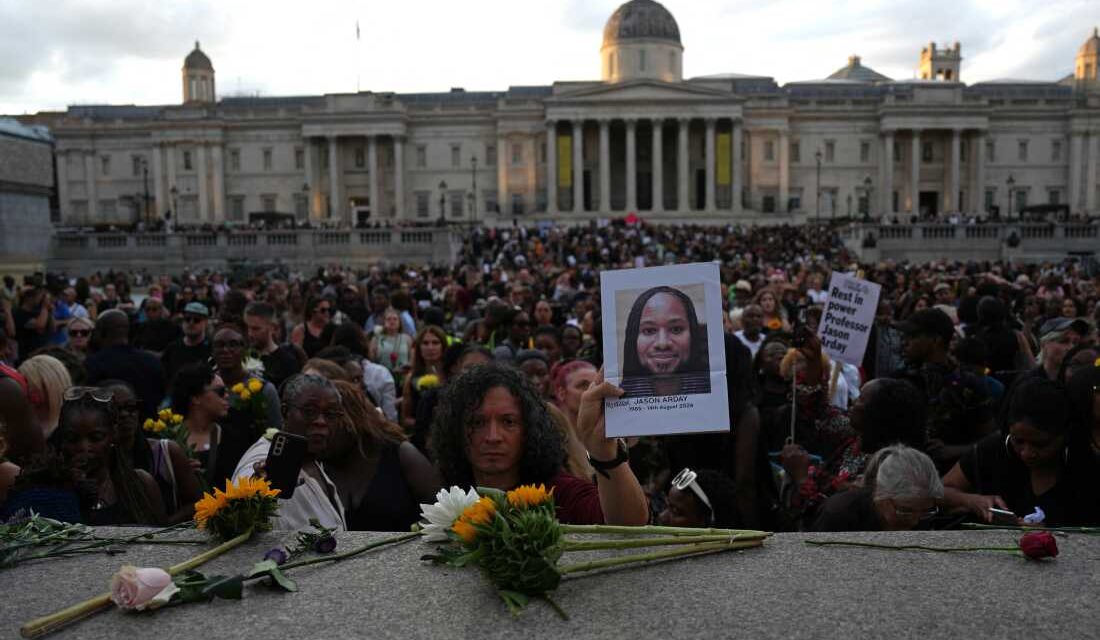
Supporters gathered for a vigil in London to honor the late Cambridge professor Jason Arday on August 17. Arday, who passed away on August 14 at the age of 41, faced allegations of plagiarism and embellishing his biography.
Jason Arday was a sociologist who focused on race, inequality, and education. His career path intersected with these subjects. In 2023, he became the youngest Black person appointed to a professorship at Cambridge University. Despite his achievements, he allegedly misrepresented aspects of his life and work.
When he died, Arday denied any intention to deceive. As scrutiny intensified, he resigned from Cambridge. During this period, he also faced online racist attacks.
The controversy surrounding Arday extends beyond the allegations. Some believe his appointments showed how liberal institutions prioritize diversity over academic standards. Others argue his fall highlights the challenges and racial scrutiny Black academics encounter.
Tyler Austin Harper, once a tenure-track professor and now a writer at The Atlantic, discussed Arday with NPR. Harper detailed concerns about Arday’s academic work, medical history, and athletic prowess. Arday claimed to be mute until 11, illiterate until 18, and ran 600 miles in six days. Harper noted that while each claim alone might be conceivable, their combination seemed implausible.
Harper recognized the discomfort surrounding these accusations. The initial claimant was known for writings on race and IQ, with Harper labeling them as racist. Affirmative action and diversity program supporters fretted that Arday’s story might be weaponized against these policies.
Harper also criticized Cambridge. He remarked that some universities create environments where Black and Brown academics are seen primarily for their race rather than their scholarly contributions. Harper believes Cambridge ignored signs that should have questioned Arday’s hiring.
In dialogue with NPR’s Michel Martin, Harper offered no simple fixes. He emphasized that defensive reactions only reinforce views that elite institutions resist recognizing their shortcomings.
 Sen. Cotton Opposes Permanent Daylight Saving Time
  Steve Hilton’s Latino Outreach and Gubernatorial Ambitions
  The Need for Reform in Presidential Nominations
  Controversy Surrounds Performances at Gillette Stadium
  Celebrity Controversies Over Political Activism and Speech
  Trump Pushes for Permanent Daylight Saving Time, Sharing Senator’s Contact Information