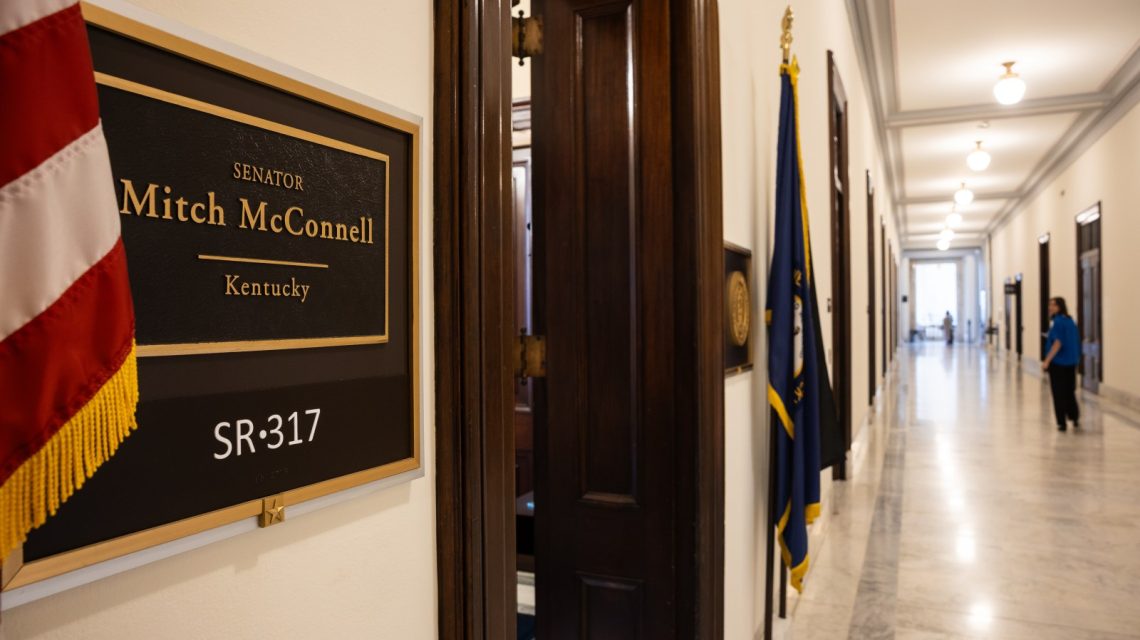
The notable absence of Senator Mitch McConnell has raised questions about the health of the Kentucky Republican. His lack of public presence and missed roll call votes since June 11 have fueled calls to alter health disclosure norms for Congress members.
McConnell, who is 84, had his office release a mid-July photo showing him hospitalized. A statement attributed his absence to a fall and pneumonia, but doubts about his condition remain unresolved.
Growing Calls for Transparency
Amid talks of reforming congressional guidelines, there’s pressure for McConnell to resume work. The Republican Party already faces challenges from a narrow Senate majority. However, McConnell’s prolonged absence has led to demands for transparent communication from his staff. Voters, journalists, and even fellow Congress members want clarity.
The last public communication from McConnell was a condolence post about former colleague Lindsey Graham on July 13. A statement from McConnell on July 12 explained his absence due to a mild pneumonia case and a fall. It denied fractures, heart attacks, strokes, tumors, or hemorrhages. However, journalists and lawmakers struggle to verify these claims. Hospitals in Washington, D.C. cannot confirm his presence without permission.
Senator Josh Hawley expressed disappointment with the opacity, highlighting an obligation to inform constituents about the situation.
Governor Andy Beshear’s Stance
Kentucky Governor Andy Beshear, a Democrat, urged McConnell on July 8 to update constituents about his health. Beshear called the communication gap concerning, especially after receiving unverified claims of McConnell’s passing. Yet, Kentucky law bars Beshear from declaring McConnell’s seat vacant or holding a special election, regardless of McConnell’s condition.
Understanding the August 3 Cutoff
Kentucky law, amended in 2024, requires a special election for Senate vacancies, adhering to the 17th Amendment. Governors can appoint replacements only if a vacancy arises near an election. An August 3 deadline looms as the unofficial limit for scheduling a special election.
The law mandates a 63-day notice before a special election, with candidates filing 56 days before voting. Consequently, a vacancy within 56 days of the November election complicates organizing a special election.
Policy consultant Adam Cochran noted that if McConnell steps down post-August 3, Republicans might employ procedural delays, potentially merging the special and general elections on November 3.
 The Trump Team’s Challenge to the Military Leadership
  Maryland First State to Restrict Electronic Pricing in Grocery Stores
  Activists Push for Nationwide Ban on Child Marriage in the U.S.
  Democratic Hopes and Historical Warnings in 2026 Senate Race
  Republicans Face Challenges Amidst Cost of Living Concerns
  A Different Kind of Fall for Congress This Year