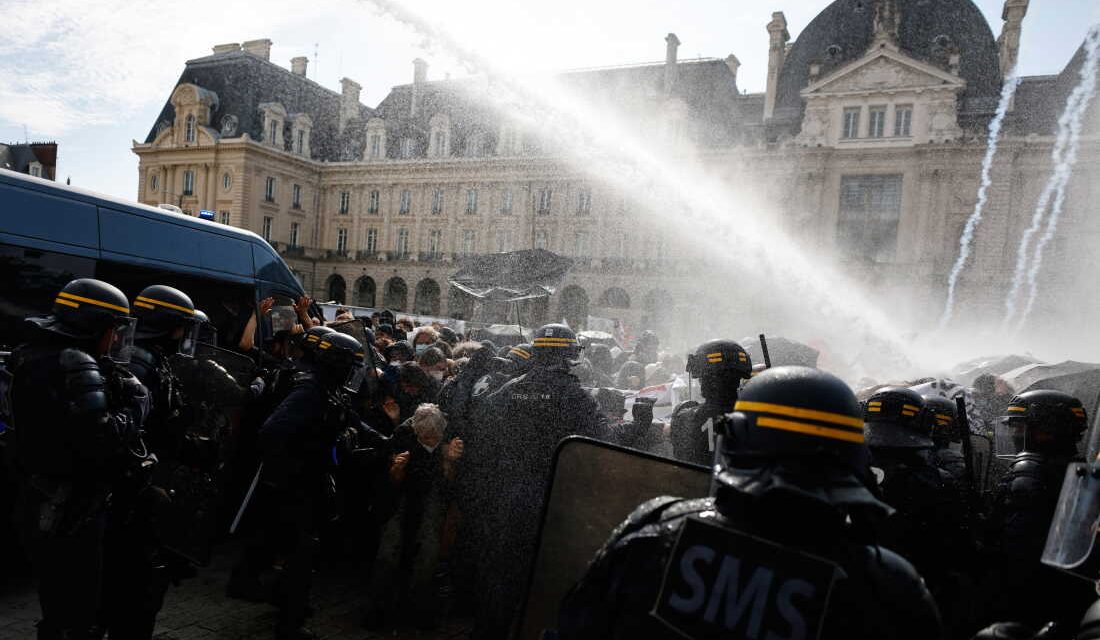
On Tuesday, riot police employed water cannons as they confronted students protesting against the lack of resources in schools in Rennes, western France. Simultaneously, police in Paris and other parts of France used tear gas to manage crowds during mass rallies that demanded increased educational funding.
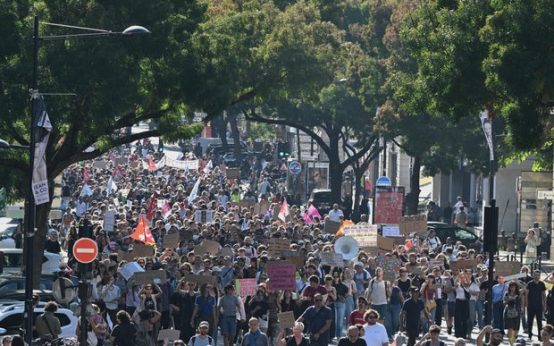
According to government reports, over 250,000 people participated in the demonstrations nationally. Outgoing President Emmanuel Macron faced mounting pressure from the public as students blocked many high schools. The protests, starting at a single Paris high school in September, have now expanded nationwide.
Protests Gather Support Nationwide
Léa Monimart, a protester from Lille, emphasized the importance of supporting students. She highlighted that these teenagers, who are around 17, possess the awareness necessary to understand and communicate their educational needs. The Interior Ministry revealed that approximately 256,000 individuals took part in the nationwide protests, with 56,000 gathering in Paris. The demonstration was largely peaceful, although minor clashes occurred between protesters and police.
The use of riot control measures, such as tear gas, water cannons, and arrests, especially against teenagers, has been a point of contention among parents and educators. Interior Minister Laurent Nuñez claimed the police actions were appropriate, given that some protests turned violent and required police intervention.
Government Response
Prime Minister Sébastien Lecornu spoke in parliament, stressing the need for dialogue with students. He condemned violent actions by protesters but pledged to investigate police conduct, rejecting allegations of systemic racism within the police force.
In the context of the presidential election campaign, the government’s handling of more than two weeks of classroom boycotts and protests has been closely scrutinized. Law enforcement’s arrest of over 6,100 individuals, mostly minors, became a highlight of criticism.
“We need to act now,” declared Suzanne Nijdam, president of the federation of student associations. “It’s a matter of political priority, a matter of prioritizing the youth and the future of our country.”
Ongoing Challenges and Actions
The recurring protests underscore discontent over broader issues including rising poverty and inequality. President Macron, who cannot seek a third consecutive term, faces criticism over public spending constraints amid soaring fuel prices and the ongoing Iran war.
Students allege educational funding gaps are threatening their futures, finding resonance with broader social discontent. At numerous schools, classrooms lack essential supplies. Some structures become unbearably hot in the summer and suffer rat infestations, staffing issues, and overwhelming workloads contribute to the challenge.
Realizing the protests’ intensity, authorities shut down schools nationwide. On Tuesday, operations at 891 schools were either partially or fully suspended. The Education Ministry responded by creating an online platform where students can detail their school-related grievances anonymously.
Emilia Sichili Suriam of a parent association asserted the legitimacy of students demanding their rights. She described these actions as essential for securing children’s rights. The alliance between teachers, parents, and students focuses on protesting the inadequate conditions that violate the French national ethos of “Liberty, Equality, Fraternity.”
 Censure Passed for East Dundee Village President Over Political Invites
  Firing of Baltimore Arts Executive Raises Discrimination Concerns
  Alberta Separatists Under Scrutiny for Alleged U.S. Resource Offers
  Massive School Protests Sweep France Over Poor Conditions
  Potential Fare Changes for D.C. Metro
  Navigating the Challenges and Opportunities of Condo Ownership in California