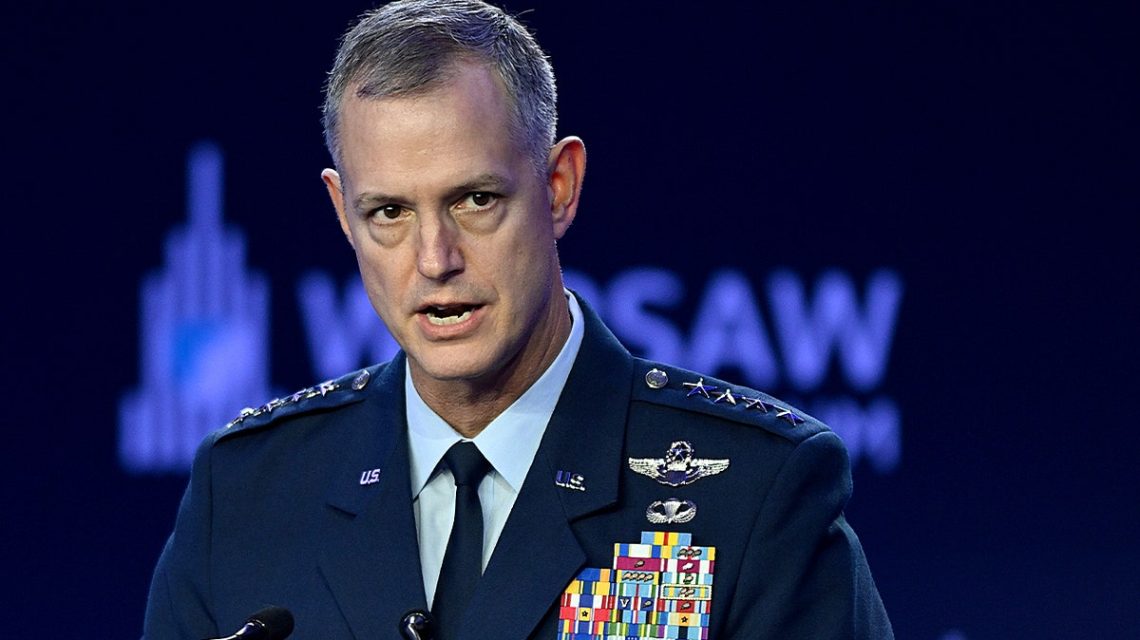
NATO’s chief military officer, General Alexus Grynkewich, addressed the Warsaw Security Forum, issuing a stern warning to any adversary considering attacks on allied territories. He emphasized that NATO would dismantle all elements supporting such aggression and disrupt enemy warfighting systems to prevent any future Russian incursions.
At the forum held in Poland, Grynkewich stated that if provoked, NATO would oppose attackers fiercely, denying them success in their objectives. He highlighted a strategy focusing on blocking, blunting, and breaking enemy forces. Although NATO is defensive, it stands ready to act decisively should any of its 32 member nations face assault. Grynkewich’s remarks align with mounting tensions involving Russia, which Western nations have accused of engaging in hybrid warfare tactics, including cyberattacks and aircraft activity near NATO regions.
The forum’s discussions also included previous instances of Russian drone activity in Polish airspace during operations linked to Ukraine, which led to enhanced defense measures through NATO’s Operation Eastern Sentry. Similar encounters have been reported by Romania and allegations from Estonia regarding violations of its airspace by Russian military aircraft.
Recent tensions between Russia and Ukraine remain high, with Russia reportedly pursuing increased attacks on Ukrainian energy and infrastructure. Despite diplomatic efforts, reports of an agreement involving U.S. President Donald Trump and Russian President Vladimir Putin on energy supplies surfaced, amid accusations of Russia violating ceasefire efforts by continuing these attacks.
Moscow has issued nuclear threats, emphasizing its stance following NATO’s activities, especially around Kaliningrad, a heavily militarized Russian exclave. Official notes from Russia pointed to significant dangers if NATO attempted to isolate this area.
At a meeting in the Hague, NATO leaders pledged to elevate defense investments, aligning with Trump’s demands for increased GDP allocations toward military capabilities and infrastructure defense. Secretary-General Mark Rutte dismissed Russia’s threats and insisted on the alliance’s longstanding defensive purpose. Meanwhile, Grynkewich avoided directly naming Russia but alluded to it as a central threat, following NATO’s Strategic Concept of 2022. His aim is to implement strategies that counter any attack.
Grynkewich reassured the alliance of NATO’s readiness for any potential conflicts, emphasizing their capacity to extend responses beyond immediate enemy troops to encompass supporting infrastructures. Additionally, he addressed doubts about U.S. commitments, recalling Trump’s favorable comments at the NATO gathering in 2025, and reflected confidence in the alliance’s preparedness to safeguard its citizens and address hybrid warfare threats.
The Warsaw Security Forum served as a platform for European leaders to plan responses to Russia’s actions and fortify defenses along NATO’s eastern front.
 Houthi Strike in Saudi Arabia and TNA Wrestling Controversy
  NPR CEO Katherine Maher Awarded First Amendment Recognition Amid Controversy
  Trump’s Dispute with Zelensky Over Diesel Deals
  Energy Ceasefire in Ukraine: Challenges and Developments
  Trump Attributes High Energy Costs to Ukraine and Halts Russia Sanctions
  Trump’s Foreign Policy Shifts Strike Concerns