Part Three of a Series on NATO’s Challenges
Location: Lviv, Ukraine
Four years into the Ukraine conflict, NATO’s eastern members increasingly see significant transformations through Ukraine’s continued engagements with Russia. New strategies in drone warfare, cyber defense, civilian resilience, and military mobilization are forcing NATO to redefine its future combat strategies.
This week, NATO Secretary General Mark Rutte confirmed the invitation extended to Ukrainian President Volodymyr Zelenskyy for NATO’s annual summit in Ankara, emphasizing Ukraine’s vital role in NATO’s strategies despite its non-membership status.
‘War Evolution’: Inside Ukraine’s Drone Factories
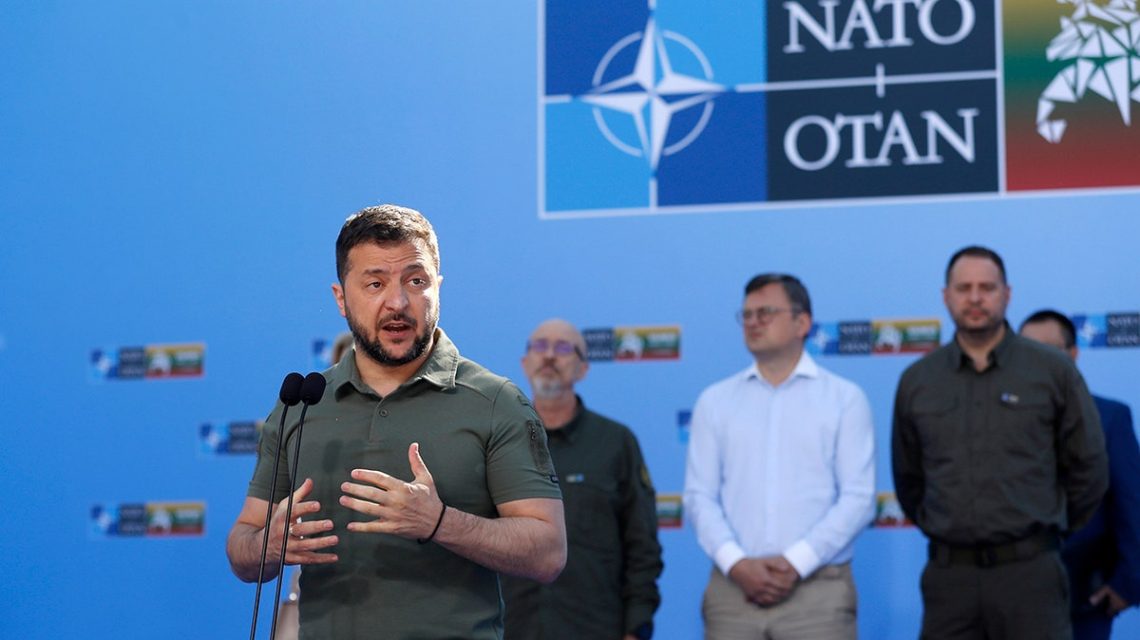
During a NATO summit in Vilnius, Lithuania, President Volodymyr Zelenskyy spoke to the press about Ukraine’s growth as a military power. Lviv’s Mayor, Andriy Sadovyi, highlighted Ukraine’s prominence within European defenses, asserting the necessity of Ukraine’s army for NATO’s future.
With NATO foreign ministers gathering in Sweden before the July summit, debates intensified over the alliance’s future. U.S. Secretary of State Marco Rubio described the summit as crucial, warning of insufficient munitions production for potential conflicts, a concern echoed by Retired Lt. Gen. Richard Newton, who noted the Pentagon’s focus on Ukraine’s rapid wartime adaptation.
Rubio also acknowledged President Donald Trump’s announcement regarding ongoing U.S. troop deployments to Poland, countering concerns about potential reductions on NATO’s eastern front.
NATO Expansion Amid Russian Concerns
Polish Foreign Minister Radosław Sikorski applauded Trump’s commitment to U.S. troop presence in Poland, highlighting its potential to unsettle President Putin.
Contrary to Moscow’s demands for NATO’s rollback, the invasion prompted the alliance’s expansion with Finland joining in 2023, adding over 800 miles of NATO border with Russia, followed by Sweden in 2024. Poland and Ukraine officials claim the war has broadened NATO geographically and shifted its fundamental strategies.
Poland’s Deputy Defense Minister Paweł Zalewski articulated a transition from expeditionary to modern warfare, primarily conducted through drones. He emphasized Ukraine’s unmatched expertise in grasping current battlefield dynamics.
Global Military Insights
Retired Gen. Philip Breedlove underscored Ukraine’s pivotal role in shaping modern warfare understanding globally, emphasizing drone warfare due to absent air capabilities. Ukraine’s military, having honed combat skills through prolonged engagement, stands as Europe’s formidable force.
Breedlove remarked on Ukraine’s advances despite the relinquishment of Soviet-era nuclear capabilities under the 1994 Budapest Memorandum.
NATO’s Strategic Redefinition
The article delineated expansion into technological innovation with Ukraine’s flourishing IT sector adapting to defense production for drones and advanced communication systems.
Breedlove highlighted drone warfare as an alternative in scenarios lacking air warfare, echoing the limitations revealed during Russia’s invasion.
Poland’s Deputy Defense Minister Zalewski, speaking to the Pentagon’s evolving ‘NATO 3.0’ approach, described Europe’s shift to self-reliance for conventional defense as the U.S. concentrates on China and the Indo-Pacific regions.
This reorientation sees Poland boosting military spending to nearly 5% of GDP, the highest in NATO, affirming Eastern Europe’s foresight regarding Russia’s threat.
NATO’s Future with Ukraine
Amid military exercises and geopolitical shifts, Eastern European officials emphasize NATO’s need for Ukraine for its future trajectory, irrespective of formal membership status.
 New Jersey Voter Fraud Prompts Renewed Push for SAVE Act
  Concerns Over Changes to Voter-Registration Form for Americans Abroad
  Trump’s 2024 Campaign Targets Young Men Through Cryptocurrency
  Trump’s White House Visitor Center Proposal Gains Bipartisan Support
  State Department Simplifies Passport Process with Online Applications
 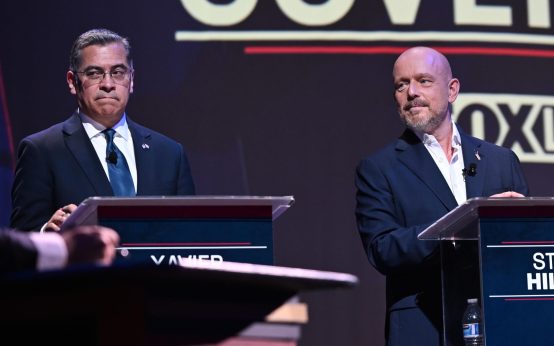 Becerra and Hilton Clash in California Gubernatorial Debate