The AI race has shifted from a focus on semiconductors and talent to electricity and data centers, which power modern technology. This shift is affecting industrial policy and reshaping China’s influence in the U.S. For years, U.S. policymakers have prioritized defending against Chinese cyber espionage and influence campaigns. However, China’s tactics appear to be evolving.
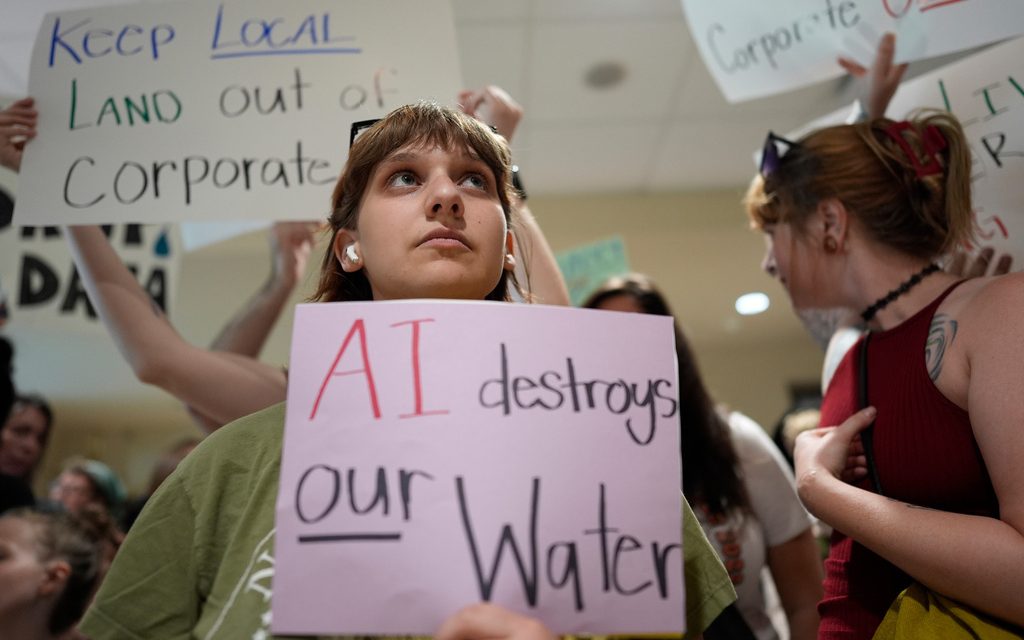
Recent evidence suggests a shift towards exploiting domestic disagreements within key industries. OpenAI reported disrupting a Chinese-linked operation dubbed ‘Data Center Bandwagon’ that generated fake social media posts against American data centers. Though modest, it signifies a strategic evolution where Chinese operatives insert themselves into existing debates instead of creating new narratives.
Investigations reveal broader trends. Graphika documented ‘Spamouflage’ networks pretending to be Americans across the political spectrum. Microsoft Threat Intelligence also highlighted similar sophisticated techniques targeting impactful political issues. OpenAI’s findings show these tactics being used in debates over America’s AI infrastructure.
Data centers are becoming crucial national infrastructure. They support AI development, cloud computing, manufacturing, military applications, and research. The U.S. and China recognize AI leadership as pivotal to economic and military power. Despite criticizing American data centers for environmental and economic issues, China subsidizes its own AI infrastructure with electricity demand set to double by 2030.
This doesn’t mean China created America’s debate on AI infrastructure nor delegitimizes local opposition. Communities have genuine concerns about energy, water, land, and quality of life. Some reports question claims of coordinated Chinese involvement, emphasizing authentic community-driven campaigns.
Foreign influence operations don’t create new disagreements. They amplify existing tensions to achieve strategic goals.
This trend is seen across multiple campaigns where state-linked actors integrate into existing debates. In 2022, Mandiant documented ‘Operation Dragonbridge,’ a campaign posing as Texans opposing a defense-supported rare earth facility. Google has since removed over 175,000 related accounts.
The target appears to be changing. Initially, it was rare earth processing plants. Now, AI infrastructure is the focus. The pattern is embedding China’s preferred outcomes within American discourse. The U.S. must discern between authentic debate and foreign amplification of strategic disagreements.
China should not artificially increase anti-data center sentiment while encouraging infrastructure development domestically. While their attempts may be fragmented, their goal remains slowing U.S. infrastructure development and heightening domestic policy discussions. The task is not to eliminate disagreements, but to better identify between genuine dialogue and coordinated foreign efforts around key technologies.
Nikolas Foster serves as a nonresident fellow at the Atlantic Council’s Global China Hub and was a deputy China advisor for USAID.
Copyright 2026 Nexstar Media Inc. All rights reserved.
 G7 Nations Agree to Release 100 Million Barrels of Oil Amid Fuel Price Surge
  Co-Pilot Attempts Hijack on Flight to Tel Aviv
  U.S. Revises Global Health Aid with New Strategy
  U.S. Warns Against Travel to Colombia’s Norte de Santander Due to Security Threats
  Reflections on 30 Years at Fox News
  Keurig Dr Pepper Launches Compostable Coffee Pods to Reduce Waste