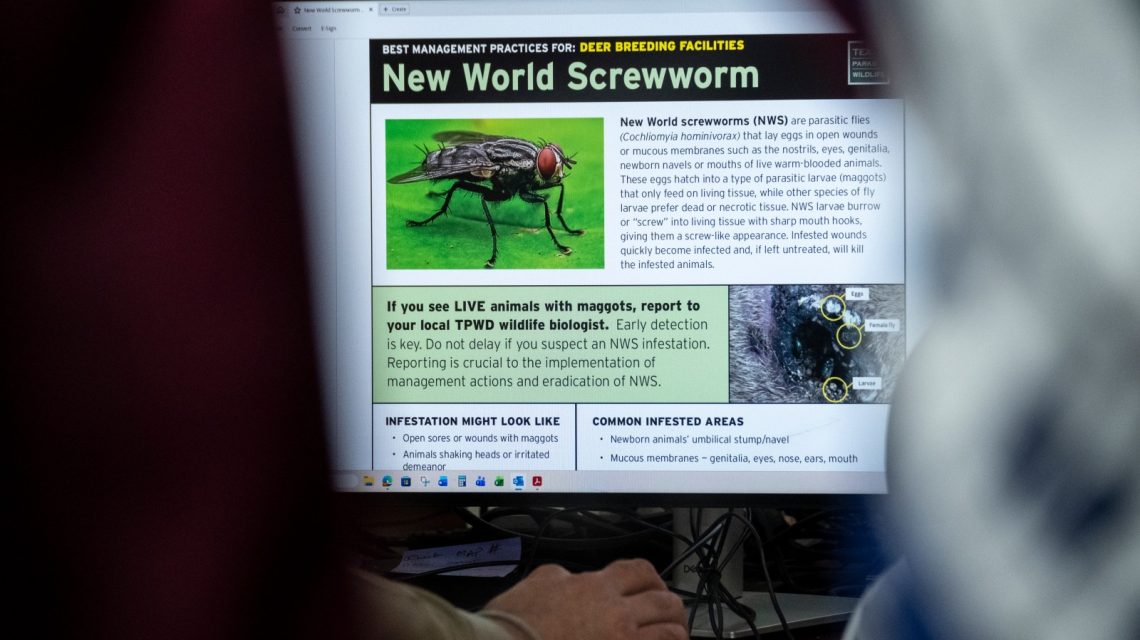
U.S. agriculture officials have confirmed a new case of New World screwworm in Texas, adding to the list of concerns about containing the flesh-eating parasite. Previously eradicated from the U.S. through an extensive sterile-fly release program, this organism feeds on the living tissue of warm-blooded animals.
Latest Developments
The USDA screwworm rapid response team confirmed the detection in a goat via a post on X. The case was identified in a castration wound. The screwworm affects only open wounds and does not infest healthy skin. This new detection is 180 miles west of the initial Texas detection, and 74 miles west of the nearest previous case.
Since November 2024, Mexico has reported nearly 30,000 cases, with 1,800 still active. In the U.S., there are currently 16 cases. These involve cattle, sheep, goats, and one dog, with the latest case confirmed in Terrell County, Texas. Another recent case was confirmed in Edwards County, Texas. An earlier case in New Mexico involved a dog and is now inactive.
Concerns and Efforts
Ranchers and animal health experts have expressed worry as screwworm reports increase in parts of North and Central America. Response teams are enhancing inspections, public outreach, and containment measures. Sterile insect techniques, proven effective in controlling screwworm populations, are being employed. Officials urge livestock owners to report suspicious wounds promptly.
New World screwworms pose significant threats to livestock, wildlife, pets, and occasionally humans. Federal and state authorities are identifying additional cases and monitoring animal movements to lower the risk of spread.
Understanding New World Screwworm
The New World screwworm is a fly that lays eggs in open wounds or body openings like eyes, genitals, nose, or mouth. The CDC explains that eggs hatch into maggots, consuming the animal’s living tissue.
History and Current Outbreak
Once widespread in the Southern U.S., New World screwworm caused significant livestock losses. Eradication efforts used sterile male flies to interrupt reproduction, reaching zero cases by 1982.
The current outbreak is centered in Mexico and Central America, with U.S. cases in Texas and New Mexico.
 Patrick McEnroe Advocates for Collegiate Athletic Reform
  Push for Reparations Faces Challenges and Calls for Strict Eligibility
  Texas Man Arrested for Threatening State Capitol Attack
  The Key Debate Between Xavier Becerra and Steve Hilton: What You Need to Know
  Physicians Urge Senate to Reject FDA Nominee
  Trump’s Executive Order to Combat Mosquitoes and Ticks in D.C.