For many years, physicists have sought to solve a critical mystery of the universe: why do some particles, like protons, possess mass while particles of light do not? Understanding this could reveal much about the origins of planets, galaxies, and life. The leading hypothesis was that mass comes from an invisible field, known as the Higgs field. However, proving this theory required immense collaborative effort.
Beginning decades ago, scientists from various countries worked together, despite political tensions between some of their nations. The United States played a major role, contributing significantly in workforce and funding. This major investment led to the discovery of the Higgs boson in 2012, proving the Higgs field theory. The breakthrough was significant enough to earn two physicists a Nobel Prize.
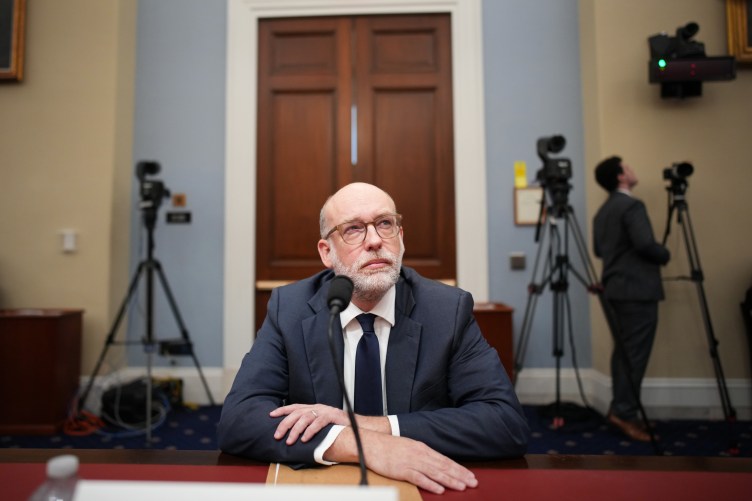
However, under a rule proposed by the Trump administration, American scientists might face limitations in international collaborations. This rule would give political appointees the authority to decide which research projects receive funding and the ability to terminate projects at their discretion. Concerned scientists, like University of Chicago physics professor David W. Miller, have voiced their objections, emphasizing the importance of sustained international cooperation for scientific progress.
The proposal from the Office of Management and Budget (OMB) aims to align spending with current law and agency priorities. Yet, it faces substantial criticism from the scientific community. They argue it might severely restrict research projects in areas like pediatric cancer, maternal health, and basic science, undermining the peer-review process that ensures funding goes to deserving proposals.
The rule not only affects physics but encompasses thousands of federal grants, including those for social services and arts. Many organizations and states rely heavily on these grants for their budgets. Critics fear the rule aims to solve issues that are exaggerated or nonexistent. Although the administration argues for preventing waste and bias, the scientific community contends that the changes could disrupt vital research.
Legal experts anticipate challenges to the OMB’s authority. They expect litigation but acknowledge the process could take years. Pressure from lawmakers is crucial for revising the rule before its final release. Notably, Senator Susan Collins has opposed parts of the rule, highlighting concerns over political influence on scientific funding.
The proposed rule’s impact could hinder not only physics but also a wide range of scientific endeavors. The path forward will depend on legal interpretations, legislative action, and future administrative changes.
 The Threat of Melting Glaciers: A Call to Action
  Climate-Resistant Rock Glaciers: Hidden Water Resources
  California Voters to Decide on $7.5 Billion State Research Fund
  Ancient Pottery Unearthed During Roadworks in Tbilisi
  U.S. Space Academy Announcement
  The Need for New Strategies in Oregon’s Wildfire Management