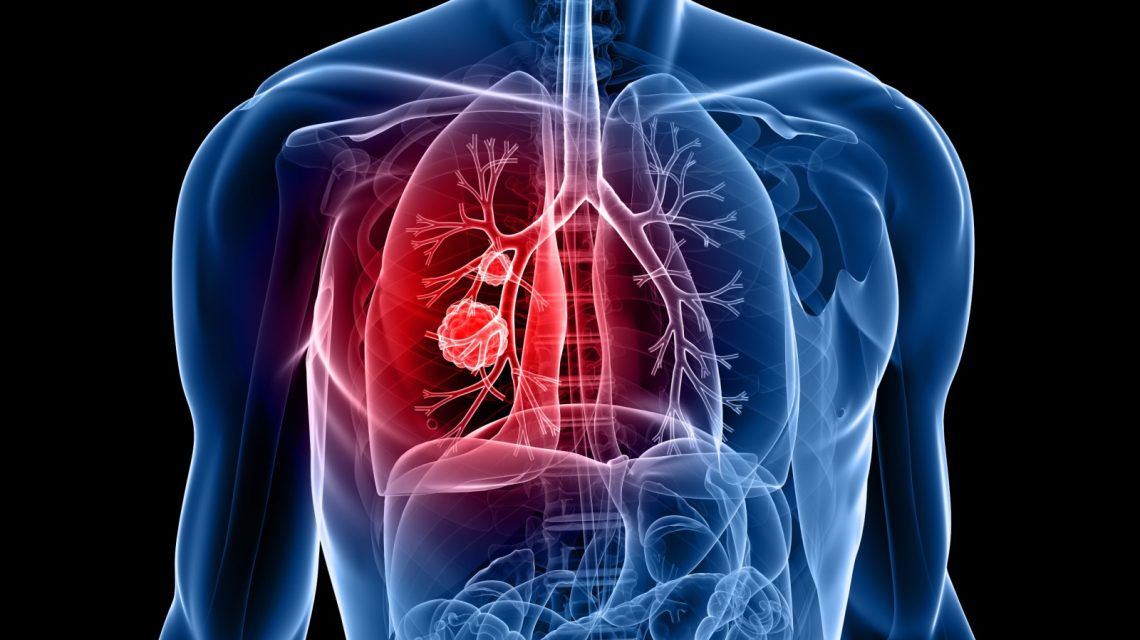
People who have never smoked may still face a heightened risk of lung cancer if they possess a specific rare genetic mutation. A new study reveals that carriers of the rare EGFR T790M mutation have a 62-fold increase in risk compared to non-smokers without the mutation. Even when considering both smokers and non-smokers, the mutation raises lung cancer risk by about 25 times.
Jaclyn LoPiccolo, MD, PhD, emphasized the significance of genetics in lung cancer risk, stating, “We tend to think of lung cancer risk primarily in terms of smoking and environmental exposures, but this study shows that, in some people, inherited genetics can also play a powerful role.” While most common diseases show risk spread across various genetic variants with minor effects, this mutation demonstrates a substantial influence.
Lung cancer is highly prevalent among men and women in the United States. The American Cancer Society anticipates approximately 229,410 new diagnoses by 2026. It remains the leading cause of cancer death in the U.S., contributing to about 20% of all cancer fatalities. Smoking is the predominant risk factor, responsible for about 80% of lung cancer deaths. Other risks, such as air pollution and family history, are beyond lifestyle interventions.
Family history and inherited genetic factors do contribute to lung cancer risk, yet are not fully understood. A study published in Science explored the EGFR T790M mutation using genetic and health data from over 3 million individuals. This research confirmed a strong connection between the mutation and lung cancer risk.
“We found that people who carry the inherited EGFR T790M mutation had approximately 25-fold higher odds of developing lung cancer than people without the mutation,” LoPiccolo explained.
The increased risk was especially noticeable in those who never smoked, with carriers in the study showing over 60 times the likelihood of developing lung cancer. Linking the mutation to heightened risk could enhance early detection through genetic testing and lung cancer screening.
While previous studies of this rare gene were limited, access to over 3.3 million genotyped research samples allowed researchers to assess cancer risk by smoking status and to identify the variant’s geographic distribution. The variant appeared in 1 in 15,850 participants and was “significantly enriched” in the U.S., with a carrier frequency of 1 in 8,920 among populations of British, Irish, African, and Indigenous American descent. This points to European origins, likely brought by settlers to the Southern Appalachian area over 200 years ago.
LoPiccolo mentioned ongoing investigations into how lung cancer risk changes with age among mutation carriers, their lifetime risk, and why some carriers develop lung cancer while others do not. These insights aim to guide CT screening and flag individuals at elevated risk.
For more information or questions about cancer, contact Health at Newsweek via [email protected]. Experts can offer advice, and your story could be featured in Newsweek.
Source: Jaclyn LoPiccolo et al., Germline EGFR T790M mutation and lung cancer risk. Science 393, eaec0473 (2026), DOI:10.1126/science.aec0473. Contact Newsweek editors Kara Dolman and Emma Lee-Sang for additional details.
 Calm Parenting: Strategies to Manage Stress
  Trump’s Executive Order to Combat Mosquitoes and Ticks in D.C.
  Overcoming Weight Loss Challenges: Brain Health and GLP-1 Medications
  Supporting Children’s Mental Health at Home: Practical Steps for Parents
  Abdul El-Sayed’s Strategy to Attract Health-Conscious Voters in Michigan
  Preventable Infection-Related Cancer Cases Worldwide: Insights from IARC Study